Look, I've been on a factory floor since 1995. I've watched sign shops ask for IP65, IP66, IP67 like they're ordering soup sizes. Most couldn't tell you what the second digit actually means. Here's the truth after 16 years of bending metal and sealing LEDs.
IP ratings aren't waterproof guarantees. They're water resistance ratings under specific test conditions.
The first digit covers solids. 6 means dust-tight. No dust gets in. That's non-negotiable for outdoor signs because dust plus moisture equals corrosion on LED boards.
The second digit covers water. It's a scale, not a quality guarantee. I've seen clients think higher number is always better. That's wrong.
Here's what nobody tells you: IP65, IP66, and IP67 are tested with fresh water at specific pressures, angles, and times. They don't test for salt spray, hurricane-driven rain, or a pressure washer held two inches from the face. Those are the real killers.
Look, IP65 is what I'd put on 90% of outdoor channel letters. It handles rain, snow, garden hose, and normal storms. Our front-lit channel letters are built with sealed LED modules and neutral silicone to meet IP65 as standard.
It won't survive a dunk in a flooded parking lot.
But here's the catch. The LED modules inside need their own protection. I don't care if the aluminum can is IP65. If the LED strips are cheap, they'll die in 12-18 months because moisture wicks through the wiring. We use quality LED modules like Samsung, Osram, and Blueview that run 5+ years in real lifespan. That's why we warranty LEDs for 2 years, not 10.
I've seen this go wrong: a client in Houston ordered IP65 letters, then the installer drilled a drain hole because he thought water would collect. That hole turned the sign into a bucket. IP65 means nothing if you punch holes in it after testing.
The ugly truth is most coastal sign failures aren't from rain. They're from salt spray and mandatory pressure washing. IP66 is built for that. It handles powerful jets from any direction.
We don't upcharge a fortune for IP66 on our back-lit halo letters. It adds better gasketing, sealed cable entries, and more silicone around the acrylic face. That's labor, not magic.
If your sign faces a building manager with a pressure washer, spec IP66. A $20-80 front-lit channel letter isn't worth a failed inspection and a $500 repaint.
If you're in Miami or Galveston, combine IP66 with 316 stainless housings. 316 has 2-3% molybdenum and lasts 15+ years in marine air. 304 is fine for Ohio, where the only salt is road salt in February.
Here's what nobody tells you: IP67 is not "better IP65". It means temporary immersion. Your acrylic light boxes might need IP67 if they're mounted low and the parking lot floods every spring. Channel letters don't need it because they're not sitting in water.
IP68 is for signs that live underwater or in extreme weather. Think fountain signs, boat docks, or coastal piers that get buried in storm surge.
We don't certify every sign as IP67 because it's a lie if it's not tested. Most sign factories, including us, build to IP65 or IP66 and call it a day. If you need true IP67 or IP68, tell us at quote stage. We'll build the enclosure with the right gaskets and send it to a third-party lab. That costs real money and adds lead time. Don't expect a $40 letter to pass a submersion test.
Look, I've replaced enough "waterproof" signs to know this: water intrusion usually happens at the wire entry, not the face. The factory seals everything, tests it, then a local electrician connects it with regular wire nuts and no silicone. That's a leak.
Here's the rule I give every contractor: IP65 for standard storefronts and strip malls. IP66 for coastal, industrial, or pressure-washed facades. IP67 only if the sign sits in a flood zone or gets hit by sprinklers daily. IP68 almost never, unless it's in a fountain.
A factory-direct front-lit channel letter runs $20-80. Back-lit halo $35-120. US retail installed is $200-700 per letter. The waterproofing spec adds a few dollars of silicone and gasket at the factory, not thousands.
The ugly truth is we can't guarantee IP67 on a standard channel letter. We can build it to IP65 or IP66 and provide our production QC reports showing the silicone seal, LED testing, and 8-12 hour aging test. We don't have a UL 48 listing in-house yet, and we won't pretend otherwise.
CE marking costs 20,000-50,000 RMB. Most factories say they have it. Ask to see the certificate with today's date. We'll show ours. That's how you separate a real factory from a trading company with a Photoshop license.
We ship worldwide. No minimum order. One front-lit letter or a full strip mall sign set, same production line. Lead time is about 5-15 days unless you need third-party IP testing; add a week for lab time.
Before you compare factories, ask for three things:
I've seen this go wrong: a contractor saved $8 per letter buying from the cheapest supplier. The LEDs failed in 14 months. He spent $6,000 on a crane and a re-skin. The $8 savings cost him $6,000.

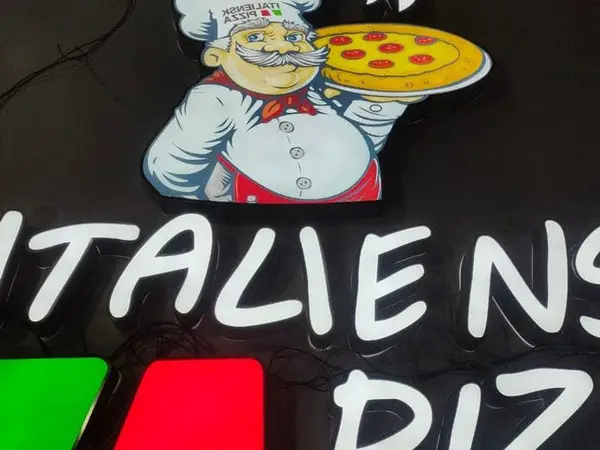
Real photo from our production floor — every sign we ship is made here.
From $24/letter · MOQ 1 piece · Flexible lead time · CE & UL certified · ships to 20+ countries
Custom sizes, colors, and finishes. Get a factory price in 24 hours.
Get a Free Quote Copy EmailWhatsApp +86 13865703472 · business@aochuangsign.cn
See pricing, specs, and get a free quote for the sign type you need. Built in our factory, shipped worldwide.