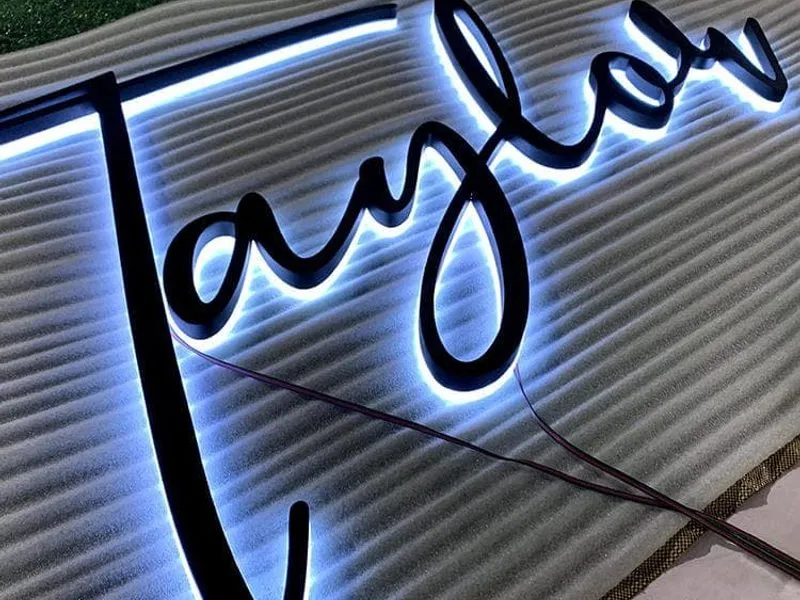
I’ve burned my hands on hot acrylic more times than I can count. 16 years on the factory floor, 13 running Aochuang Sign in Lu’an, Anhui. I’ve watched importers cry over container loads of channel letters that failed in six months. If you’re reading this, you’re probably done with glossy websites and salespeople who’ve never bent a return. You want a factory that tells you what they can’t do, not just what they can. Let’s talk.
Every supplier says they have ISO 9001. Most have a certificate on the wall. Ask yourself when the last audit actually happened. We re-certify every year because buyers check. But certifications don’t stop a hungover welder from leaving pinholes on a rainy Tuesday. Verified quality means processes, not promises. I’ll walk you through what that looks like on our floor, screw-ups included. Because if you’re spending $5,000 on a shipment of front-lit channel letters, you deserve to know if they’ll still be lit in year three.
Here’s the ugly truth: 90% of “inspections” are just a guy with a camera who doesn’t know IP65 from a hole in the ground. You get photos of shiny letters. Six months later, water creeps in and LEDs start dying. Real verification checks seam welds under magnification, tests silicone adhesion with a pick, and runs every completed sign through an 8-hour aging test. We do that. Most don’t.
Look, I’ve seen a sign shop in Texas lose a $12,000 contract because the “stainless steel” letters rusted after one winter. The Chinese supplier had used 201-grade steel with a chrome flash. It looked great for 90 days. When we fab stainless steel letters, it’s 304 or 316, no exceptions. 304 lasts 10+ years outdoors. That’s 18% chromium, 8% nickel, density 7.93g/cm³. If your quote doesn’t show the grade, run.
Acrylic is another time bomb. Mitsubishi or Degussa UV-resistant material holds 90-92% light transmittance and won’t yellow for 5-8 years. Domestic stuff? 1-2 years before it looks like a smoker’s teeth. For faces over 2.5 meters, you need 5mm thickness minimum, otherwise they bow like a potato chip. I’ve seen shops order 2mm to save $3 a letter. The sun warped them in July. Nobody saves money buying twice.
I’ve seen this go wrong: a casino chain ordered 200 back-lit halo letters. Supplier used no-name SMD 2835 modules, claimed 5-year life. 14 months later, they were at 60% brightness, patchy as hell. That’s a removal cost higher than the sign itself. We use Samsung, Osram, or Lan Jing. Real L70 ≥50,000 hours. Cheap LEDs? 12-18 months before they start dying. You can spot cheap LEDs by the spacing—if they shove one module every 15cm, the letter will have dark spots. We space according to depth and color temp. For a 6-inch deep channel letter with 6500K cool white, you’re looking at a module every 8-10cm. That’s how you get even face illumination without hotspots.
Color temperature matters more than you think. 3000-3500K warm white? Perfect for hospitality. 4000-5000K neutral? Corporate lobbies. 6000-6500K cool? That’s highway signage, crisp and aggressive. Don’t let a sales rep pick this for you. You know your client’s brand. We’ll build whatever you spec, but we won’t guess.
Look, a front-lit channel letter is the workhorse. Our factory price runs $20-80 per letter depending on size, finish, and acrylic spec. Same letter installed on a U.S. storefront? $200-700. The math isn’t complicated. But if your project needs that premium architectural glow, back-lit halo letters are the move—$35-120 from us. The secret is the standoff. We use solid aluminum barrel standoffs with threaded inserts, not the plastic crap that cracks in six months. The face gets mounted 30-40mm off the wall, and the LEDs wash the wall with light. Sexy as hell. Just don’t install them over brick with a raked joint; the light scatters weird and your client will blame you.
Rimless letters look clean and modern. No trim cap, just a polished acrylic edge. They’re a pain to seal properly. We pressure-test every one under a water spray for 10 minutes before it goes in the crate. I’ve rejected 3% of rimless orders at QC. That’s the cost of doing it right.
CE marking cost us 20,000-50,000 RMB. RoHS included. ISO 9001 yearly audit. That stuff means your shipment clears customs in Europe. UL 48 is a different animal—$4,000 to $15,000 and quarterly audits. We don’t carry UL by default because 70% of our customers don’t need it. But if your U.S. project demands it, we’ll go through the full process at cost. Takes 4-9 months. I’m not going to lie and say we’re UL certified. Most Chinese factories claiming UL on a standard channel letter are lying. Ask for the UL file number and look it up while you’re on the phone. You’ll hear silence.
We do guarantee IP65 on every outdoor sign. Dust-tight, water jets from any direction. That means seams are fully welded and sealed with neutral silicone that won’t degrade in UV. Neutral cure, not the acid stuff that attacks metal. For coastal jobs, we step up to IP66 and 316 stainless with 2-3% molybdenum. Costs 20-30% more, but the salt air won’t pit it.
Here’s what nobody tells you: the factory price of a channel letter is 50-65% below what a U.S. sign supply house charges. A 24-inch back-lit letter in 304 stainless with Samsung LEDs leaves our dock around $90. That letter installed in Chicago hits $400-1,000. Shipping and 30% Section 301 tariff eat into the margin, but you’re still way ahead. When you quote a $20,000 storefront package, we can deliver the goods for $8,000. You keep the rest for project management, permits, install labor. That’s the business model.
I won’t give you a price over email without seeing artwork. Fonts with thin strokes and tight inside corners need more labor. Serifs are a welding nightmare. Send me your vector file and I’ll tell you within 24 hours what it really costs—and if something won’t hold up, I’ll say so. I’ve talked more clients out of a design than into one.
10 steps, no magic. Design confirmation in one day. Laser cuts with ±0.1mm tolerance. TIG welding, not spot welding, so seams stay smooth. We grind and polish by hand—a 52-year-old with a die grinder can feel a wave in the metal better than any robot. Acrylic faces get CNC routed. LEDs are assembled on jigs, not eyeballed. Silicone sealed, then every sign sits in a burn-in room for 8-12 hours. Next morning, QC checks 100% of units. One drip of water inside and the whole sign gets reworked. Packaging is foam, carton, then plywood crate. about 5-15 days from approval to pallet.
I’ve seen importers try to skip the aging test to shave 2 days off lead time. Bad idea. LEDs either fail right away or last years. That 8-hour burn catches the early infant mortality. We used to do 4 hours; one batch of 50 letters had a driver overheat at hour 6. Now it’s 8 minimum. Lost one shipment early on, learned forever.
Express: 7-10 days, $30-100 for a small box. Air freight: about 10 days, $4-12/kg. Sea freight LCL: about 65 days, $80-200 per cubic meter. A full container from Shanghai to Los Angeles runs $1,200-3,000 depending on fuel surcharges. You’ll pay destination charges and a customs bond. Figure 30% tariff on top of your product value. Use a freight forwarder who knows signage; classification matters. We declare accurately, no undervaluing. I don’t want your shipment seized.
MOQ of 1 piece means exactly that. Need a single 48-inch letter for a replacement? We’ll build it. It won’t be cheap per unit because setup time is the same whether you order one or fifty. But we won’t pad a fake minimum and make you buy 10 when you need 1. That’s factory arrogance talking. I run a shop, not a franchise.
I’ve seen this go wrong: spec’ing a 1.0mm aluminum face for a 3-meter-wide sign because it saved $12. The face oil-canned in the sun, looked like a wavy mirror. Use 1.6mm minimum over 1.2 meters. Second: choosing domestic acrylic with UV-inhibitor coating instead of bulk-integrated UV protection. The coating scratches, moisture gets under it, delamination in 18 months. Spend the extra $4 per letter. Your reputation is worth more than a lunch tab.
I’ve built signs worldwide. Some lessons you only learn by doing. Like, don’t ship aluminum letters with steel screws touching them in a damp container—galvanic corrosion turns the screw holes into chalk. We use nylon washers and stainless hardware every time. Like, put a small weephole at the bottom of every outdoor letter, even IP65, because condensation is a thing. Not a single customer asked for that; I do it because I don’t want angry calls in year two.
When you’re ready to source LED channel letters from a China factory that treats your money like it’s our own, you know where to find us. Three thousand square meters, 50 workers who’ve been with me a decade, and a phone that I answer myself. We’ll build you letters that light up, not light up your problems.
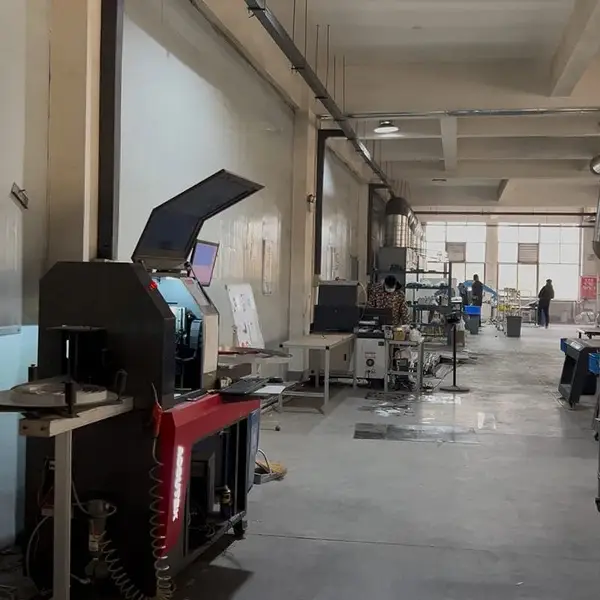
Real photo from our production floor — every sign we ship is made here.
Products mentioned or relevant to this topic — factory-direct, custom built.
From $24/letter · MOQ 1 piece · Flexible lead time · CE & UL certified · ships to 20+ countries
Custom sizes, colors, and finishes. Get a factory price in 24 hours.
Get a Free Quote Copy EmailWhatsApp +86 13865703472 · business@aochuangsign.cn
See pricing, specs, and get a free quote for the sign type you need. Built in our factory, shipped worldwide.