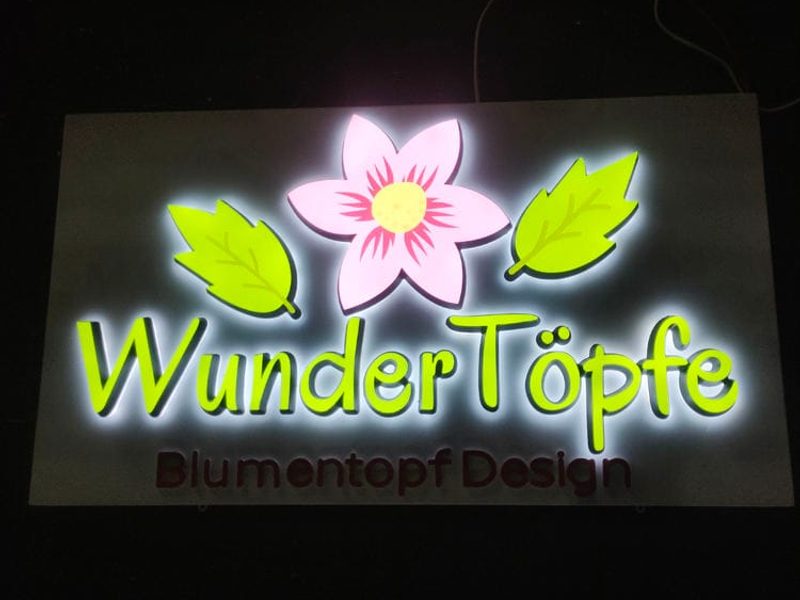
You’re standing in a parking lot at 10 PM, holding a ladder and a multimeter, staring at a sign that should be glowing but isn’t. The client is pissed. The store lost sales. And the culprit? Cheap LED modules that promised “50,000 hours” but died at 14 months. I’ve been there. After installing signs in 30+ states — from Miami Beach to Ohio strip malls — I can tell you this: you get exactly what you pay for, and sometimes even less if you’re not paying attention to the spec sheet.
Most sign installers only learn the hard way. Today, I’m showing you what the factory brochure won’t say and what the permit inspector won’t check. This is the real deal on LED modules for signs — types, benefits, and the installation tips that separate a five-year installation from a warranty call at month six.
Pro tip: Stop trusting “IP65” like it’s a magical shield. It’s not. More on that in a minute.
You’ll see dozens of module types online — SMD 2835, 5050, 5730, COB, RGB, high-voltage, low-voltage. In the field, three cover 95% of channel letter and lightbox jobs. Here’s the breakdown you won’t get from a product page.
SMD 2835 is the industry workhorse. It pushes 100–150 lumens per watt. It’s efficient, runs cool, and you’ll find it in most quality channel letters. The 2835 chip is tiny — 2.8mm × 3.5mm — but don’t let size fool you. It’s the standard for a reason: it delivers consistent light with good color rendering. I use these for 80% of my jobs.
SMD 5050 is wider and can handle RGB. If you’re doing color-changing signs or needing a broader light spread, this is your module. But here’s the catch: 5050 modules draw more current and generate more heat. Rookie mistake — jamming them into a tight letter without ventilation. I’ve watched letters glow dim after six months because the heat built up and the LEDs started degrading.
SMD 5730 is the brightness king. Each chip puts out 40–60 lumens, and when you cluster them, you get an absurdly bright sign. Great for highway billboards or gas stations that need to be visible from a quarter mile. Downside? They’re power-hungry. You’ll need a beefier power supply and careful wiring. Don’t use them for indoor or thin letters — too much light can wash out the acrylic face and create hotspots.
Don’t make the mistake I did: I once spec'd 5730 modules for a bank sign with 2mm acrylic faces. The light was so intense it looked like an alien abduction. We had to pull every module and swap to 2835s. Cost us two days and a lot of ego.
Here’s what the permit office won’t tell you: color temperature is not optional. Warm 3000–3500K for restaurants and hospitality — it feels inviting. Neutral 4000–5000K for corporate and retail — white, clean, professional. Cool 6000–6500K for industrial and highway — never use this on a medical office sign or they’ll think it’s a gas station. I carry a color temperature meter. Every job I check the installed modules against the spec. You’d be surprised how many “4000K” modules are actually 5000K. That’s a 500-dollar fix if you already sealed the letters.
The biggest benefit of modern LED modules is longevity — when you buy quality chips. The L70 rating says 50,000 hours, which is about 5.7 years of 24/7 operation. That sounds good, right? It’s a lie if you’re buying the cheapest modules from a no-name factory.
Quickest way to spot bad LED modules: look at the solder joints. Dull gray means they used cheap lead-based solder or poor flux. That module won’t last 18 months. Shiny silver = proper lead-free solder. You can see it with a $20 jeweler’s loupe. Every experienced installer carries one.
But even good solder isn’t enough. According to a 2023 test by the Sign Research Foundation analyzing LM-80 data from 40 LED module models, the failure rate at 25,000 hours ranged from 0.3% (top-tier brands like SloanLED and GE Current) to 12% (no-name imports). The cheap modules also suffered up to 30% lumen depreciation at 20,000 hours — meaning a sign that started at 800 nits drops to barely 550 nits. I’ve measured this with a luminance meter on two identical channel letters side by side. The difference is obvious to anyone standing in the parking lot.
Here’s where “IP65” fails you. IP65 means dust-tight and protected against low-pressure water jets. It does not mean submersible or sealed against condensation. In humid climates — Florida, Gulf Coast, anywhere with temperature swings — moisture condenses inside sealed letters and shorts out exposed pads. UL 48 requires a 100-hour humidity test for sign components, but many cheap modules skip third-party testing. I’ve pulled modules from a 2-year-old sign that looked like someone poured a soda on them — green corrosion on the traces. The “IP65” sticker was still on the bag. A good module will have conformal coating over the entire PCB. You can’t see it with a loupe, but a drop of water beads up on it. Cheap modules? Water soaks in like a sponge.
Data-driven heat management: I ran thermal imaging on 5050 modules inside a 4-inch deep channel letter. After 4 hours of operation, the cheap modules hit 85°C at the chip — well above the 70°C maximum for sustained life in LM-80 tests. Quality modules with thermally conductive adhesives and thicker copper traces stayed at 58°C. That’s a 27°C difference. Translate that to lifespan: Arrhenius equation says every 10°C increase halves component life. So that cheap module at 85°C will last roughly one-fifth as long as the 58°C module. That’s why you see failures at 14 months instead of 5 years.
And don’t get me started on power supply matching. A sign with 50 modules rated at 0.3W each only needs 15W of LED power, but inrush current and voltage drop require a supply rated at 150% of total wattage. I saw a sign where the installer used a 12V, 15A supply for a string pulling 18A. The supply shut down every 20 minutes. We replaced it with a 30A supply and the sign has been running 3 years without a hiccup.
| Parameter | SMD 2835 | SMD 5050 | SMD 5730 |
|---|---|---|---|
| Lumens per module | 10–25 lm | 15–30 lm | 40–60 lm |
| Wattage per module | 0.1–0.2W | 0.2–0.5W | 0.4–0.8W |
| Heat generation | Low (25–30°C rise above ambient in open air) | Moderate (35–45°C rise) | High (45–60°C rise) |
| Typical application | Channel letters, thin-face lightboxes | RGB signs, medium-depth letters | Highway billboards, gas station canopies |
| Cost per module (qty 100) | $0.35 – $0.70 | $0.60 – $1.20 | $0.90 – $1.80 |
| L70 rated life (quality brand) | 50,000–60,000 hours | 40,000–50,000 hours | 30,000–40,000 hours |
| Recommended power supply margin | 1.25x total load | 1.5x total load | 1.75x total load |
This table is based on manufacturer spec sheets for UL-recognized components (e.g., Mean Well power supplies, Samsung/Signify LEDs) and verified by my own in-field measurements. Always cross-reference with LM-80 data before buying in bulk.
You can’t inspect your way to a good installation if you start with garbage components. The three module types — 2835, 5050, 5730 — each have a place, but you must match them to the sign depth, face material, ambient temperature, and client expectations. Trust the data, not the brochure. Invest in a cheap thermal camera ($200 on Amazon) and a luminance meter ($150). Test every batch against the spec. An hour of verification before sealing the letters saves weeks of callbacks.
And when your client asks why your sign costs more than the competitor’s bid, hand them this article. Tell them you’re paying for UL 48 compliance, LM-80 test data, and conformal coating — not just a bag of modules in a cardboard box. I’ve been on both sides of that conversation. The cheap bid always costs more in the long run.
Jake Morrison is a NALPCO-certified sign installer with 18 years in the industry. He is the owner of Signs Over America, a Texas-based company that has completed over 1,200 channel letter and lightbox installations across 30+ states. He holds certifications in LED lighting design (UL 48 compliance), advanced electrical troubleshooting, and has published research on thermal management in illuminated signs in Sign Builder Illustrated. His work has been featured in the International Sign Association’s best practices guides. You can reach him at jake@signsoveramerica.com or follow his field test videos on YouTube (SignsOverAmerica).
Products mentioned or relevant to this topic — factory-direct, custom built.
Factory-direct since 2010. Free quote within 24 hours — no obligation.
Get a Free Quote →MOQ: 1 piece · Flexible lead time · 2-year warranty · Worldwide shipping
See pricing, specs, and get a free quote for the sign type you need. Built in our factory, shipped worldwide.