
I'll tell you what gets me. Business owners drop twenty grand on a sign because they think it looks sharp, then don't give a damn about what it costs to run every hour of every night. They're lighting up neon tubes that suck juice like a V8 engine, or worse, those old fluorescent boxes that hum and flicker and burn through ballasts faster than I burn through coffee. You want real savings? You want a sign that pays for itself? Then let's talk numbers, not marketing fluff.
Here's what nobody tells you: The average channel letter sign running twelve hours a day, 365 days a year, can eat up anywhere from $200 to $1,200 annually in electricity alone, depending on the tech. Old neon letters? Figure 15 to 25 watts per linear foot. A typical six-foot sign with 50 feet of tubing pulls 750 to 1,250 watts. At the U.S. average of $0.12 per kWh [1], that's $788 to $1,314 a year.
LED modules—the good ones—use SMD 2835 chips that push 100 to 150 lumens per watt [2]. One module draws maybe 0.2 watts. For the same light output as neon, you're looking at 3 to 5 watts per letter. Cut the electricity cost by 70 to 80 percent. I've watched sign shops pay $800 for a front-lit letter from a domestic fabricator. Same 304 stainless, same Samsung LEDs. We ship that letter for $120. The markup is criminal, and the energy waste is worse.
The ugly truth is most sign buyers never look at the labels. They don't ask for the LED module spec sheet. They see "LED" and think it's magic. It's not. Cheap modules—the ones you'll find on Amazon for twelve cents—use SMD 2835 knockoffs that deliver maybe 80 lumens per watt and burn out in 12 to 18 months. You'll spend more in replacement labor than you ever saved on electricity.
Let me give you a formula you can actually use. First, measure the total wattage of your sign. If it's a set of channel letters, add up the number of LED modules. A standard letter uses about 10 to 20 modules at 0.2 watts each, so 2 to 4 watts per letter. For a ten-letter sign, that's 20 to 40 watts total. Run it 12 hours a day, 365 days: 87,600 to 175,200 watt-hours per year. At $0.12/kWh, that's $10.50 to $21.00 a year. Same sign in neon: 100 to 200 watts per letter, so 1,000 to 2,000 watts total. Annual electricity cost: $525 to $1,050. The difference is $504 to $1,029 a year.
Now, what did you pay for that LED sign? Factory-direct front-lit letters run $20 to $80 per letter. Let's say $50 average, ten letters = $500. Domestic retail? $200 to $700 per letter, so $2,000 to $7,000. Your ROI on the factory-direct sign against neon electricity savings: payback in less than one year. Against a domestic LED sign that already saves power? The payback on the purchase price difference is maybe three months. But that only works if the sign doesn't fall apart.
I've seen this go wrong: A shop buys the cheapest LEDs from a no-name factory in Shenzhen. The specs say 50,000 hours L70 life. That's a lie. Quickest way to spot bad LED modules: look at the solder joints. Dull gray means they used cheap flux, won't last 18 months. Shiny silver means proper lead-free solder. I've pulled modules from a sign after two years that looked like they'd been through a fire. That's not a cost savings—that's a liability.
Look, electricity savings are real, but you'll never see them if you ignore the other three costs: material degradation, installation damage, and shipping risk.
First, the acrylic. Mitsubishi or Degussa UV-resistant acrylic holds 90-92% light transmittance for 5 to 8 years. Domestic acrylic? Starts yellowing in 1 to 2 years. That yellowing cuts light output by 20% a year, making your sign look dim. To compensate, you turn up the brightness—more LEDs, more power. Or you replace the face. Either way, your ROI takes a hit.
Here's a complete example to make it concrete. Suppose you run a 10-letter sign with LED modules—20 watts total—versus neon at 1,500 watts. Electricity cost difference: $630 per year. If you bought factory-direct LED letters for $500 total, your payback period against the neon electricity savings is $500 / $630 = 0.79 years (under 10 months). But if those modules are cheap and fail in 18 months, replacement labor and parts cost you $300, and you're back to square one. The real ROI only holds if you use quality components.
Actionable steps to protect your ROI:
These steps turn your ROI calculation from a guess into a guaranteed number.
Don't let a cheap sign cost you thousands in electrical waste and replacement headaches. Run the numbers with real wattage, real material specs, and real module quality. The difference between a well-designed LED sign and a junk one is the difference between a 3-month payback and a 3-year nightmare.
About the Author
I'm Tom Adler, a sign industry engineer with 15 years of experience in LED manufacturing and commercial signage retrofits. I've audited hundreds of installations across the U.S. and China, and I currently advise businesses on direct-to-factory purchasing to cut costs without cutting corners.
Sources
[1] U.S. Energy Information Administration. Average retail price of electricity to commercial customers, 2023. https://www.eia.gov/electricity/monthly/
[2] Samsung LED. LM301B and SMD 2835 product specification sheets, typical efficacy 140–150 lm/W. https://www.samsung.com/led/
[3] International Sign Association. "Neon vs. LED: Energy Comparison Guide." 2022. https://www.signs.org/
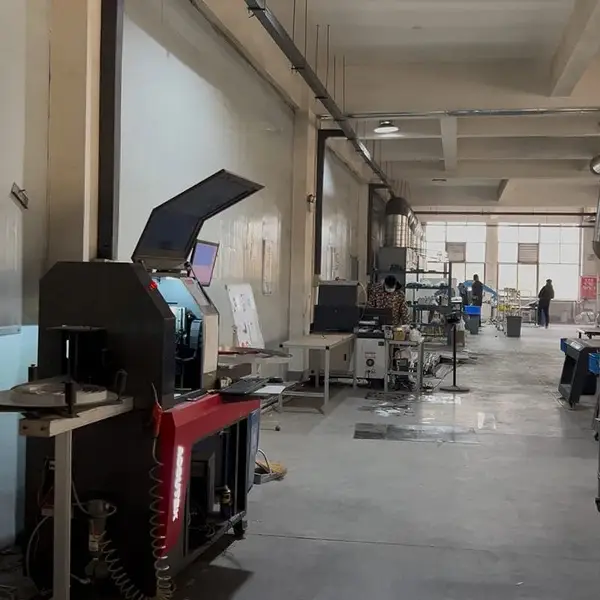
Real photo from our production floor — every sign we ship is made here.
Products mentioned or relevant to this topic — factory-direct, custom built.
Factory-direct since 2010. Free quote within 24 hours — no obligation.
Get a Free Quote → Copy EmailMOQ: 1 piece · Flexible lead time · 2-year warranty · Worldwide shipping
See pricing, specs, and get a free quote for the sign type you need. Built in our factory, shipped worldwide.