I've watched sign shops pay $800 for a front-lit letter. Same 304 stainless, same Samsung LEDs. We ship that letter for $120.
Let's get this straight: I run a sign factory in Lu'an, Anhui. We've been at it since 2010, we ship worldwide, and we've seen every rookie mistake you can make. Buying direct is a skill, not a shortcut. This guide is the skill.
Here's the simple math: our factory price for front-lit channel letters is $20-80 per letter. The US retail installed price? $200-700 per letter. Do the arithmetic and you'll understand why every smart sign shop in America is Googling "LED sign factory China."
But you don't get that margin by firing off a vague email and hoping for the best. You get it by knowing your materials, your certifications, and your shipping math.
I've seen this go wrong: a contractor in Ohio ordered 50 channel letters "like the picture" and got domestic acrylic that yellowed in eleven months. He saved $3 per letter and lost a client.
Most factories won't tell you this: the acrylic makes or breaks your sign. Mitsubishi or Degussa acrylic holds its clarity for 5-8 years. Domestic Chinese acrylic starts yellowing in 1-2 years. We stock both. If you don't specify, you might get domestic.
That's the difference between a five-year sign and a fifteen-year sign. So when you quote your next storefront job, demand UV-resistant acrylic in writing. If you're ordering front-lit channel letters, ask us exactly which acrylic we're using. We'll tell you straight.
And don't forget the color temperature. 3000-3500K for restaurants. 4000-5000K for retail or corporate. 6000-6500K for industrial or highway work. I've seen more signs ruined by hospital-white 6500K in a salon than by any wiring mistake.
Stainless 304 has 18% chromium and 8% nickel. It gives you 10+ years outdoors, and it's a solid default. Stainless 316 adds molybdenum and gets you 15+ years in coastal or industrial areas. It costs 20-30% more. For a strip mall in Kansas, that's wasted money. For Miami Beach, pay for 316.
Aluminum is one-third the weight of steel and naturally rust-proof. That's why we push aluminum letters for large installs where weight and corrosion matter. Anodized or powder-coated, it'll do 8-12 years outdoors.
Here's what nobody tells you about LED modules: the chip is king. SMD 2835 gives 100-150 lumens per watt and is the industry workhorse. SMD 5730 is brighter — good for deep channel letters that need punch. Quality Samsung or Osram modules last 5+ years. Cheap modules die in 12-18 months.
We use the good stuff. That's why we offer a 2-year LED warranty and actually honor it. Our power supply warranty is one year. That's on the quote, not in fine print.
For the US market, NEC Article 600 is the electrical standard for signs. If you're selling to commercial landlords, you'll likely need UL 48 or ETL. UL 48 certification costs a factory $4,000-15,000 and takes 4-9 months of audits. That's why many Chinese factories claim it but don't have it.
Let me be plain with you: we don't have UL 48. We have CE, RoHS, and ISO 9001, which cover most international destinations. If your end client demands UL, then you need a UL-certified factory, and I'll gladly tell you we're not your guy. If a Chinese factory promises UL approval in a week, they're lying to you.
The ugly truth is that many factories display a CE certificate that's a photocopied relic from 2015. Ask to see the certificate with today's date on the test report. We'll show you ours without stuttering.
And one more thing: IP65 means dust-tight and water jets. It's good for most outdoor signs. IP66 handles power jets — coastal and industrial. IP68 means submersible. You don't need IP68 for a dry storefront, and IP65 won't make your sign hurricane-proof. It just won't.
Here are our actual factory price ranges per letter: front-lit $20-80, back-lit halo $35-120, stainless steel non-lit $15-40, 3D fabricated $40-120, aluminum $10-25. Light boxes run $80-250 per square meter. Neon flex signs run $30-200 per sign.
Compare that to what your local sign shop charges per letter. Go ahead. I'll wait.
This is why we built a full lineup around these numbers — back-lit halo letters, rimless channel letters, dual-lit channel letters. Same materials, same LEDs, half the price. That's the whole game.
Express couriers take 7-10 days and cost $30-100 for small samples. Air freight runs $4-12 per kilogram and takes about 10 days. Sea freight takes about 65 days and runs $80-200 per cubic meter for LCL. A full container is $1,200-3,000.
Here's the part that trips people up: sea freight is cheap but brutal. 70 days in a container with shifting cargo can dent a sign that was perfect when it left our floor. That's why we pack with foam layers, a carton, and a plywood crate. It's non-negotiable for any ocean order.
And don't forget US Section 301 tariffs. They add roughly 30% on imported signs. That's not a rumor, it's a line item. If you're pricing your bid, include it. The importer of record pays it. No way around it.
Our MOQ is one piece. That sounds convenient, and it is for testing. But ordering a single letter from China only makes sense if you're prototyping or doing a tiny install. The shipping cost makes a 1-letter order silly. A typical business order is 20-100 letters.
Lead time is about 5-15 days for production. That's not shipping time. Add 3 days for door-to-door express, or about 65 days for sea. Anyone who promises overnight delivery from a factory is drop-shipping from a warehouse, not making your sign.
Order samples before you commit to 100 letters. Any serious factory will sell you a sample. If they get offended, walk. We make samples for any project over $500. You pay shipping, that's the deal.
Here's our real production timeline: design confirmation takes 1 day. Laser cutting to ±0.1mm takes 1-2 days. Bending and TIG welding take 1-2 days. Grinding and polishing take 1-2 days. Acrylic face CNC takes 1 day. LED assembly takes 1-2 days. Sealing with neutral silicone takes 1 day. Then we run an 8-12 hour aging test and a 100% QC inspection. Then export packaging.
That's the rhythm. That's why we quote about 5-15 days, not 3 days.
I'm not saying every factory operates like that. I'm saying a factory that can't break down its timeline is working on vibes, not systems.
First: using tiny fonts on a sign meant to be read from 50 meters. That's not a manufacturing problem, that's a design problem. We'll make your lettering at 10cm and warn you that it'll look like a stamp from the street.
I've seen this go wrong: a franchise buyer skipped the aging test to save $50 per batch. Half the LEDs died in the first month. The factory refused to redo it. He lost the entire account over a coffee-and-donuts saving.
Email with your artwork or a sketch, complete dimensions, letter height, depth, colors, font style, mounting method, and destination city. Tell us if the wall is aluminum composite, brick, or glass. Tell us the electrical voltage in your country. That's how you get an accurate quote in one round instead of five.
We'll respond with a detailed quote, not a vague "please contact us." If your file is incomplete, we'll tell you what's missing. That's the efficient way.
And don't ask for a quote on "some letters." I cannot price a sign from "some letters." Send me numbers.
Standard terms are 50% deposit, 50% before shipment. We also accept payment plans for larger orders. But never pay 100% upfront to any factory you haven't visited. That's not paranoia, that's survival.
Look, I know there are horror stories about Chinese factories taking money and disappearing. They exist. I've seen them too. The fix is simple: ask for a video call, ask for photos of your product during production, ask for the dimensions before shipping. A real factory will do all three. If they won't, walk away.
Before approving a production sample, check four things: LED brightness against your reference color, solder joints on the module wires, silicone sealing on every seam, and the thickness of the acrylic face. Common thicknesses are 2mm, 3mm, and 5mm. Anything over 2.5 meters tall should use 5mm+ or the face will sag.
Also check the wiring gauge. A sign shop owner once told me he'd never order from a Chinese factory again because "their wire melted." Then he admitted his requested the cheapest transformer. You get what you pay for.
We'll send you a sample if you ask. We'll also send a production video of your specific batch. That's our standard, not a favor.
We're a 3,000 square meter workshop with 50+ skilled workers. We make stainless steel letters, acrylic light boxes, neon flex signs, and food menu signs. We export worldwide and we're proud of that.
Now the hard part. We cannot get you UL 48 by next month. We can't bend 3mm acrylic into a seamless 2-meter letter — impossible for any factory. We can't make a $20 letter with 316 stainless and Samsung LEDs because the material alone costs more than that.
If a factory promises all three, they're lying. We prefer honest margins.
We're also not the right factory for a homeowner who wants one small replacement sign shipped by express. You'll pay more in shipping than in product. Our strength is mid-volume and large-volume production for sign shops, contractors, and importers who need consistency over years, not a one-off favor.
That's who we serve. That's what we're good at.
Send us your drawings with dimensions, materials, quantity, and destination. Ask for a sample. Ask for a production schedule. Don't ask for a quote without specifics.
Buying direct from an LED sign factory in China is the smartest move most sign shop owners never make. It's not risky if you manage it like a professional. And now you know how.
If you're ready to skip the middleman and save 50-65% on your next project, that's exactly what we do every day.

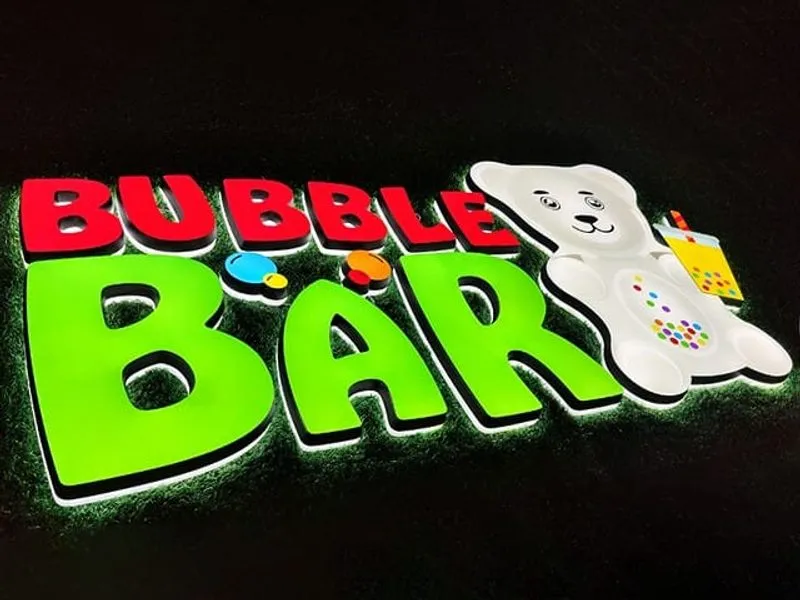
Real photo from our production floor — every sign we ship is made here.
From $24/letter · MOQ 1 piece · Flexible lead time · CE & UL certified · ships to 20+ countries
Custom sizes, colors, and finishes. Get a factory price in 24 hours.
Get a Free Quote Copy EmailWhatsApp +86 13865703472 · business@aochuangsign.cn
See pricing, specs, and get a free quote for the sign type you need. Built in our factory, shipped worldwide.