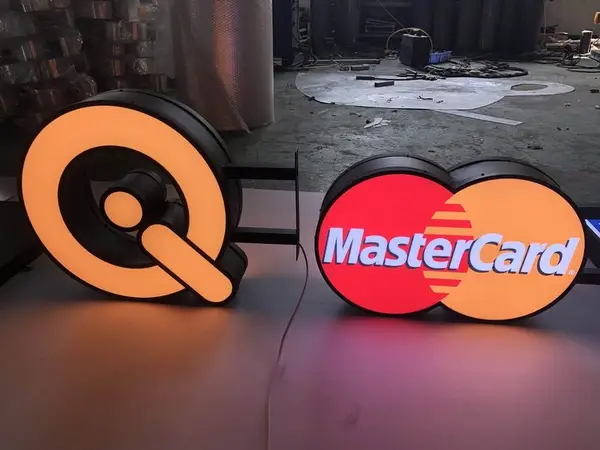
Nobody grows up dreaming about sourcing signs from a factory 7,000 miles away. But here you are, comparing quotes. Trying to figure out which LED sign manufacturer won't leave you holding a crate of flickering garbage.
I've worked factory floors since 2010. Burned my hands on hot acrylic. Argued with suppliers about LED quality until they changed their specs. I'm not here to sell you a dream. I'm here to tell you what actually matters when you buy an LED sign from a factory like ours in Lu'an, Anhui, China.
This isn't a Wikipedia article. You're getting what I'd tell you if you called me at 11pm after a long day on my feet.
Factory-direct means exactly what it sounds like. No middleman. No trading company slicing your margin.
You're buying from the plant that cuts, bends, welds, and wires the sign. No trading company adding 20–40% on top. ODM means the factory already has a design and you tweak it. OEM means you bring drawings and they build to spec. Most sign shops don't need full OEM. They need a factory that doesn't flinch at one-off custom work.
Look, you've probably been quoted $800 for a front-lit letter from a domestic fabricator. Same 304 stainless, same Samsung LEDs. We ship that letter for $120. That's the whole factory-direct pitch in one sentence.
If you're ordering front-lit channel letters for a storefront, factory prices run $20-80 per letter. Domestic retail installed often runs $200-700 per letter. That's real margin. You just have to survive importing.
Aochuang Sign has been building signs since 2010. We run a 3,000m² floor with 50+ skilled workers. Export worldwide. MOQ is one piece. That's not a typo. One custom job gets the same production line attention as a 200-letter order.
Here's what nobody tells you: a $20 LED letter and a $60 LED letter can look identical on day one.
Two years later, the cheap one has dead sections. So let's talk guts. SMD 2835 diodes push 100-150 lumens per watt. That's the industry standard for most signs. Need RGB? SMD 5050 is your workhorse. Need maximum brightness on a highway pylon? Spec SMD 5730 at 40-60 lumens per chip. But the diode won't save you if the solder joints are garbage.
The quickest way to spot bad LED modules: look at the solder joints. Dull gray means that thing won't last 18 months. Shiny silver means proper lead-free solder. I've torn apart cheap modules where the diode fell off the board in my hand. Not kidding.
When you're speccing acrylic LED letters, the diode is half the story. Driver IC and thermal path make up the other half. Quality modules from Samsung, Osram, or Blueview can run 5+ years. Cheap unbranded ones? 12-18 months before they start dropping dead. Heat kills LEDs faster than a bad driver. Our aluminum cans run 1.0-1.6mm thick, naturally rust-proof, and give the sign an 8-12 year outdoor life. If the can isn't vented or the driver's undersized, you've built a solar oven.
Color temperature isn't a vibe. It's physics. 3000–3500K warm white belongs in hospitality. 4000–5000K neutral covers corporate and retail. 6000–6500K cool is for gas stations and highway signs. Pick the wrong one and your client will call it "blue" every day for five years. Don't.
Ugly truth: half the certificates you see from Chinese factories are photoshopped or expired.
CE marking costs 20,000-50,000 RMB and takes 2-8 weeks. Most factories claim they have it. Ask to see the certificate with today's date. Watch them sweat. UL 48 is a whole different animal: $4,000-15,000, 4-9 months of testing, and quarterly audits after that. If a factory claims UL certification on a $5,000 order, they're lying.
For US electrical work, you need NEC Article 600 compliance. ETL is a legitimate UL alternative that costs 10-30% less and can move faster. We hold CE, RoHS, and ISO 9001. That isn't marketing fluff. It means our process has documentation and traceability.
IP65 sounds impressive. But that just means dust-tight and protected from water jets from any direction. It won't survive a Florida hurricane. For coastal salt spray, you want IP66 or IP68. And don't spec 304 stainless on that job. Pay the 20–30% premium for 316 stainless steel letters. Otherwise you're replacing them in 3 years.
And if your job touches the ADA, you need tactile letters. Non-glare faces, Grade 2 Braille, mounting between 48 and 60 inches to the baseline. No exception.
I've seen this go wrong: a shop saved $400 by speccing domestic acrylic faces. Two years later, they're yellowed and the customer is threatening a chargeback.
Most factories won't validate your design. They just cut what you send. Then you find out the stroke width doesn't fit the LED module. We do design confirmation in one day, then laser cutting with ±0.1mm accuracy. If your letter is over 2.5 meters tall, we'll tell you to use 5mm acrylic instead of 3mm. Not to upsell you. Because it'll crack.
Material choice isn't optional. UV-resistant acrylic from Mitsubishi or Degussa holds up 5–8 years before yellowing. Domestic acrylic starts yellowing in 1–2 years. Light transmittance difference is tiny: 90% for 2mm, 92% for 3mm. Your customer won't notice that 2%, but they'll notice a 40% cost bump if you overspec thickness.
Aluminum weighs one-third of steel and lasts 8-12 years outdoors with anodized, powder-coated, or brushed finishes. Naturally rust-proof. Good for pylon sign faces and large letters.
We run an 8-12 hour aging test on every assembled sign before it leaves the floor. If a wire's loose, it fails on our bench, not on your client's storefront.
Lead time doesn't start until you approve the artwork. That's the part most factories leave out.
Aochuang Sign runs a 3,000m² production floor with 50+ skilled workers. Not huge by Chinese standards, but enough to keep MOQ at one piece and lead time at 7–15 days after approval. The process stays disciplined: laser cutting, TIG welding, grinding and polishing, CNC acrylic face, LED assembly, neutral silicone sealing, 8–12 hour aging test, 100% QC inspection, then export packaging.
Look, that 100% QC gate isn't optional. Cheap factories skip it to save a day. You pay for that skipped day in year two.
Shipping is where rookies get burned. Express takes about 5-15 days and costs $30-100 for small packages. Air freight runs about 10 days at $4-12 per kilo. Sea freight takes about 65 days: LCL runs $80-200 per cubic meter, and a full container runs $1,200-3,000. And don't forget the US Section 301 tariff of roughly 30% on sign products.
LCL sea freight means your crate passes through six to eight pairs of hands between our dock and yours. Every touch invites damage. Brochures won't tell you that.
We pack every sign in foam, then carton, then plywood crate. Still, I've seen forklifts turn a crate into a jigsaw puzzle. Forklifts have no conscience. Pick your freight mode with that in mind.
Don't compare a factory price to a local installed price without adding freight, tariff, customs brokerage, import bonds, and on-site UL/ETL field certification fees.
A factory-direct back-lit halo letter runs $35-120. Domestic retail installed runs $400-1,000. That's a 50-65% savings on product before freight. A small express order might add $50 in freight. A 30% tariff adds roughly $15 on a $50 letter. You still land at under $100. The local guy wants $800. Do the math.
Our standard warranty: 2 years on LED, 1 year on power supply. That's realistic. If a factory offers 5 years on LEDs, ask what specific module they're using. Get it in writing. Then ask how they'll handle a warranty claim when your sign is in Ohio and they're in Guangdong. Our warranty only matters because we actually answer emails after the container lands.
Factory-direct isn't a magic money printer. It's a different cost structure. You trade a local middleman's markup for international freight and customs. Run the full landed cost before you decide. Don't compare a $60 factory letter to a $600 installed quote and forget the other $40 in fees.
Do you really have CE and ISO 9001, or is that just a website badge? Yes. Ask for the certificate with today's date. If a factory hesitates, walk.
Can I order just one sign? Yes. Our MOQ is 1 piece. That's not a typo. Setting up costs us more, but we do it because custom sign shops need small runs.
How long until my signs actually arrive? Production takes about 5-15 days after you approve the artwork. Then shipping: express about 5-15 days, air about 10 days, sea about 65 days. If you need it in a week, don't choose sea.
Why is your price half of my local fabricator's quote? You're not paying for their storefront, install crew, or middleman. You're paying freight and tariff instead. Run the total landed cost before you decide.
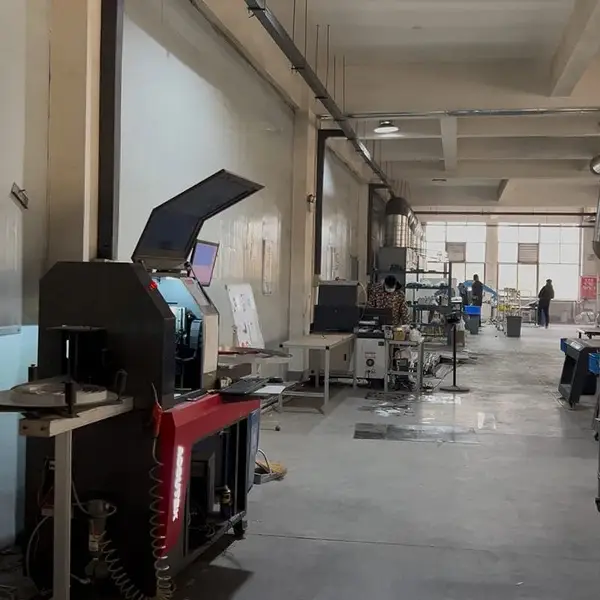
Real photo from our production floor — every sign we ship is made here.
Products mentioned or relevant to this topic — factory-direct, custom built.
From $24/letter · MOQ 1 piece · Flexible lead time · CE & UL certified · ships to 20+ countries
Custom sizes, colors, and finishes. Get a factory price in 24 hours.
Get a Free Quote Copy EmailWhatsApp +86 13865703472 · business@aochuangsign.cn