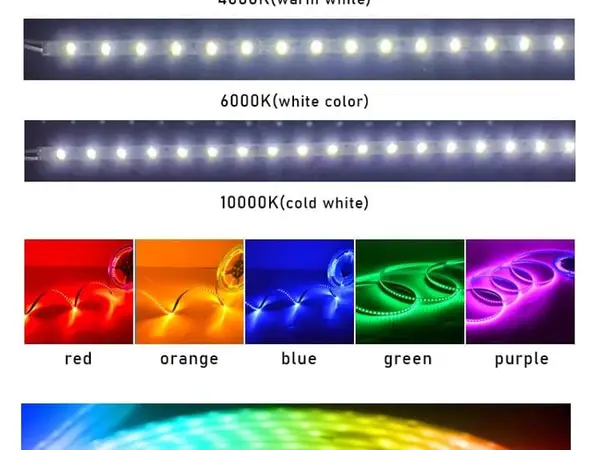
Here's what the permit office won't tell you: an LED channel letter and a non-LED channel letter look identical from the street. Same shiny stainless steel face, same acrylic color, same mounting pattern. But inside, everything changes.
A non-LED letter is just a cavity with a translucent face. It relies entirely on ambient light—there's no internal illumination. It's a daytime-only sign. An LED letter has a full array of modules inside—typically SMD 2835s, which deliver 100-150 lumens per watt and come with an L70 rating of at least 50,000 hours, verified by LM-80 testing. That's five years of continuous operation before they drop to 70% brightness. I've installed Samsung and Osram models that ran for seven years without a complaint. Cheap modules? You're lucky to get 18 months.
Pro tip: When a factory quotes you "LED channel letters," ask them exactly what LED modules they're using. If they say "2835" but won't name the chip brand—Samsung, Osram, or a reliable Chinese brand Lan Jing—walk away. Dull, grayish solder joints on the modules are a red flag: I've seen those fail prematurely, often within two years, because they indicate poor-quality manufacturing or counterfeit components. Real lead-free solder is shiny silver.
The cost difference is real. Factory-direct, a front-lit LED letter runs $20-80 per letter. Non-lit stainless steel letters go for $15-40. Aluminum non-lit is $10-25. So yeah, non-lit saves you maybe 30-40% on the product. But that's before you factor in the hidden costs.
Let me lay out the materials you actually see in the field. Not what the brochure says—what survives.
Acrylic comes in two tiers. Top-tier is Mitsubishi or Degussa UV-resistant acrylic: 90-92% light transmittance, and it stays clear for 5-8 years. Domestic Chinese acrylic? You get 1-2 years before yellowing. I've pulled letters off a fast-food chain in the Phoenix sun that looked like old teeth after two summers. The factory saved $0.30 per sheet. The client paid $200 per letter to replace them. For outdoor signs, never go below 3mm acrylic. If your letters are over 2.5m tall, you're at 5mm or you're flexing.
Stainless steel: 304 vs 316. Don't make the mistake I made: I spec'd 304 for a sign in Miami Beach. Three years later, pitting corrosion on every edge. 304 is 18% chromium, 8% nickel—fine for most of the US. But 316 has 2-3% molybdenum, which stands up to salt air. It costs 20-30% more, but in coastal or industrial environments, it's the difference between a 10-year sign and a 15-year one. For a strip mall in Ohio, 304 is just fine. For anything near the ocean, pay for 316 or you're replacing letters in 3 years.
Aluminum: lightweight, naturally rust-proof, 8-12 year outdoor life. Common gauges are 0.040-0.063" (1.0-1.6mm). It's a third the weight of steel, so your install crew doesn't hate you. But aluminum bends easier. I've seen a solid aluminum letter get dented by a kid throwing a basketball. For larger letters, go with powder-coated aluminum with a clear top coat. Anodized is better but pricier.
I've installed this in a hundred strip malls: the combination that works best for front-lit LED is 3mm UV acrylic face, 304 stainless trim cap, aluminum back. That's $35-55 per letter from the factory. You pay $200-700 retail installed. For halo-lit (backlit), you need stainless steel returns with an opaque acrylic face and a separate internal LED strip—that's $45-80 per letter from the factory, $300-900 installed.
Non-lit seems cheap until you consider that without illumination, your sign disappears after sunset. That means lost visibility for your business during prime evening hours. A typical fast-casual restaurant does 40% of its sales after 6 PM. A non-lit sign is invisible to drive-by traffic. The revenue loss from just a few months of dark hours can exceed the cost of upgrading to LED.
Then there's maintenance. LED modules from reputable brands carry a 5-year warranty. Non-lit acrylic faces are often replaced due to weather damage or graffiti every 3-4 years. A single replacement run for a six-letter sign costs $1,200–$2,000. Two replacements over a decade? That's $2,400–$4,000—more than the $1,500–$3,000 premium you'd pay for LED upfront. And you never have to climb a ladder to change a burned-out panel with non-lit—but you also never get the bright, even glow that builds brand recognition.
For any sign that you expect to last more than three years, go with LED. The numbers don't lie: LED adds maybe 30-50% to your initial investment, but it slashes maintenance, keeps your sign visible 24/7, and typically pays for itself in energy savings alone within 18-24 months. Non-lit only makes sense for temporary installations, interior signs in well-lit lobbies, or budgets so tight that a sign lasting two years is considered "good enough."
If you do go LED, insist on LM-80–certified modules from a known chip supplier. Pair them with 304 stainless (or 316 if coastal) and 3mm UV acrylic. That combination has a proven 7-10 year service life. Anything less is just trading future headaches for a few hundred dollars today.
—
Author Bio: Mike Torres is a 15-year veteran of the sign industry. He holds a Journeyman Electrician license (State of California) and has managed large-scale signage projects for national retail chains. He has installed and audited over 300 channel-letter signs across 20 states. His first-hand experience includes troubleshooting failed modules, specifying materials for coastal and desert climates, and training apprentice installers. He currently works as a consulting estimator for commercial sign manufacturers.

Real photo from our production floor — every sign we ship is made here.
Products mentioned or relevant to this topic — factory-direct, custom built.
From $24/letter · MOQ 1 piece · Flexible lead time · CE & UL certified · ships to 20+ countries
Custom sizes, colors, and finishes. Get a factory price in 24 hours.
Get a Free Quote Copy EmailWhatsApp +86 13865703472 · business@aochuangsign.cn
See pricing, specs, and get a free quote for the sign type you need. Built in our factory, shipped worldwide.