Menu boards are where sign shops lose their shirts. You quote it wrong, spec the wrong acrylic, or trust a supplier's "waterproof" claim, and six months later you're on a ladder replacing a warped face while the restaurant manager watches.
I've been building signs in Lu'an, Anhui since 2010. Our factory's 3,000 square meters and 50-plus workers crank out thousands of menu boards a year, most of them for clients who got burned by a domestic reseller first. Here's what I'd tell you over a beer after shift.
Static menu boards come down to four materials: acrylic, aluminum, stainless steel, and a nasty thing called PVC. PVC warps and yellows in UV, and I won't sell it for anything but temporary promos.
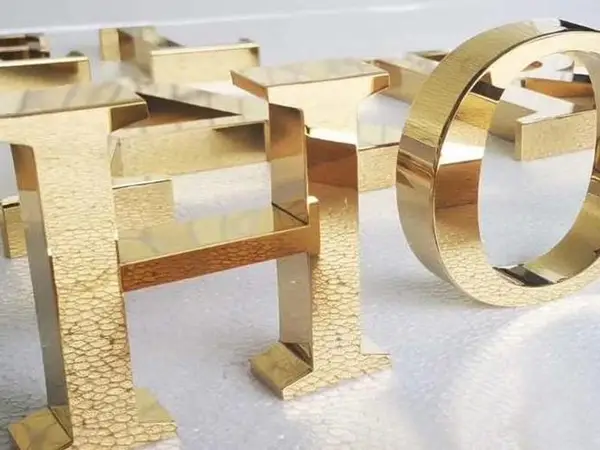
Aluminum is the smart default frame material. It weighs one-third of steel, lasts 8-12 years outdoors, and won't rust. If a client's in a coastal zone or wants a premium look, 304 stainless gives you 10+ years—it's 18% chromium and 8% nickel, density 7.93 g/cm³—but it's heavy. The brushed #4 finish shows fingerprints like a crime scene.
Acrylic is the face panel, not the frame. UV resistance is the spec that matters. Mitsubishi or Degussa sheet holds 90-92% light transmittance and won't yellow for 5-8 years. Domestic acrylic? 1-2 years before it turns the color of weak tea. That's a fact I've tested on our own roof.
Here's what nobody tells you: the thickness debate is mostly nonsense. A 3mm acrylic face cuts 92% light output, a 2mm face cuts 90%. Your customer won't notice the 2% difference, but they will notice the 40% cost bump. Unless the board spans more than 2.5 meters, use 2mm and move on. For a cutout-face menu board, like our hollow-out lightbox, you need a face that won't crack around routed openings, so 3mm UV-resistant acrylic earns its keep there.
You'll see acrylic in 2mm, 3mm, and 5mm. Use 5mm for oversized faces or anywhere a customer can reach. 1.0–1.6mm aluminum sheet handles most frame work. Don't over-spec material and eat margin for no reason.
Digital menu boards aren't a one-time purchase. They're a marriage. You've got software subscriptions, controller failures, power supply replacements, and LED modules that die right after the warranty. A cheap static lightbox with quality modules runs for years. A cheap digital board runs for months.
Let me give you the numbers I trust. Quality LED modules—Samsung, Osram, or Blueview—have an L70 rating of at least 50,000 hours and a real lifespan of 5+ years. Cheap modules? 12-18 months before they flicker and half the board goes dark. The solder joints are the tell: dull gray means lead-free done wrong, shiny silver means the boards will last.
An embedded lightbox menu board with good LEDs should run 10+ years before you think about module replacement. Digital boards, on top of the hardware, add monthly software fees and electrician visits. I've watched a single drive-thru digital board eat service calls month after month because the owner bought on price and got a controller that couldn't handle humidity.
Here's the math that matters. A static lightbox runs $80-250 per square meter factory direct. A digital board costs several times that before software. Most independent restaurants don't need a slideshow. They need a readable menu that doesn't fail at dinner rush.
Power supplies are the weak link in both types. We warranty power supplies for 1 year, LED modules for 2. That's honest. If a supplier offers 5 years on power supplies, they're either lying or building the warranty cost into the price. You pay.
I've seen this go wrong: a sign shop installs a beautiful menu board in a drive-thru, and the first pressure-wash kills the LEDs because the "IP65" rating was a sticker, not a test. IP65 means dust-tight and resists water jets from any direction. It won't survive a Florida hurricane.
For coastal areas, spec IP66 for powerful jets. If the board could be submerged, IP68. For the US market, NEC Article 600 applies to all electric signs—you need a listed power supply and proper disconnects. UL 48 certification costs $4,000 to $15,000 and takes 4 to 9 months with quarterly audits.
ETL is an accepted alternative and runs 10-30% cheaper than UL. Don't let a factory tell you they're "UL equivalent." Ask to see the certificate with today's date. CE marking is another trap. Getting one runs 20,000-50,000 RMB and takes 2-8 weeks. Most factories will say they have it. Ask to see the certificate with today's date. Watch them sweat. No certificate, no deal. That's not me being cynical—that's me having watched a competitor ship non-CE boards to Germany and lose the whole container at customs.
If the menu board has tactile elements—braille, raised letters—ADA kicks in. You need mounting height 48-60 inches to the tactile text, a non-glare surface, and Grade 2 Braille. Skip that and you're buying a new board plus a lawyer.
Multi-unit QSR chains are obsessive about consistency. The menu board in Denver has to match the one in Miami exactly—same red, same typeface, same LED color temperature. That's where a factory-direct supplier with a real QC process beats a distributor who's just relabeling Asian imports.
Our production process isn't magic. Ten steps: design confirmation (1 day), laser cutting at ±0.1mm (1-2 days), bending and TIG welding (1-2 days), grinding and polishing (1-2 days), acrylic face CNC (1 day), LED assembly (1-2 days), sealing with neutral silicone (1 day), an 8-12 hour aging test, 100% QC inspection, and export packaging with foam, carton, and plywood crate. Total: about 5-15 days.
That aging test is non-negotiable. We run every illuminated board at full power for 8-12 hours before it leaves the floor. If a power supply is going to fail early, I want it to fail in Lu'an, not in a Boise drive-thru.
For prototypes, our MOQ is 1 piece. That's not a typo. You can order one unit, check the color and finish, then roll out 200 stores. If you're doing a double-sided board for a drive-thru, order a double-sided lightbox prototype first—most factories screw up the internal mounting for glass faces and LED strips.
Look, the markup in this industry is criminal. I've watched sign shops pay $800 for a front-lit letter from a domestic fabricator. Same 304 stainless, same Samsung LEDs. We ship that letter for $120. Menu boards are no different—a distributor buys from a factory like ours, marks it up 50-65%, and adds three weeks to the lead time.
Our factory-direct price for light boxes runs $80-250 per square meter. Shipping is where you need to do the math. Express takes about 5-15 days and costs $30-100 for small parcels. Air freight is about 10 days at $4-12 per kilogram. Sea freight is cheapest—about 65 days and $80-200 per cubic meter for LCL—but handlers touch your crate 6-8 times between our dock and yours. Every touch is a chance for damage.
US Section 301 tariffs add roughly 30% on top of the product cost for most sign products. So a $100 factory board lands at $130 before freight. Still half what a domestic reseller charges. If you need 20 boards for a chain, LCL sea freight makes sense. If you need one prototype, just pay express and get it in a week.
Here's what nobody tells you: the warranty is only as good as the factory's willingness to replace parts without a fight. We give 2 years on LED modules and 1 year on power supplies. Some factories offer 5 years on LEDs and then disappear when 18 modules fail at month 14. Ask a supplier how they handle warranty claims—not what the PDF says.
Most QSR operators can't tell you what their menu board costs per day. They know the upfront price. They don't count the four hours a manager spends cleaning a static board's acrylic face every month, or the drive-thru backup when a digital board freezes.
At 12 hours a day, quality LEDs rated L70 ≥50,000 hours should last 11.4 years. That's the theory. Real world, with heat and voltage spikes, expect 5+ years. Cheap LEDs will hit 12-18 months. The ROI calculation isn't about energy—LEDs cost pennies to run—it's about avoiding the $400 electrician visit and the lost sales from a dead menu.
For drive-thru, dual-purpose visibility matters. A double-sided board catches cars entering and at the speaker. If the face is hollow-out with push-through acrylic letters, the contrast at night is unmatched, and you can change a single letter without replacing the whole face. That's a detail that saves chains real money per changeout.
Retail deployments inside a mall are different. The board sits in 72°F, no UV, no rain. You don't need IP65 or marine-grade 316. You need accurate color rendering—use 4000-5000K neutral white from quality modules so the burger doesn't look green. I've seen that happen with cheap 6500K modules. The manager said the salad looked like alien food.
"Do I really need IP65 for an indoor food court menu board?" No. But if it's within ten feet of a kitchen, steam and grease will kill a non-sealed board faster than rain. I'd spec IP54 at minimum and use neutral silicone around the face. For outdoor, IP65 is the floor, not a bonus.
"What's the actual lead time from a factory in China?" Production is about 5-15 days. That's after design confirmation. Sea freight adds about 65 days. Air freight adds 10-20. If a supplier quotes you 3 days, they're either lying or sending you a stock board with no customization.
"Why is one quote $300 and another $900 for the same size menu board?" Because the $300 one uses domestic acrylic that yellows in 18 months, cheap LED modules with dull solder joints, and a power supply that dies in a year. The $900 one might be a distributor marking up a $400 factory board. The price isn't the problem—the spec sheet is.
"Can I buy direct from a factory if I only need 2 boards?" Yes. Our MOQ is 1 piece. You'll pay more for shipping per unit, but you still save 50-65% on product versus a domestic reseller. Stop thinking you need 100 units to go factory-direct.
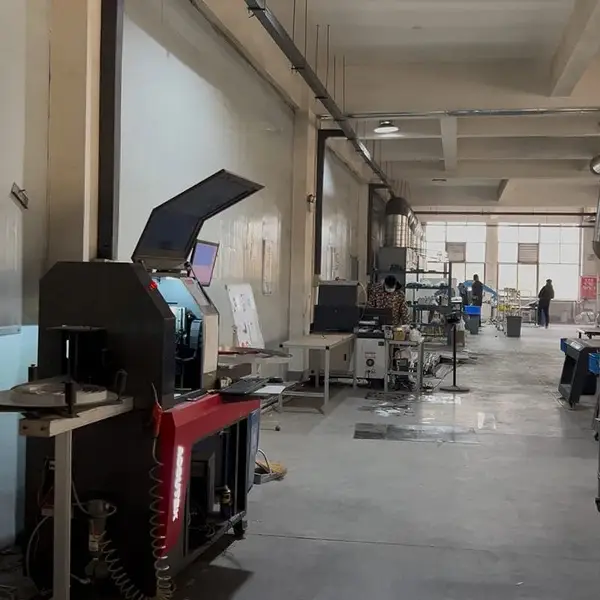
Real photo from our production floor — every sign we ship is made here.
Products mentioned or relevant to this topic — factory-direct, custom built.
From $24/letter · MOQ 1 piece · Flexible lead time · CE & UL certified · ships to 20+ countries
Custom sizes, colors, and finishes. Get a factory price in 24 hours.
Get a Free Quote Copy EmailWhatsApp +86 13865703472 · business@aochuangsign.cn