After 16 years bending aluminum and cursing at LEDs, I can tell you this: most property owners buy the wrong freestanding sign because they've been staring at glossy renderings instead of a weather report. I'm not going to feed you brochure talk. I'm going to tell you what I'd tell a shop foreman who's about to order 14 signs for a strip mall in Phoenix and needs them to still look good in 2031.
Let's kill the confusion quick. A monument sign sits low, usually ground-mounted, with a solid base—stone, brick, or a thick steel cabinet. It's the "permanent establishment" look. Banks and medical buildings love these because it screams we're not moving.
Look, a pylon sign is the opposite: tall, often 20 to 40 feet, held up by one or two beefy poles. It's built for highway speeds—grab eyeballs from 500 yards. Think gas stations, auto dealerships, shopping centers where the goal is visibility over elegance.
Here's what nobody tells you: the pole sign is just a pylon's scrawny cousin. It's a single-pole-mounted cabinet that's cheaper but also the first thing to fold in a 60 mph gust. I've seen them installed outside Florida diners and leaned over two years later because somebody skimped on the foundation bolts. Use a pole sign only when your budget's screaming and you're inland.
I don't care which style you pick—if you spec the wrong metal, you're buying a rust bucket. 304 stainless steel is 18% chromium, 8% nickel, and it'll give you 10+ years outdoors unless you're kissing salt spray. If your property's within a mile of the coast, step up to 316 stainless. It's got 2-3% molybdenum and costs 20-30% more, but you won't be replacing letters in three years. I've seen that mistake on a Miami Beach hotel monument sign with stainless steel letters that turned into pitted junk because they used 304.
Aluminum is the lighter choice—a third the weight of steel, naturally rust-proof, good for 8-12 years. For a pylon cabinet that's 25 feet up, you want aluminum. Your installer's back will thank you.
Then there's the acrylic face. Domestic stuff starts yellowing in 1-2 years. UV-resistant acrylic from Mitsubishi or Degussa? 5-8 years before it even thinks about fading. A 3mm sheet cuts 92% of your LED light output. A 2mm sheet cuts 90%. Your customer won't notice that 2% difference, but they sure as hell will notice the 40% cost bump for thicker material you didn't need. I've watched shops upsell 5mm faces on small acrylic LED letters like it's armor plating. It's not. It's just wasted money.
The ugly truth is that LED quality on a pylon sign is the difference between a beacon and a dim embarrassment. Real SMD 2835 modules from Samsung or a comparable factory deliver 100-150 lumens per watt and an L70 rating of 50,000 hours. Cheap no-name modules? 12-18 months before they start flickering. Quickest way to spot the garbage: flip the module over and look at the solder joints. Dull gray joints mean they used rosin-core junk. Shiny silver is proper lead-free solder. I've re-lit

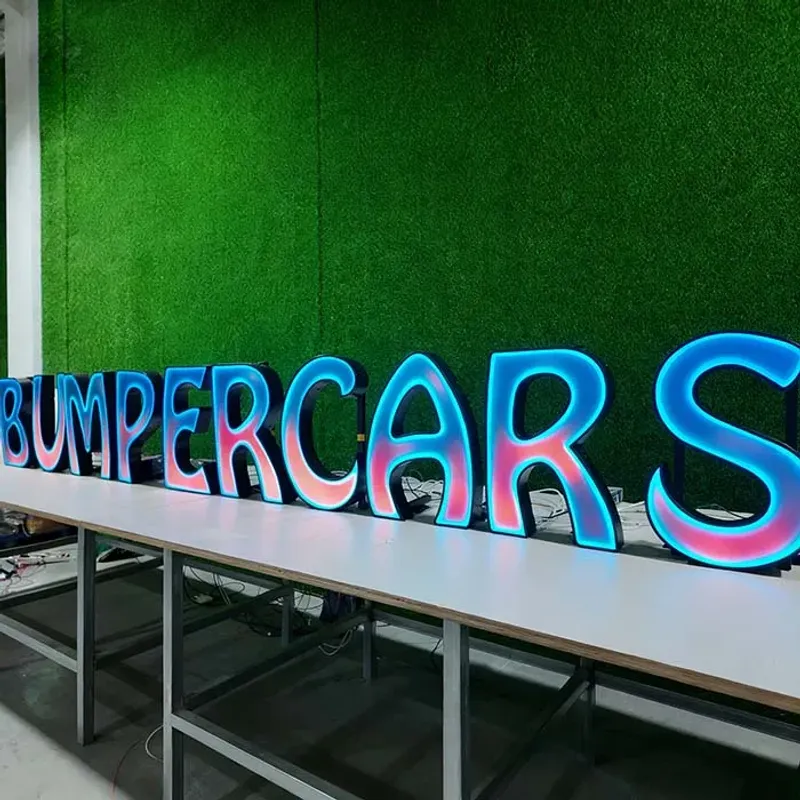
Real photo from our production floor — every sign we ship is made here.
Products mentioned or relevant to this topic — factory-direct, custom built.
Factory-direct since 2010. Free quote within 24 hours — no obligation.
Get a Free Quote → Copy EmailMOQ: 1 piece · Flexible lead time · 2-year warranty · Worldwide shipping
See pricing, specs, and get a free quote for the sign type you need. Built in our factory, shipped worldwide.