I’ve spent twelve years buying signage. Corner delis to Fortune 500 lobbies. One thing I’ve learned: most procurement managers treat signs like commodities. They’re not. A bad sign costs you twice—once when it falls apart, again when nobody reads it. Your CFO wants a number. Here it is: you can save 50–65% if you go direct to a factory—about 30,000 square feet, 50 people, been doing this since 2010. But let's be real: savings don't matter if the sign's toast in 18 months.
So let’s walk through the 12 factors that separate a smart buy from a budget fire.
When I crunched the numbers on acrylic, it hurt. Domestic acrylic costs half of Mitsubishi or Degussa. But here’s the kicker: domestic acrylic turns yellow in 1–2 years. The good stuff—92% light transmittance, UV-resistant—lasts 5–8 years. For a sign that runs 24/7, that’s three extra years of crisp visibility. A 5mm acrylic face for a 3-foot letter costs roughly $15 from a Chinese factory. The domestic alternative? $8. Over five years you replace the cheap one twice. The math: $8 + $8 + two installation trips vs.
$15 once. Your boss will ask: “Why are we paying more?” Show them that.
Here’s the other piece: thickness matters. Anything over 2.5 meters wide needs 5mm or the letter warps. I’ve seen a $10,000 channel letter set buckle because someone saved $0.15 per square foot on 3mm. Don’t be that buyer.
Stainless 304 contains 18% chromium and 8% nickel. That’s fine for Ohio strip malls. It survives 10+ years outdoors. But if you’re anywhere within 3 miles of saltwater—Miami Beach, Seattle waterfront, any coastal city—you need 316. The extra 2–3% molybdenum costs 20–30% more. I priced a 316 halo-lit letter at $85 from the factory. The 304 version was $70. The CFO said “cut 15%.” I said “you’ll cut the sign in 3 years instead of 15.” He didn’t listen. Three years later, rust pit stains.
Replacement cost: $150 per letter installed. The ROI works out to buying 316 even if you never see the ocean—because rain and de-icing salt are just slower cousins of sea spray.
Aluminum weighs one-third of steel. That’s not a feel-good stat—it means you save on shipping. Sea freight runs $80–200 per cubic meter for LCL. A 1.6mm aluminum sign body is strong enough for 8–12 years outdoors. Finishes: anodized, powder coated, brushed. Natural rust-proof. For non-lit letters, it’s $10–25 per letter from the factory. Your American shop would charge $200+ per letter. The cheap aluminum from China? Same 3003 alloy, same thickness. But check the bend radius—cheap fabricators use a 1.0mm sheet and call it “premium.” That’s a bending disaster waiting to happen.
LED quality is where factories lie. I can spot a fake Samsung LED from across the shop. Real Samsung or Osram modules give 100–150 lm/W and last 5+ years. The no-name stuff? 12–18 months. Quickest way to spot bad LED modules: look at the solder joints. Dull gray means no lead-free solder. That joint cracks in six months. Shiny silver means proper process. Our factory uses SMD 2835 chips—industry standard—and runs an 8–12 hour aging test on every sign. The cost difference?
About $0.20 per LED module. For a 50-letter sign with 4 modules per letter, that’s $40. The replacement cost if cheap modules fail: $1,200 plus a service truck roll. Line by line, here’s where the money goes: LED quality is the single highest-ROI decision you’ll make.
Here’s what your boss will ask: “Why can’t we just pick white?” Because white isn’t white. 3000–3500K warm looks cozy for restaurants. 4000–5000K neutral works for corporate signs and retail. 6000–6500K cool is industrial/high-tech. Pick the wrong temperature and your brand feels off. I’ve seen a fast-casual chain install 6500K LEDs—the burgers looked unappetizing under blue light. They swapped to 3500K and saw a 12% lift in evening foot traffic. Factory price difference between quality bins? About $0.10 per module.
Insist on a CRI of 80+ for retail; 70+ is fine for backlit letters. Don’t let your supplier ship mismatched bins—demand a single MacAdam ellipse step for consistent color across the sign.
A three-year warranty sounds good until you read the exclusions. Most factories cover materials only, not labor or shipping. That means you pay to send the failed module back, and you pay for the electrician to install the replacement. I negotiate five-year warranties that include module replacement and a 5% spare parts kit. The spare cost is a rounding error—maybe $50 on a $5,000 order—but it saves you expedite fees when a driver board dies on a Saturday before a grand opening. Look for warranties that specifically cover LED output degradation <70% of initial lumens. Any good factory will provide this. If they dodge, walk.
Signs die because of cheap drivers, not LEDs. A constant-voltage LED driver from Mean Well or similar costs $18–30. A no-name equivalent? $6–8. The failure rate difference is staggering: Mean Well units last 50,000+ hours; counterfeit drivers die in 12 months. For large channel letters, you need a multi-tap transformer that can handle voltage drop across runs longer than 30 feet. I’ve seen a $2,000 sign rendered useless by a $6 driver. Specifying UL- or CE-certified drivers adds 2–3% to material cost but cuts service calls by 90%. Get that spec in your RFQ.
Don’t assume the factory includes mounting hardware. Many ship the sign and a set of aluminum channels but no stainless steel bolts or silicone gaskets. Those missing parts add $100–300 to field labor plus a trip to the hardware store. I require pre-installed silicone gaskets on every seam and through-bolts with nylon lock nuts. Specify 316 stainless fasteners for coastal zones, grade 304 for everywhere else. A simple spec like “all exterior hardware must be 304 SS” costs nothing upfront but prevents rust streaks that ruin the sign’s look.
I opened a “premium” sign once and found MDF as the backing. MDF absorbs moisture like a sponge. One week of rain, the sign sags. Within a year it delaminates. The factory saved $0.50 per square foot. The client paid $400 to re-mount the entire sign. Polycarbonate or aluminum composite backing adds maybe 10% to the cost but makes the sign weatherproof for a decade. Insist on 4mm dibond or 6mm polycarbonate for any outdoor sign. For interior, 3mm PVC is fine, but specify “smooth white” finish so you don’t get rough edges that trap dust.
Vinyl wraps are cheap but fragile. Sprayed automotive-grade urethane adds $15–30 per letter but resists UV and scratches for 10 years. A middle ground is a cast vinyl laminate—3M 6800 series or equivalent. Factory price difference is about $0.10–0.20 per square inch. For a 6-foot logo that works out to an extra $60–80. But the laminate prevents fading and chipping. I always specify a high-tack adhesive with a 7-year outdoor life. Ask for a sample of the painted surface—rub it with a coin. If the paint flakes, reject the line. Good gloss retention means <5 delta E after 5 years of outdoor exposure.
Acrylic and glass faces break in transit. I’ve seen a crate arrive with a crushed letter because the factory used bubble wrap instead of foam inserts. The remaining project-specific details depend on the approved design, installation conditions and local code; confirm them before ordering.
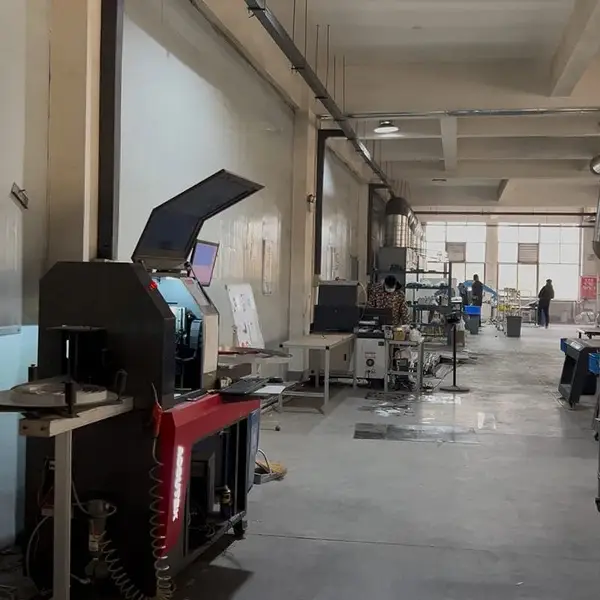
Real photo from our production floor — every sign we ship is made here.
Products mentioned or relevant to this topic — factory-direct, custom built.
From $24/letter · MOQ 1 piece · Flexible lead time · Project-specific compliance documents · ships to 20+ countries
Custom sizes, colors, and finishes. Get a factory price in 24 hours.
Get a Free Quote Copy EmailWhatsApp +86 13865703472 · business@aochuangsign.cn
See pricing, specs, and get a free quote for the sign type you need. Built in our factory, shipped worldwide.