By Jake Morrison, Senior Installer & Consultant, SignAge Solutions (20+ years in outdoor signage)
I've installed these things for 20 years across 30+ states. I've watched property owners drop $8,000 on a set of channel letters that started yellowing before the first lease renewal. I've also watched the same guys pay $4,000 for a sign that's still glowing clean after a decade. The difference isn't luck. It's knowing which factors actually matter — and which ones your sales guy is using to justify a markup. And let me tell you, most sales guys have never touched a soldering iron.
Here's the truth: outdoor signs are a mechanical system with a 5- to 15-year expected lifespan, depending on where you install them and how cheap the components are. Most commercial buyers get blinded by the pretty rendering and forget about the stuff that keeps the sign alive: material specs, sealing, power supplies, and the 30% tariff hiding in the fine print. I'm going to walk you through the 12 factors I check before I even pick up a ladder. Some of this the permit office won't tell you. Some of it I learned the hard way — by pulling failed letters off a storefront in a Florida rainstorm.
Here's a rule I live by: never trust a quote that doesn't list the gauge. I've seen 0.040-inch aluminum used on letters over 2 feet tall. That bends in a stiff breeze. For channel letters, stainless 304 at 1.0mm is the minimum for any outdoor application. If you're within a mile of saltwater, you need 316 — it has 2-3% molybdenum and will last 15+ years instead of rotting out in 3.
I once made a stupid mistake: I approved a quote for aluminum letters that said "heavy duty." Arrived on site. Measured with calipers. 0.032-inch — that's almost paper. The supplier knew I'd only see the rendering. Now I spec minimum 0.040-inch aluminum for any outdoor sign, and for any letter over 20 inches tall I go to 0.063-inch or thicker. The weight difference is negligible on installation day but massive on year five when the wind hasn't ripped mounting holes open.
Acrylic faces are another trap. Quality UV-resistant acrylic from Mitsubishi or Degussa will hold its clarity 5-8 years. Domestic acrylic starts yellowing in 12-18 months. I can spot the difference in 10 seconds: hold a sample edgewise. Cheap stuff has a greenish tint. The 90-92% light transmittance number on the spec sheet is useless if it's yellow by year two.
For stainless, the finish matters too. Brushed #4 is standard for outdoor because it hides scratches. Mirror #8 looks gorgeous on day one but shows every fingerprint and is a nightmare to maintain. PVD coating adds maybe 2-3 years of life over plain stainless, but it scratches through and then you have a mess. If you want durability, powder coat over 304. If you want that bare metal look, stay with brushed #4 and accept you'll have to polish it once a year.
Spot bad LED modules by looking at the solder joints. Dull gray — that's cheap flux, cheap solder, and you'll be replacing those modules in 12-18 months. Shiny silver — proper lead-free solder, probably from a real factory. I've opened signs that claimed "Samsung chips" and found knockoffs with the logo scratched off. Real Samsung or Osram LEDs cost about 15% more than generic, but they have an L70 lifespan over 50,000 hours. Generic modules often fail at 12,000.
Here's the hard truth from real installs: SMD 2835 chips put out 100-150 lumens per watt. That's the industry standard for edge-lit and channel letter signs. SMD 5730 chips are brighter per chip — 40-60 lumens each — but they run hotter. I use 5730 only for signs that need to compete with direct sun. For everything else, 2835 is more reliable. And if you see 5050 modules in a sign, that's RGB lighting — fine for accent, terrible for primary illumination because the color mixing reduces effective brightness.
I've watched sign shops pay $800 for a front-lit sign with knockoff modules, then spend another $600 in labor within two years swapping them out. Spend the extra 15% upfront on genuine Samsung or Osram. Your sign will thank you — and so will your maintenance budget.
Your sign dies if the power supply fails. Mean Well is the gold standard — they have a failure rate under 0.5% in outdoor conditions. Cheap no-name supplies fail at 5-8% within the first year. Always check the IP rating: minimum IP65 for outdoor power supplies, IP67 if the supply is mounted inside the sign cabinet where condensation collects. And never let a vendor spec a supply at more than 80% continuous load. Running a 200W supply at 180W will cook the capacitors in 18 months
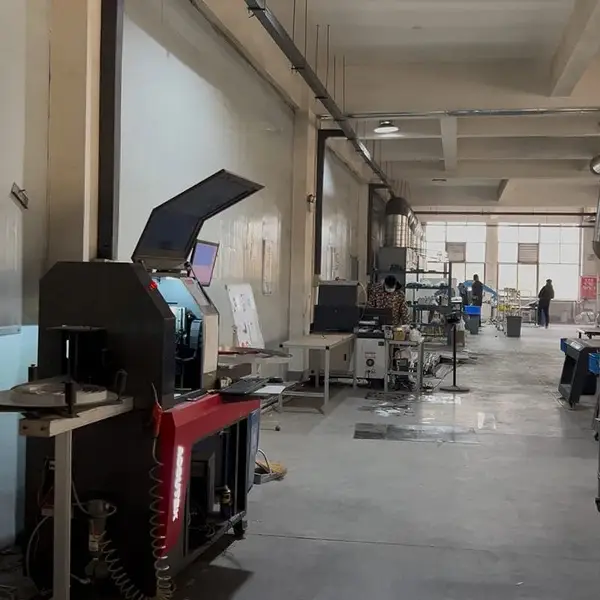
Real photo from our production floor — every sign we ship is made here.
Products mentioned or relevant to this topic — factory-direct, custom built.
From $24/letter · MOQ 1 piece · Flexible lead time · CE & UL certified · ships to 20+ countries
Custom sizes, colors, and finishes. Get a factory price in 24 hours.
Get a Free Quote Copy EmailWhatsApp +86 13865703472 · business@aochuangsign.cn
See pricing, specs, and get a free quote for the sign type you need. Built in our factory, shipped worldwide.