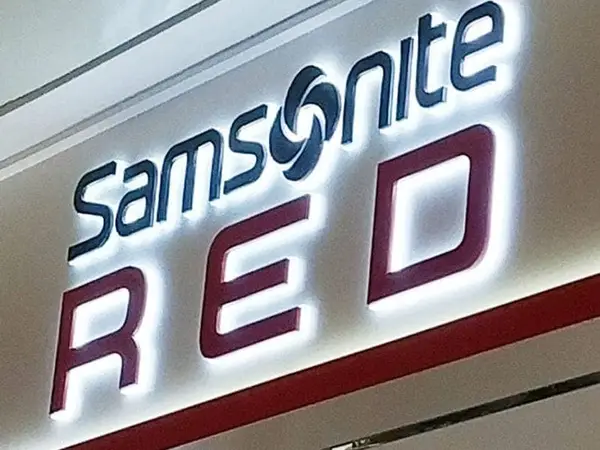
I’ve been on the floor since 2010. Our shop—Aochuang Sign in Lu’an, Anhui—runs 3,000 square meters with 50-plus people. Not a brag. You need that baseline if you want to handle custom outdoor work without subcontracting half of it.
Look, the Chinese outdoor signage trade splits into two camps: metal shops that bend stainless and aluminum all day, and acrylic/LED shops that build lit channel letters. We do both because storefront signs need both. You can’t weld a 304 stainless return and call it done if the face won’t hold an SMD 2835 module without leaking.
Minimum order one piece. That surprises most buyers. Most factories won’t touch it, but we will, because we learned that small sign shops in Ohio order one 20-inch front-lit letter as a sample, then come back for 40. Lead time stays 7 to 15 days, not because it’s easy, but because we built the process for speed without skipping the aging test.
China’s outdoor signage factories aren’t all the same. Some are 200-person lines that only run big-box retail orders. Others are 10-person garages that can’t hold a tolerance. The sweet spot is a mid-size shop with CNC, laser, and TIG welding under one roof, because that’s where you build front-lit channel letters without finger-pointing between suppliers.
We handle aluminum, stainless, acrylic, and LED work in-house. That matters when a sign has a stainless return, an acrylic face, and a sealed LED module. If one shop cuts the metal and another routes the acrylic, you get gaps. A 0.1mm laser cutting tolerance means squat if the face doesn’t seat flush.
Export certification matters just as much as the build. CE, RoHS, and ISO 9001 are the floor, not the ceiling. We hold those. UL 48 is a different animal—nobody has that just lying around unless they paid for it and passed quarterly audits.
Here’s what nobody tells you: domestic acrylic and UV-stable acrylic look identical on day one. Year two, the domestic sheet starts yellowing. The Mitsubishi or Degussa sheet stays clear for 5 to 8 years. Guess which one the cheap quote uses. That cheap sheet will cost you the repeat order.
For acrylic LED letters, light transmittance runs 90 to 92 percent. A 3mm face transmits around 92 percent of light output. A 2mm face transmits 90. Your customer can’t see the 2 percent difference, but they’ll feel the 40 percent cost bump if you over-spec thickness for a small sign. Anything over 2.5 meters, though, go 5mm or the face sags like a wet napkin.
For metal, 304 stainless gives you 10-plus years outdoors. 304 stainless steel letters are the workhorse. If you’re within half a mile of salt water, spend the 20 to 30 percent premium for 316. That grade has 2 to 3 percent molybdenum, which stops pitting corrosion. A strip mall in Ohio? 304 is fine. Miami Beach? Pay for 316 or you’re replacing letters in 3 years.
Aluminum weighs a third of steel and lasts 8 to 12 years without rust. Powder coating adds a physical barrier; anodizing keeps the metal look. Both beat raw aluminum in coastal air.
LED modules are where rookies get burned. Samsung, Osram, or Blueview modules last 5-plus years real lifespan. Cheap no-name modules? 12 to 18 months. Don't risk it. SMD 2835 runs 100 to 150 lumens per watt and is the industry standard. SMD 5730 is brighter per chip at 40 to 60 lumens but runs hotter. SMD 5050 is for RGB.
Color temp matters. 3000–3500K warm for hospitality. 4000–5000K neutral for corporate and retail. 6000–6500K cool for industrial or highway. Wrong color temp makes a $3,000 sign look cheap.
The ugly truth is most factories hang a CE certificate they bought from a consultant and call it quality. CE marking costs 20,000 to 50,000 RMB and takes 2 to 8 weeks. Most shops will say they have it. Ask to see the certificate with today’s date. Watch them sweat.
UL 48 is the real gate for US electrical signs. It runs $4,000 to $15,000 and takes 4 to 9 months, with quarterly audits. ETL is a cheaper alternative, 10 to 30 percent less, and most jurisdictions accept it. If a factory quotes UL-certified product but won’t share the UL file number, they’re lying.
RoHS and ISO 9001 are baseline. RoHS keeps lead out of solder. ISO 9001 means the process is documented, not just a guy with a welder.
IP65 means dust-tight and protected against water jets from any direction. IP66 handles powerful jets, which is coastal. IP68 is submersible. None of them mean hurricane-proof. I’ve seen a Florida contractor buy IP65 signs and then act shocked when a Category 3 ripped the face off. That’s not the rating’s job.
Production control is where a good factory separates from a garage. Our process is 10 steps: design confirmation, laser cutting at plus or minus 0.1mm, TIG welding, grinding and polishing, CNC acrylic routing, LED assembly, sealing with neutral silicone, an 8-to-12-hour aging test, 100 percent QC inspection, then export packaging. That aging test catches dead modules before they leave. Cheap shops skip it. Big mistake.
Look, our factory prices are not secret. Front-lit channel letters run $20 to $80 per letter. Back-lit halo letters run $35 to $120. Non-lit stainless letters run $15 to $40. 3D fabricated letters $40 to $120. Aluminum $10 to $25 a letter. Light boxes $80 to $250 per square meter.
Compare that to US retail installed: front-lit letters at $200 to $700 per letter, halo-lit at $400 to $1,000. You save 50 to 65 percent on product factory-direct. That’s before shipping and tariff, so don’t get drunk on the margin.
I’ve watched sign shops pay $800 for a front-lit letter from a domestic fabricator. Same 304 stainless, same Samsung LEDs. We ship that letter for $120. The math isn’t hard. What’s hard is trusting the factory enough to send the deposit.
Cost drivers: letter depth, face material, LED module brand, finish. A mirror polished #8 stainless letter costs more than brushed #4. Powder coating adds a step but protects aluminum. RGB modules add cost and a controller. If someone quotes you $8 for a front-lit letter, you’re getting 1mm cheap acrylic and LEDs that die in a year.
Here’s what nobody tells you: the biggest cost killer isn’t the sign—crate handling is. LCL sea freight means your crate gets handled 6 to 8 times between our dock and yours. Every touch is a chance for damage. No brochure says that.
Express shipping takes 7 to 15 days and costs $30 to $100 for small packages. Air freight runs 10 to 20 days at $4 to $12 per kilogram. Sea freight takes 50 to 70 days, at $80 to $200 per cubic meter for LCL, or $1,200 to $3,000 for a full container. Budget true landed cost, not just unit price.
The Section 301 tariff on signs from China runs around 30 percent. Add customs brokerage, local delivery, and possible rework if the inspector finds something. A $1,000 sign order can become $2,000 landed if you don’t do the math before quoting your customer.
Packaging matters more than you think. We use foam, then carton, then plywood crate. A crate that can’t survive a forklift driver in Long Beach isn’t packaging, it’s trash. Sea shipment signs need VCI paper or silica gel to prevent corrosion. Anyone who skips that is sending you rusted stainless.
Look, most factories look identical on Alibaba. The difference is whether the owner answers a video call at 9pm his time and walks you to the aging test room. Ask for a live video tour. If they won’t, move on.
Ask for certificates with today’s date. Ask for the UL file number if they claim UL. Ask for the CE certificate number. Then verify it. Five minutes of work saves you from buying signs that get red-tagged by the inspector.
Check the solder joints on a sample. Dull gray means cheap solder. Shiny silver means lead-free. I’ve seen this go wrong: a shop ordered 200 letters, saved 15 percent, and every module failed by month 14. The factory promised two years, then disappeared. Cheap warranty isn’t a warranty.
Start with a small order. One letter, one sign. Test the color temp, the finish, the packaging. Then scale. A factory that handles a one-piece order without batching is a factory that respects your business. That’s rare.
We’ve been doing this since 2010. One-piece MOQ. Seven to fifteen day lead. Two-year LED warranty, one-year power supply. If a factory won’t state their warranty in writing, they don’t have one.
Q: What’s the real difference between IP65 and IP66?
A: IP65 handles water jets from any direction. IP66 handles powerful jets, which is coastal. Neither is hurricane insurance. Stop asking if it’s “waterproof.” These ratings don't make a sign a submarine unless it's IP68.
Q: Can I really order just one sign?
A: Yes. MOQ is one piece. Lead time 7 to 15 days. Express shipping 7 to 15 days. Stop apologizing for being small.
Q: Why is UL certification so expensive?
A: $4,000 to $15,000 and 4 to 9 months and quarterly audits. Most factories skip it and lie. Ask for the file number. If they can’t, you’re the product test.
Q: How much can I actually save buying factory-direct?
A: On product, 50 to 65 percent off US retail installed. But add shipping, 30 percent tariff, brokerage. Your real landed savings are still solid, but not if you don’t calculate.

Real photo from our production floor — every sign we ship is made here.
Products mentioned or relevant to this topic — factory-direct, custom built.
From $24/letter · MOQ 1 piece · Flexible lead time · CE & UL certified · ships to 20+ countries
Custom sizes, colors, and finishes. Get a factory price in 24 hours.
Get a Free Quote Copy EmailWhatsApp +86 13865703472 · business@aochuangsign.cn