
Look, I've built signs for plumbing companies that thought a $34 magnetic decal was a business investment. It isn't.
I've watched a two-truck plumbing outfit lose a $60,000 commercial service contract because the owner showed up with a peeling door magnet and a yard sign printed at the local copy shop. The facilities manager told him, straight up, "If you can't keep your own truck clean, I don't trust you in my building." That's the whole game. Plumbing signs aren't decoration. They're a warranty claim against the customer's fear of water damage, sewage backups, and a guy who might not show up on time.
The ugly truth is your sign is the first employee your customer meets. If it looks cheap, you look cheap. If it's faded, you look like you don't finish jobs. And in plumbing, trust is everything. You're being handed keys to someone's basement. They need to believe you won't flood it.
Aochuang Sign runs 50+ workers on a 3,000m² floor in Lu'an, Anhui. We ship to the U.S., Canada, Australia, the Middle East. We've seen the order patterns. Plumbing contractors who invest in proper storefront and vehicle signage book more emergency calls at 2 a.m. That's not marketing fluff. It's call volume.
Here's what nobody tells you: plumbing is a trust-based emergency service. Unlike a coffee shop, nobody walks into a plumber's storefront because they're curious. They call because there's two inches of water in the bathroom. Before they call, they Google you. Before they Google you, they drive past your shop or see your van stuck in traffic. If the sign looks unreadable or the van looks like a crime scene, they call someone else.
I've seen this go wrong: a plumber in Ohio spent $9,000 on a new van wrap with a glossy cartoon wrench and a phone number so small you needed binoculars. Three months later, he's complaining that "marketing doesn't work." He had four callbacks total from that wrap. His neighbor, an HVAC guy with a simple white van and 8-inch channel letters on the side, was turning away work. Readability beats clever.
Shop signage works the same way. A storefront with front-lit channel letters at 6500K cool white reads from 500 feet away on a rainy Tuesday. That matters when someone's driving to your showroom to pick up a water heater. If they can't find you, they'll buy from the box store. Factory price on those letters runs $20–80 per letter. Installed U.S. retail? $200–700 per letter. That's not a small gap. That's why contractors and sign shops import.
You need three kinds of signage, minimum. Storefront for walk-in trust. Vehicle for rolling brand visibility. Job site for the neighbors and the property manager. Each one does a different job.
Storefront signs usually mean channel letters or a lightbox. If you're ordering front-lit channel letters for a plumbing supply counter, spec 5mm acrylic faces if the sign spans over 2.5 meters. 2mm acrylic cuts 90% of LED light output. 3mm cuts 92%. Your customer won't notice the 2% difference, but they'll sure notice a cracked face after a hailstorm. And over 2.5 meters, 2mm flexes. Don't do it.
Vehicle signage is a different animal. Cut vinyl, printed panels, or channel letter-style logos mounted on the van. None of it survives a pressure washer at point-blank range. If your crew washes vans with a gas-powered pressure washer, tell them to stay back three feet. Cheap cast vinyl shrinks and cracks within 18 months. Premium cast wraps last 5–7 years, but they cost 3x more. That's just reality.
Job site signs are temporary. Aluminum composite panels with printed faces or simple corrugated plastic. Don't overthink these. But don't use PVC for a permanent storefront sign. It warps. More on that in a minute.
Plumbing conditions are not normal retail conditions. You've got pressure washing, PVC glue fumes, acidic drain cleaners, hard water spray, and brutal sun. If you install the wrong material, you'll be back in two years with a ladder and a bad attitude.
304 stainless steel letters are the workhorse. 18% chromium, 8% nickel, 10+ years outdoors. If your plumbing shop is near the coast or in an industrial park with chemical drift, pay the 20–30% upgrade for 316 marine grade. It contains 2–3% molybdenum. For a strip mall in Ohio, 304 is fine. For Miami Beach, buy 316 or you're replacing rusted letters in three years. I don't care if the brochure says "stainless." Stainless isn't stain-proof.
Aluminum is another solid option. It weighs one-third of steel and naturally rust-proof. 8–12 years outdoors. But aluminum dents easier than steel. If your sign is within reach of a delivery truck bumper or a ladder, go thicker—1.6mm minimum. Brushed aluminum looks clean but shows fingerprints from greasy hands. Powder coat is better for plumbing shops.
PVC is the lie I want to address. PVC is cheap. PVC is fine for indoor lobby signage or a short-term real estate placard. But under Texas sun, PVC sags. In Ohio winters, it gets brittle. Pressure washing will peel the printed laminate right off. I've pulled PVC signs off storefronts that looked like wet cardboard after two summers. If you're tempted because it's $60, remember you'll buy it twice. Maybe three times.
Acrylic and LED are where the lighting lives. Acrylic LED letters need UV-resistant acrylic if they're outdoors. Mitsubishi or Degussa acrylic lasts 5–8 years before yellowing. Domestic acrylic can start turning yellow in 12–18 months. The LED modules matter more. Cheap modules have dull gray solder joints and die in 12–18 months. Quality Samsung or Osram modules on SMD 2835 chips pull 100–150 lumens per watt and last 5+ years. Check the solder joints before you buy. Dull gray equals future service call.
I've seen this go wrong: a sign shop sold a plumber a beautiful backlit sign, installed it, and got red-tagged by the city inspector because the power supply wasn't UL listed. The plumber paid $2,400 to rewire. Don't let that be you.
In the U.S., NEC Article 600 covers electric signs. If your sign has a transformer, it needs to meet the local electrical code. UL 48 certification costs $4,000–15,000 and takes 4–9 months. Quarterly audits after that. If a factory says they're UL listed, ask for the certificate with today's date. Watch them sweat. ETL is a legitimate UL alternative and runs 10–30% cheaper. CE marking costs 20,000–50,000 RMB in China. Most factories will say they have it. Ask for the certificate with today's date. Same sweat.
Outdoor signs need IP65 minimum. That means dust-tight and protected from water jets. IP66 handles powerful jets near coastal or industrial areas. IP68 is submersible—overkill for a plumber's storefront, but if you're mounting a sign on a boat dock or inside a wet well, okay. IP65 sounds impressive. It does not mean your sign survives a Florida hurricane. It means it survives rain. There's a difference.
If you're mounting interior signs in a plumbing showroom or office, ADA rules apply to tactile signs. Mounting height 48–60 inches from floor. Non-glare finish. Grade 2 Braille. Don't skip this just because you're a plumbing contractor. Building inspectors check.
The ugly truth is most plumbing logos are terrible. They cram a wrench, a toilet, a pipe, and a family crest into a 12-inch square. Then they wonder why nobody can read the phone number at 40 mph. Stop. Pick one symbol. Make the name huge. Phone number second. Service area third.
Color temperature matters. 3000–3500K warm white feels hospitality. Don't use that for a plumbing van or storefront unless you're selling spa bathrooms. 4000–5000K neutral reads corporate and clean. 6000–6500K cool white is industrial and high-visibility. For a plumbing shop, 5000–6000K is the sweet spot. It says sterile, sharp, professional. Not romantic.
Here's what nobody tells you: contrast beats color. A bright blue logo on a bright red background vibrates. White on black reads from 200 feet. Black on yellow reads from 300. If your truck wrap has a dark blue phone number on a black background, you might as well not have a phone number. Test it from across the parking lot. If you have to squint, your customer won't squint. They'll call the next plumber.
For embedded lightbox storefront signs, keep the face simple. One logo, one phone number, maybe a short tagline like "24/7 Emergency Service." Don't list 14 services. The customer just wants to know you fix leaks. They'll ask about water heaters later.
Stock signs are for job sites. Custom signs are for your brand. It's that simple. A custom storefront sign tells a customer you've been in business long enough to care about your image. A stock "OPEN" sign from a hardware store says you're renting the space month-to-month.
I've watched sign shops pay $800 for a front-lit letter from a domestic fabricator. Same 304 stainless, same Samsung LEDs. We ship that letter from Lu'an for $120. Add freight, import duties, and reseller margin, and it's still 50–65% cheaper than U.S. retail installed. That's not a typo. Our MOQ is 1 piece. Lead time 7–15 days. So a plumber with one truck and one shop can order exactly what they need without buying 50 pieces.
Stock signs have their place. A generic "Caution: Pipes Buried Below" yard sign. A "Portable Toilet" arrow. Don't pay custom prices for those. But your storefront and your van? Custom. Every time.
Ordering from a factory like Aochuang is easier than most contractors think. You send the design or we help you vectorize a rough sketch. We confirm the drawing in one day. Laser cutting runs ±0.1mm tolerance. Bending and TIG welding with proper argon gas, not the cheap stuff. Then grinding, polishing, CNC acrylic face, LED assembly, sealing with neutral silicone, and an 8–12 hour aging test. Total production 7–15 days. Export packaging is foam, carton, and plywood crate.
Freight is where rookies get punched. Express shipping takes 7–15 days but costs $30–100 for small parcels. Air freight takes 10–20 days at $4–12 per kg. Sea freight takes 50–70 days at $80–200 per cubic meter for LCL or $1,200–3,000 for a full container. LCL means your crate gets handled 6–8 times between our dock and yours. Every touch is a chance for damage. That's not in the brochure. If you're ordering a few channel letters, express or air is fine. If you're ordering a whole storefront, sea freight saves money but plan two months ahead.
U.S. Section 301 tariffs add roughly 30% to imported signs. Factor that into your pricing. And customs delays happen. They just do. Don't promise your customer a 10-day turnaround on a sea-freighted lightbox unless you enjoy angry phone calls.
Installation depends on the substrate. Brick storefronts need anchors. Metal fascia needs self-tapping screws. If you're hanging a 50-pound sign over a sidewalk, hire a licensed sign contractor. Don't let your plumbing apprentice do it with a ladder and a prayer. That's how people get hurt and lawsuits start.
Maintenance is mostly common sense. Wash signs with a mild detergent and soft brush. Don't pressure wash acrylic faces or vinyl wraps at close range. Check the power supply yearly. Our warranty covers LEDs for 2 years and the power supply for 1 year. That's standard, but if a cheap power supply dies at month 13, you're buying a new one. Buy a good one up front.
Look, I've been bending metal and wiring LEDs since 2010. The plumbers who treat signage as a one-time purchase afterthought are the same ones complaining about "fake reviews" and "slow months." The ones who spec the right material, keep it simple, and budget for professional install? They're the ones with a waiting list. Be the second kind.
What's the best material for an outdoor plumbing shop sign?
304 stainless steel for most places. 316 stainless if you're within a few miles of salt water or heavy chemical exposure. Aluminum is fine for lighter budgets but dents easier. Don't use PVC outdoors. I can't believe I still have to explain this.
How much should a plumbing storefront sign cost?
Factory price for front-lit channel letters runs $20–80 per letter. U.S. installed retail runs $200–700 per letter. If you're paying $800 a letter from a domestic fabricator and it's not installed, you're getting hosed. Or they're using cheap LEDs. Either way, ask for the spec sheet.
Do I need UL or CE certification for my sign?
In the U.S., your sign needs to meet NEC Article 600. UL 48 or ETL is the usual path. If you're buying from overseas, ask for UL or ETL listing with a current date. CE means it meets European standards, not American. CE doesn't automatically mean UL. I've had factory sales reps tell me otherwise. They're wrong.
Can I install a plumbing sign myself?
For a small non-electric aluminum sign, sure. For any electric sign over a public walkway, hire someone licensed. If you have to ask if you need a permit, you probably need a permit. Call the city. Don't ask your cousin who "does electric work."
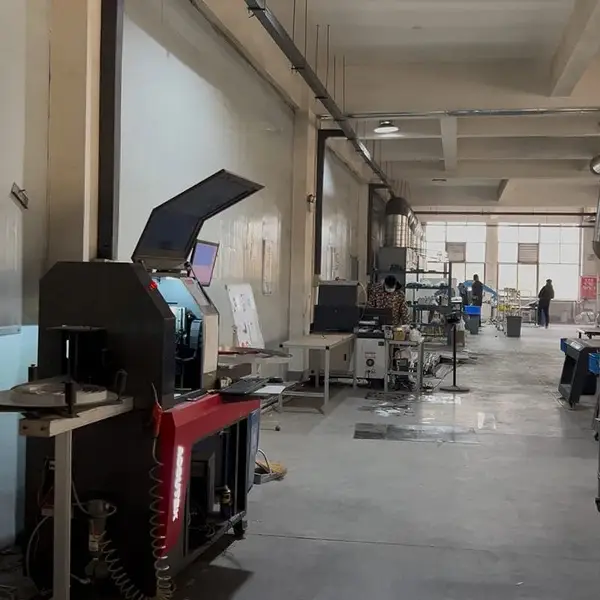
Real photo from our production floor — every sign we ship is made here.
Products mentioned or relevant to this topic — factory-direct, custom built.
From $24/letter · MOQ 1 piece · Flexible lead time · CE & UL certified · ships to 20+ countries
Custom sizes, colors, and finishes. Get a factory price in 24 hours.
Get a Free Quote Copy EmailWhatsApp +86 13865703472 · business@aochuangsign.cn
See pricing, specs, and get a free quote for the sign type you need. Built in our factory, shipped worldwide.