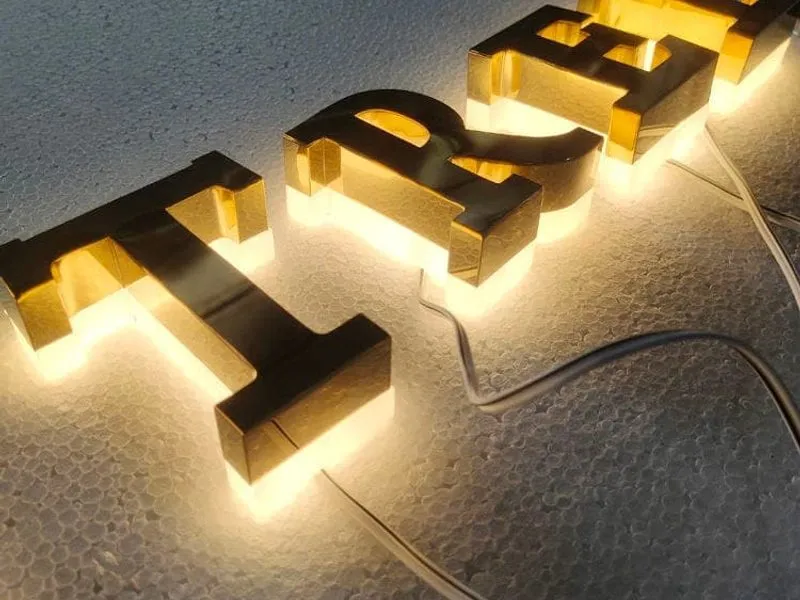
Look, I'll save you the five-minute YouTube rabbit hole. Acrylic yellows slower than polycarbonate. That's it. That's the headline. But if you're a sign shop owner or importer, you already knew that, and you're here for the real numbers, the cost differences, and the honest bullshit filter so you don't get burned by a supplier quoting you a "UV-stabilized" sheet that's nothing but false promises.
Here's what nobody tells you: The best acrylic we can buy, the Mitsubishi and Degussa stuff that we use for our premium front-lit channel letters, holds its clarity for five to eight years before you see any meaningful yellowing. That's not a marketing claim. That's the physical limitation of the polymer under UV bombardment. Meanwhile, the domestic acrylic we can source, the generic brand stuff, starts yellowing in one to two years. One to two. I've seen it happen in a strip mall in Tulsa, and I've seen it happen on a beachfront joint in Tampa. The difference isn't the installation. It's the resin.
Polycarbonate is a different animal. It's tougher, no debate there. You can throw a rock at it, and it laughs. Acrylic shatters. But for outdoor signage, yellowing isn't about impact. It's about the sun.
The ugly truth is that standard polycarbonate yellows even faster than domestic acrylic. We're talking visible brownish-yellow discoloration in twelve to eighteen months if you're exposed to intense Southern sun. The UV rays literally break down the molecular chains in the polymer. That's why manufacturers add UV-stabilizing layers, usually co-extruded on the surface. But here's the kicker: that protective layer is only about 20 to 50 microns thick. It's a coating. And coatings don't last forever.
You'd think the maker says it all. Lexan, Makrolon, Palsun. These are the big names in polycarbonate. A top-grade UV-stabilized polycarbonate will give you three to five years of clarity, and I'm pushing the top end of that estimate. But the problem is, when it does yellow, it doesn't just get a little off-white. It gets that nasty, muddy, tobacco-stain look that makes a brand look bankrupt. With acrylic, the yellowing tends to be more gradual and uniform, which is easier to tolerate.
I've seen this go wrong a hundred times: A contractor buys "polycarbonate" for a sign face because the client said they want something "unbreakable". They don't check the grade. Three years later, the sign looks like it's been through a fire. The contractor blames the factory. But he bought cheap polycarbonate without a UV protection layer.
So let's break down the actual buying decision, because this isn't about "which is better". It's about "which is better for your specific job". Because it's a decision you're going to see for years, right there on the side of a building.
First, let's talk about clarity. Acrylic is the king here. It has a light transmittance of 90-92%. That's the number you need to remember. Polycarbonate, with all its UV layers, usually drops to 85-88% transmittance. It might not sound like a lot, but side by side at night, the acrylic face looks cleaner, brighter, and more vibrant. The LED light pops better. If you're lighting up a back-lit halo letter, which banks entirely on crisp light distribution, acrylic is your material.
Second, there's the cost. And here's where the factory-direct math gets interesting. Acrylic is roughly half the price of UV-stabilized polycarbonate per sheet. We pay about 40% more for the good UV polycarbonate over the cheap stuff. But when we quote you a project, the material cost is only part of it. The labor is the same. The shipping is the same. So the price difference on a finished sign isn't as dramatic as you'd think.
Now, here's a hard fact from our workshop: We can cut and route acrylic all day long. It machines beautifully. Sharp edges, precise curves, perfect CNC results. Acrylic gives us a clean cut for stainless steel letters with an acrylic face insert, and it looks sharp. Polycarbonate is gummy. It doesn't cut as cleanly. It melts, it chips, and it gives our CNC team headaches if they don't use the exact right tooling speeds. That's not your problem, but it does mean some factories might not offer polycarbonate faces because it slows down their production.
When a buyer asks me specifically for polycarbonate, I always ask the same question: "How likely is someone to throw a brick at your sign?" If they hesitate, I tell them to go with acrylic. If they're putting a sign on a gas station pump, or a school bus stop, or a low-wall display in a parking garage, then polycarbonate makes sense. It's just that durable.
The brutal honesty part: We are in the sign business to make signs that work. But we don't want to install a sign for you that fails because you chose the right material for the wrong reason. If you need impact resistance, get polycarbonate. But understand you're trading five years of color stability for the peace of mind that a rock won't crack the face.
I've seen it happen with acrylic light boxes installed in high-vandalism areas. They get cracked. It's a cost of doing business. But I've also seen polycarbonate light boxes in Arizona that look like they've been stained with nicotine after just three years. The business owner went from complaints about vandalism to complaints about how cheap the sign looks. You can't win.
Let's talk thickness, because that matters more than the polymer chemistry in some cases. For acrylic, we use 2mm, 3mm, and 5mm. Under 2.5 meters wide, 3mm is usually fine if it's framed properly. Over 2.5 meters, you better be going up to 5mm or you'll see the face sag. With polycarbonate, because it's more flexible, you can get away with thinner material, but that flexibility also means it can bow and ripple when the heat hits it.
What about the LED heat? This is a rookie mistake. You put a high-density LED array close to a polymer face, and you're baking it. We run an 8-12 hour aging test on every single sign we build. We also check the temperature inside the channel. If your LED modules are too dense or underpowered, the heat will accelerate the yellowing process far faster than any sun damage. That's an installation spec, not a material spec.
Here's how we handle this at Aochuang. When we quote a project, we always specify the material origin depending on the client's location. If you're shipping to Arizona or Texas, where UV index is brutal, we push you toward the Mitsubishi or Degussa acrylic. We also suggest a slight curve on the face to shed debris. If you're shipping on a budget, we'll tell you the domestic option will save money but will yellow faster, so don't come crying to us in eighteen months when it looks aged.
Look, The "greenhouse effect" problem: Most sign faces are sealed with neutral silicone. That traps heat. If you use polycarbonate, it has a higher thermal expansion coefficient than acrylic. It expands and contracts more with temperature swings. So you need to design the mounting with more gap clearance. If a factory doesn't account for that, the face can buckle or stress crack at the fastener. We've seen it. It's not pretty. Acrylic is more tolerant of framing errors.
Let's get to the price tags. Factory-direct, for a standard 3D acrylic letter with LED modules, expect to pay $20 to $80 per letter for our dual-lit channel letters. A solid acrylic face is usually included in that because it's cheaper. If you spec polycarbonate, our cost on materials is noticeably higher, and that margin gets passed to you. For a back-lit halo sign where acrylic is mandatory for the glow, you're looking at $35-120 per letter. The polycarbonate just isn't ideal for halo effects because the material isn't as clear.
One story: I had a client in Florida insist on polycarbonate for a huge 8-meter sign. He remembered a sign getting smashed by a hurricane in Miami. We obliged. We built it, shipped it. Eighteen months later, he sends us photos. The face is turning yellow, and he's pissed. We reminded him of the conversation. He said, "But you guys said you'd deliver a quality product." That's the disconnect. We can't reverse chemistry. You can't have unbreakable AND non-yellowing in the same polymer, not at this price point. We told him in a call, and he still wanted the polycarbonate. He's now replacing it with acrylic.
The "100% LED warranty" check: We warranty our LED modules for two years. That's a real warranty. The material warranty is trickier. If a customer writes in asking about yellowing, we don't play games. We ask for a photo. If it's a material defect, we replace it. If it's just the natural aging of an economy polymer, we explain it. That's the difference between us and a sign supply house that'll never take a return.
What about a coating? Can't you just spray something on acrylic to stop yellowing? There are UV-cured clear coats. They add cost, and they can peel. We don't recommend them for exterior channel letters because the expansion and contraction will crack the coating. A co-extruded acrylic sheet with a UV barrier is the only reliable way to get extended life, and that's already what we're buying when we pay for the Mitsubishi.
You also need to know that we can't find a decent UV-stabilized polycarbonate sheet, cut it, and then form it into a circle without stressing it. Polycarbonate hates forming after CNC cutting. Acrylic is much more forgiving. That's why, on our rimless channel letters, which are gorgeous, minimalist, and trending hard, acrylic is the only real choice. The formation clarity and edge light glow are too important. You can't get that with polycarbonate.
Here's the final sales pitch, and it's not a sales pitch; it's a spec sheet. If you are ordering a sign for a coastal location, we insist on 316 stainless steel backings for the letter bases and premium acrylic faces. 316 stainless has 2-3% molybdenum, which is a marine-grade alloy, and it's 20-30% more expensive than 304. We will recommend it for ocean air because the salt will eat 304 and it'll stain the nearby acrylic. We don't just tell you to buy acrylic and walk away. We tell you the surrounding hardware needs to survive.
Look, If you want a sign face that will look brand new when your business is celebrating its tenth birthday, buy premium acrylic, install it in a ventilated channel, and don't touch it. If you want a sign face that can stop a baseball and you're okay with replacing it in 3-5 years because it looks like a smoker's fingers, buy UV-stabilized polycarbonate.
The ugly truth is that 90% of sign buyers don't need polycarbonate. They need a high-quality acrylic face with proper LED spacing and an aluminum or stainless frame to hold it. The impact resistance thing is usually a solution to a problem that exists only in their head, not in the real world.
So if you've got a project in hand, and you're ready to order, don't email us asking for a "sample". Email us asking for a quote, and clarify whether you need the 5-8 year clarity (premium acrylic) or the 10-15 year bang-proof flexibility (polycarbonate). We'll do the rest. We'll build it, age test it for 8-12 hours, pack it in foam, carton, and a plywood crate, and ship it to your door.
That's what we can do. What we can't do is promise a polymer that doesn't exist. Don't ask for that. Ask for what works.
Now, go spec the right material.
Wait, one more thing, because this is a classic: Watch out for the importer who claims "marine grade acrylic." There's no such thing. Acrylic is acrylic. UV protection comes from the resin or coating, not the grade name. If a supplier throws that phrase at you, they're fluffing you. Ask for the brand name, the thickness, and the UV transmittance spec.
That's the truth from a guy who's spent 16 years in the shop, cutting, welding, and litigating sign failures. Buy smart. Or buy twice. Your choice..
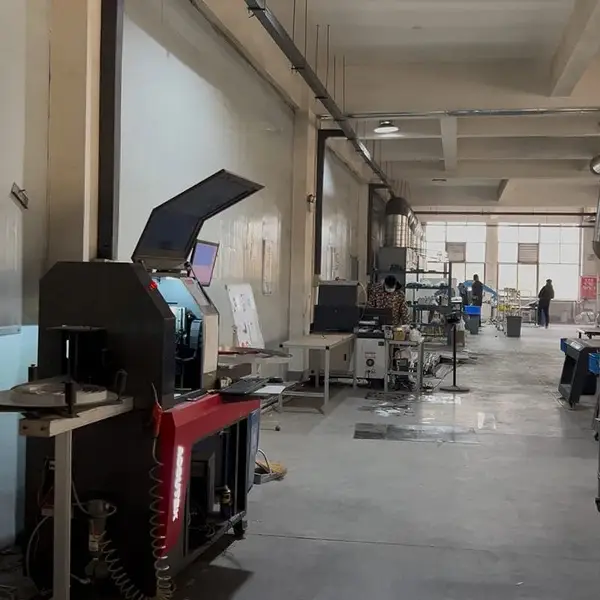
Real photo from our production floor — every sign we ship is made here.
Products mentioned or relevant to this topic — factory-direct, custom built.
From $24/letter · MOQ 1 piece · Flexible lead time · CE & UL certified · ships to 20+ countries
Custom sizes, colors, and finishes. Get a factory price in 24 hours.
Get a Free Quote Copy EmailWhatsApp +86 13865703472 · business@aochuangsign.cn
See pricing, specs, and get a free quote for the sign type you need. Built in our factory, shipped worldwide.