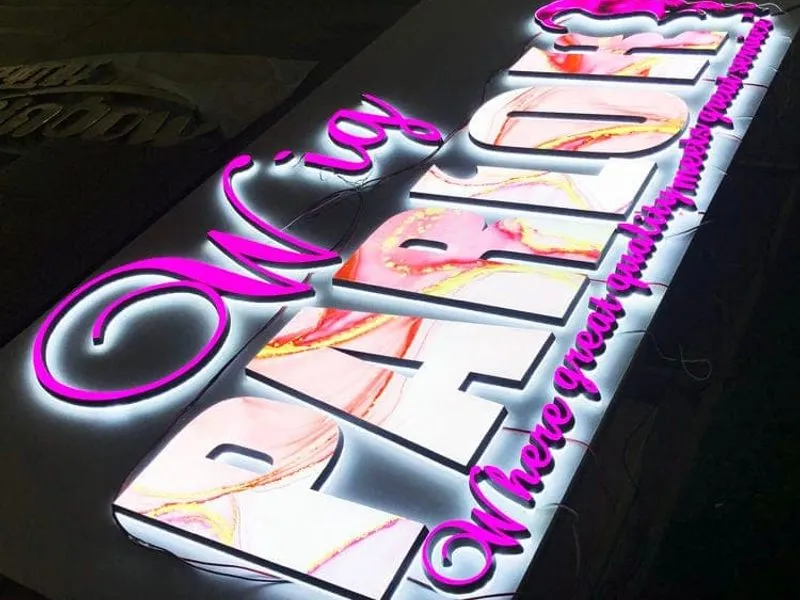
A sign permit isn't a formality. I've watched a $4,000 channel letter order sit in a warehouse for six weeks because the shop owner thought the landlord's "yes" was enough.
We build signs at Aochuang Sign in Lu'an, Anhui. Founded 2010, 3,000m² floor, 50+ workers, exporting worldwide. We ship in about 5-15 days after drawing approval. But no factory in China can file your city permit. That's on you or your contractor.
This is the sign permitting guide for US cities—process, timeline, requirements. No corporate fluff.
Here's what nobody tells you: most city sign permits are decided by a clerk, not an inspector. If your application looks incomplete, it goes to the bottom of the pile.
The process is usually five steps.
That's it. But each step hides a delay.
Look, I've shipped signs to Texas, Florida, California, Ohio. The factory lead time is the shortest part of the whole job.
Our production is about 5-15 days from drawing approval. Express shipping is about 5-15 days for small orders. Air freight is about 10 days. Sea freight is about 65 days. Tariff under Section 301 is roughly 30% on top of that. So if you order factory-direct, the product can be at your door in under a month by air.
The permit? Plan on 2-6 weeks for a standard sign. If you need a variance—oversized, taller than allowed, historic district—add 2-4 months. I've seen a Dallas bar lose a summer season because they ordered the sign before the variance hearing. Don't do that.
Here's what nobody tells you: some cities won't even accept an application until the sign is physically on site. Others want a stamped engineering drawing before you can apply. That's backwards. Check your city's code before you pay a deposit.
Not all signs need the same paperwork. But one rule holds: if it lights up, you need electrical approval.
Front-lit channel letters. These are the storefront standard. Cities usually require a UL 48 or ETL listed assembly, not just listed components. If you're buying front-lit channel letters, ask the factory for the LED module spec and power supply listing. We use quality SMD 2835 modules rated 100-150 lm/W with L70 ≥50,000 hours. But that doesn't make the whole sign UL-listed. Most cities want the full assembly listed, or they'll accept an ETL label.
Back-lit halo letters. These are premium architectural signs. They're also inspected harder because the light spills onto the building. For back-lit halo letters, pay attention to IP rating. IP65 is minimum outdoor. IP66 if you're near salt water. We've shipped halo letters with 316 stainless for coastal jobs—20-30% more cost than 304, but 15+ years in marine air. City reviewer won't care about your material choice, but the inspector might fail a rusted sign a year later.
Light boxes and window signs. Some cities count acrylic light boxes as signage. Some count them as window display. It depends on whether they're internally illuminated and mounted inside or outside the window. Check before you buy. Same with LED neon flex—some cities treat it as a sign, some as decorative lighting.
Non-lit metal letters. Simpler, but not permit-free. Most cities require a permit for any permanent wall sign over a certain square footage, even if it's just stainless steel letters. The material spec matters less than the sign area calculation.
ADA rules apply to signs that identify permanent rooms or spaces. Mounting height 48-60 inches, non-glare finish, Grade 2 Braille. If your sign is wayfinding, you need tactile copy. A wall-mounted channel letter is usually not ADA, but the suite number next to the door is.
The ugly truth is most sign shops don't read the electrical code until after they fail an inspection.
NEC Article 600 covers electric signs in the US. It says electric signs must be listed by a recognized testing lab. That means a third-party label on the finished sign, not a CE mark. CE is a European thing.
UL 48 is the standard for electric signs. A real UL listing costs $4,000-$15,000 and takes 4-9 months plus quarterly audits. ETL is accepted in most US cities and runs 10-30% cheaper. We are not a UL 48 listed shop for full channel letter assemblies. We can build with ETL-listed power supplies and UL-recognized LED modules. If your city demands a full UL 48 label, tell us before you order. We'll be honest about whether we can meet it.
Here's what nobody tells you: many cities don't care if the LED module is UL-recognized. They care if the finished sign has a label. That's a big difference.
The ugly truth is most sign factories overpromise on permits. We don't. We make signs
Factory-direct since 2010. Free quote within 24 hours — no obligation.
Get a Free Quote → Copy EmailMOQ: 1 piece · Flexible lead time · 2-year warranty · Worldwide shipping
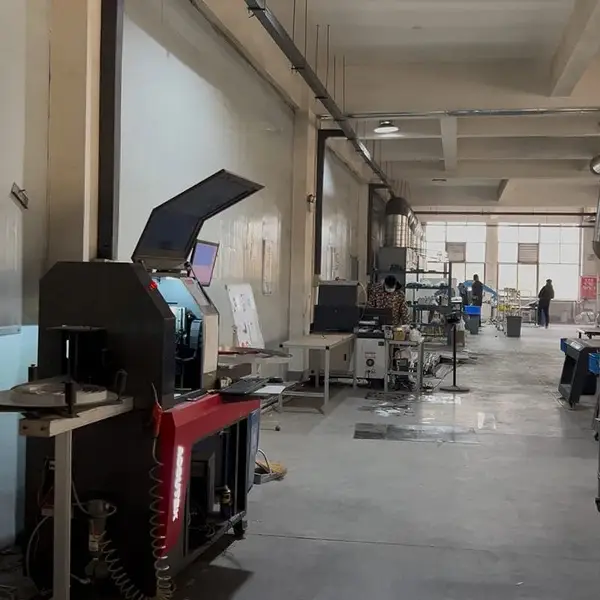
Real photo from our production floor — every sign we ship is made here.
See pricing, specs, and get a free quote for the sign type you need. Built in our factory, shipped worldwide.