I've been on this factory floor for 16 years. I've seen sign shops blow six-figure budgets because someone assumed a permit was "just a formality." It's not. It's the difference between a sign that lights up on schedule and a sign that sits in your shop for eight months while your client's landlord threatens legal action.
Here's what nobody tells you: getting a permit is harder than building the sign. I've watched guys spend two hours welding perfect stainless steel letters and then spend two months fighting city hall over a thumbs-up. This guide is what I'd tell you if you were standing next to me at the workbench with a beer in your hand. No fluff. No "navigate the complexities." Just what works and what doesn't.
How long does it really take?
Most cities quote 4–6 weeks. Double it. Triple it if you've never done this before.
Here's the real breakdown. Small towns with a one-person planning office: 2–4 months. Big cities like LA, Chicago, or New York: 6–12 months on a bad day. Why? Because they want stamped structural drawings, electrical load calculations, UL listings, ADA compliance proof, and a whole stack of paper that most sign fabricators don't have on hand. The ugly truth is that half the delay is on you — you submitted incomplete paperwork. The other half is the city reviewer who works three days a week and treats your file like a hobby.
I've seen a 2mm acrylic face get rejected because the city code said "minimum 3mm for sign faces over 10 square feet." That cost the shop two weeks and $600 in rework. The sign would have survived a hurricane with 2mm, but code doesn't care about physics.
What you actually need to submit
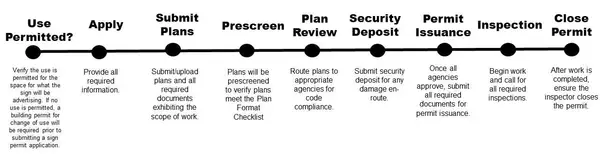
You're not walking into city hall with a brochure. You need a complete permit package. Here's the short list:
- Site plan showing sign location, setbacks, building elevation.
- Sign elevation drawing with dimensions, materials, attachment method.
- Electrical one-line diagram for illuminated signs.
- Structural calculations signed by a licensed engineer (if over a certain size — usually 2 feet or 50 pounds).
- UL listing or ETL certification for the electrical components.
- Cut sheets for all materials: LEDs, power supplies, acrylic, metal gauge.
I've been doing this long enough to know that when you hand over a binder with a clear table of contents and color tabs, the reviewer smiles. It cuts your timeline by 20% easy. When you show up with a crumpled envelope, they put your file at the bottom. That's not in the codebook, but it's real.
If you're ordering front-lit channel letters for a storefront, make sure your spec sheet includes the exact LED module type (SMD 2835, 5730) and the acrylic thickness (2mm or 3mm — most cities default to 3mm for outdoor). I've seen permits stall for three weeks because the reviewer couldn't find "fire rating" on the acrylic cut sheet. Mitsubishi acrylic is inherently fire-rated, but you need to show the certificate.
Three rookie mistakes that kill your timeline
Here's what nobody tells you: most sign shops don't know their own local codes. I've had customers in Orlando order back-lit halo letters without checking setback distances. The letters were beautiful. But they were too tall. Six feet from the property line required a variance. That's a separate 3-month process. The sign sat in their warehouse.
Mistake #1: Ignoring IP ratings. IP65 is the minimum for outdoor. But "minimum" doesn't mean it's right for your location. Coastal areas? You want IP66 or even IP68. A client in Galveston put up IP65 channel letters. After one nor'easter, water got inside and shorted the LEDs. We replaced them under warranty because our spec said IP65, but the sign was dead. The city didn't care — but the client sure did. Most cities don't require IP66. They should.
Mistake #2: Assuming UL/ETL is optional. If your sign is illuminated and it's in any US city with a pulse, they will ask for UL listing on the whole assembly — or at least on the electrical components. CE marking is not a substitute. CE costs 20,000–50,000 RMB (about $3,000–$7,000 USD) and takes two weeks to get. UL costs $4,000–15,000 and takes 4–9 months. Most Chinese factories don't have UL. If you buy from one that doesn't, you're facing a permit denial or an extra $10,000 to have a local UL shop list it after arrival. I've seen it happen. It's brutal.
Mistake #3: Not submitting ADA compliance for tactile signs. Interior signs that identify restrooms, exit stairs, or room numbers must have Grade 2 Braille, non-glare finish, and be mounted 48–60 inches above floor. I've watched a $200 acrylic sign cost a shop $800 in rework because they used gloss finish instead of matte. The city inspector pulled out a tape measure and a microscope. They do that.
Materials that speed up (or slow down) permitting
Some materials get through faster because reviewers know them. 304 stainless steel letters have been around for decades. There's a standard spec sheet. Reviewers nod and move on. 316 stainless takes 20–30% longer because they want to see a mill certificate proving the 2–3% molybdenum content. For a coastal sign, that's the right material. For a strip mall in Nebraska, it's overkill. But if you spec 316 and don't have the paperwork, you wait.
Aluminum is another easy one. 1.0–1.6mm thickness, anodized or powder coated. It's lightweight — 1/3 the weight of steel — and those strength calculations are simpler for a structural engineer. That means lower engineering fees and faster approval. Aluminum letters acrylic LED letters with a 3mm acrylic face and SMD 2835 LEDs: that's a permit package that flies. The materials are well-understood by every building department in America.
But if you try to import a one-off design with a custom LED module from a supplier with no UL, expect delays. I've had clients ask for "DMX programmable" or "color-shift" materials. Those are cool, but you need to provide the UL data for the controller. Some Chinese factories have never heard of UL. They'll send you a CE cert that's a PowerPoint template. I'm not joking. I've seen it.
How to cut your permit timeline in half
Here's the trick I've learned after 16 years: work with a fabricator who already knows US code. When we build front-lit channel letters for export, we include a permit packet — cut sheets, UL certificates on all LEDs and power supplies, structural calculations if needed. That's worth its weight in gold. I've seen a shop get a permit in 11 days because the reviewer didn't ask a single follow-up question. Everything was there.
Other shortcuts: pre-approve your sign design with the city before you fabricate. Some cities offer "conceptual review" for $50–200. Worth every penny. Also, build a relationship with the plan reviewer. They're human. They remember who submits clean packets and who gives them hassle.
The ugly truth is that 90% of permit delays are preventable. They happen because someone ordered a sign before checking zoning, or because the supplier's LEDs are not UL-listed, or because the drawings don't include a scale bar. Fix those three things, and you're 85% there.
FAQ — the answers I'm tired of giving
Can I install the sign while the permit is pending?
No. Not unless you want a stop-work order, a fine that starts at $500, and the possibility of having to tear it down at your own cost. I've seen it happen. The owner thought "it's just a temporary sign." It wasn't. The city made him take it down with a crane. That cost $8,000.
Do I need a permit for a single letter?
Depends on the city. Most require permits for any illuminated sign — even one letter. If it's non-illuminated and under 6 square feet, some cities let it slide. But "let it slide" is not a permit. I've seen a $200 stainless steel letter get a $1,500 fine because the inspector was having a bad day. Get the permit.
What if my sign is direct-import from China without UL?
You're going to either pay for a local UL listing (another $4,000–15,000 and 4 months) or you'll fight with the building department for a waiver. Most won't give you one. The smarter play: choose a factory that ships with UL-certified components. We do. I'm telling you this not because I'm selling — it's because I've cleaned up too many messes from guys who went cheap on the spec.
How long should I budget for permitting?
For a standard front-lit channel letter sign in a typical suburban city: plan 8 weeks minimum. For a complex halo-lit or custom fabricated sign: 12–16 weeks. If the city says "we usually do it in 4 weeks," ask them what "usually" means. Usually means "if everything is perfect." It never is.