For sign shop owners and commercial buyers, signage is not merely an operating expense—it is a capital asset with significant tax advantages. The Internal Revenue Code, specifically Section 179 and bonus depreciation rules, allows you to deduct a substantial portion of your signage investment in the first year. This can reduce your taxable income by thousands of dollars, effectively lowering the net cost of custom channel letters, metal relief signs, and digital displays. Understanding how to classify and depreciate signage correctly is essential for maximizing these benefits.
How the IRS Classifies Signage as Tangible Personal Property
The IRS treats most commercial signage as tangible personal property under MACRS (Modified Accelerated Cost Recovery System) with a 5-year or 7-year recovery period. This classification is critical because it qualifies signage for accelerated depreciation methods, including Section 179 and bonus depreciation. Permanent signs attached to a building—such as channel letters or monument signs—are generally classified as 7-year property. Freestanding signs, like pylons or pole signs, often fall under the same category. Digital displays, including LED message centers, may qualify as 5-year property if they contain computer components. Always verify with a tax professional, but the default MACRS class for most signage is 7-year, 200% declining balance.
Section 179 Deduction: Immediate Expensing for Signage Investments
Section 179 allows you to deduct the full purchase price of qualifying signage in the year it is placed in service, up to $1,160,000 for 2024 (with a phase-out threshold of $2,890,000). For a sign shop owner purchasing $50,000 worth of custom LED channel letters from Aochuang Sign, this means an immediate deduction of $50,000—not spread over 7 years. The sign must be used for business purposes more than 50% of the time. This deduction applies to both new and used signage, provided it is new to you. For buyers, this can reduce the after-tax cost of a $10,000 storefront sign to roughly $7,000, depending on your tax bracket.
Bonus Depreciation: 80% First-Year Deduction for New Signage
Bonus depreciation allows an additional first-year deduction on qualifying new signage placed in service between 2023 and 2027. For 2024, the bonus rate is 80% (down from 100% in 2023). This applies to new assets only, not used signage. If you purchase a $20,000 digital display from Aochuang Sign, you can deduct 80% ($16,000) in year one under bonus depreciation, plus the remaining 20% under standard MACRS. Combined with Section 179, you can potentially deduct up to 100% of the cost in the first year. However, Section 179 must be applied first, then bonus depreciation on any remaining balance. This stacking strategy is powerful for large signage projects.
Comparison: Standard Depreciation vs. Accelerated Methods for Signs
| Method | Recovery Period | Year 1 Deduction ($10,000 Sign) | Total Deduction Over Life | Best For |
|---|---|---|---|---|
| Standard MACRS (200% DB) | 7 years | $1,429 | $10,000 | Small purchases under $2,500 |
| Section 179 | Immediate | $10,000 | $10,000 | Used or new signs, up to $1.16M |
| Bonus Depreciation (80%) | 1 year + MACRS | $8,000 + $286 | $10,000 | New signs only, large investments |
| Section 179 + Bonus | Immediate | $10,000 | $10,000 | Maximum first-year deduction |
Note: Standard MACRS uses half-year convention for year 1. Section 179 and bonus depreciation require the sign to be placed in service by December 31. Plan your signage purchases from Aochuang Sign accordingly—our 7-15 day lead time ensures delivery before year-end for timely installation.
Practical Strategies for Sign Shop Owners and Commercial Buyers
For sign shop owners, treat fabricated signs as inventory until sold. Once installed, the sign becomes a depreciable asset for the buyer. If you manufacture signs for your own use (e.g., a showroom sign), capitalize the cost and deduct under Section 179. For buyers, bundle installation costs with the sign purchase—these are part of the depreciable basis. A $15,000 channel letter set from Aochuang Sign with $2,000 installation yields a $17,000 basis for depreciation. Avoid classifying signage as a building improvement (39-year property), which eliminates accelerated deductions. Ensure the sign is not structurally integrated into the building. Freestanding signs and wall-mounted channel letters typically pass this test.
Documentation and Compliance: Protecting Your Deductions
Maintain detailed records: purchase invoices, installation contracts, and photos of the sign in service. The IRS requires proof of placed-in-service date. For Aochuang Sign purchases, retain the commercial invoice showing the product description, cost, and shipping date. If you claim Section 179, file Form 4562 with your tax return. Bonus depreciation requires the same form. For signs costing more than $2,500, capitalize and depreciate them—do not expense as supplies. Repair and maintenance costs (e.g., LED replacement) are deductible separately. Work with a CPA experienced in tangible property regulations to avoid reclassification during audit.
Frequently Asked Questions
Can I use Section 179 for used signage purchased from a reseller?
Yes. Section 179 applies to both new and used signage, as long as it is new to you and used for business. A used channel letter set from a liquidation sale qualifies, provided it is placed in service in your business.
What is the minimum cost for a sign to qualify for depreciation?
The IRS de minimis safe harbor allows expensing items under $2,500 per invoice (or $5,000 with applicable financial statements). For signs costing more, you must capitalize and depreciate them. A $1,000 custom sign can be expensed as supplies; a $10,000 monument sign must be depreciated.
Does installing signage on a leased building change depreciation treatment?
No. Signage is still tangible personal property, even if attached to a leased building. You depreciate it over 5 or 7 years, not the lease term. However, if the sign is permanently affixed and cannot be removed without damage, the landlord may treat it as a leasehold improvement. Consult a tax advisor for lease-specific scenarios.
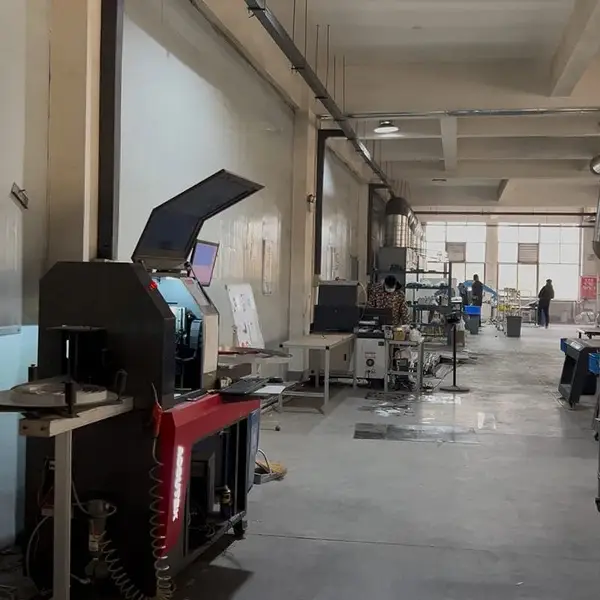
Real photo from our production floor — every sign we ship is made here.
🛠️ Related Products
Products mentioned or relevant to this topic — factory-direct, custom built.
Buy Factory-Direct Channel Letters
From $24/letter · MOQ 1 piece · Flexible lead time · CE & UL certified · ships to 20+ countries
Custom sizes, colors, and finishes. Get a factory price in 24 hours.
Get a Free Quote Copy EmailWhatsApp +86 13865703472 · business@aochuangsign.cn