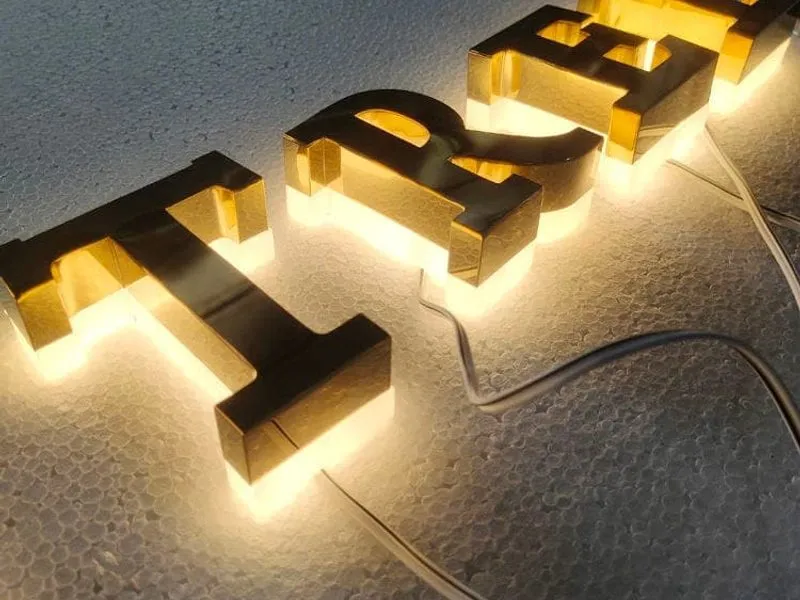
I’ve wired up over a half-million channel letters since 1997, and I’ve swapped out dead modules in signs that should’ve lasted a decade but barely survived one wet winter. The failure almost always traces back to one bad call: which SMD chip got stuffed inside the channel letter. It’s not about brand names on the reel. It’s about physics, binning, and whether the factory cared enough to match the chip to the letter depth. Get this right, and your sign glows evenly for years. Get it wrong, and you’ll be renting a bucket truck at 2 AM to yank flickering diodes while the client fumes.
The market shoves three chip types at you: 2835, 5050, and 5730. They aren’t interchangeable. And most comparison charts you’ll find online were written by people who’ve never crimped a wire. So let’s cut through the marketing nonsense with real numbers from a factory floor in Lu’an, China, where we build channel letters every day.
SMD stands for Surface-Mounted Device. The numbers are the chip dimensions in tenths of a millimeter. A 2835 is 2.8mm by 3.5mm. A 5050 is 5.0mm by 5.0mm. A 5730 is 5.7mm by 3.0mm. Bigger doesn’t automatically mean brighter, but it does affect heat dissipation, beam angle, and how many diodes you can cram onto a module strip.
All three types can hit L70 ratings of 50,000 hours when driven properly. The ugly truth is that “50,000 hours” is a lab number at 25°C ambient, and your sealed channel letter in Phoenix hits 70°C by noon. That gap between datasheet and rooftop is where reputations die. I’ve seen modules stamped with Samsung bin codes that failed in 14 months because the factory drove them at 120% current to make the spec sheet look brighter. Always ask for the drive current, not just the lumen number.
This is the industry standard for a reason. 2835 chips pump out 100-150 lumens per watt, run cool, and cost less than a cup of coffee per module. In a standard 4-inch-deep front-lit channel letter, a single row of 2835 modules spaced 3 inches apart gives you buttery smooth illumination without hotspots.
We use 2835 modules in probably 80% of the front-lit channel letters that leave our factory. They’re slim enough for rimless letters, efficient enough to keep power supply costs down, and forgiving if your installer accidentally pinches a wire. If you’re doing a storefront in a strip mall with no direct sun, a quality 2835 module from a supplier who uses epoxy-domed lenses and 2oz copper PCBs will last 5+ years without blinking.
Here’s what nobody tells you: many “2835” modules sold on AliExpress for $0.15/ft are really 0.5-watt chips with thinner phosphor coatings that shift color temperature after 1,000 hours. You’ll see the letters turn from warm white to puke green. Our factory only buys binned chips from Samsung, Osram, or Lan Jing. They cost 40% more but don’t embarrass you after two summers.
If you need color-changing signs, SMD 5050 is your only realistic choice. These larger chips pack three diodes in one package—red, green, blue—so a single module can mix any color when paired with a controller. But for single-color white signage, 5050 is a waste of money.
I’ve seen this go wrong: a casino ordered 600 feet of warm-white 5050 modules for an interior lobby sign because a brochure said “5050 is brighter.” The installer had to retrofit a massive aluminum heatsink because the modules ran so hot the acrylic faces warped. They could have used 2835 at half the module cost and one-third the heat. 5050 for static white is like buying a Ferrari to drive to the grocery store.
5050 modules shine when you need RGB effects on dual-lit channel letters or backlit halo letters with dynamic color programs. Just budget for a meatier power supply and wider letter returns. Those three diodes pull about 0.24 watts per chip, so a 10-foot letter can eat up 60 watts fast. Vent the letter can properly or the LEDs will cook themselves.
The 5730 chip pushes 40-60 lumens from a single diode, which is nearly double the output per chip of a 2835. That means you can space modules wider, use fewer of them, and still hit the light intensity of an airport terminal sign. For deep channel letters (over 6 inches return) or for back-lit halo letters mounted far from the wall, 5730 modules are the tool you grab.
Our crew slaps 5730 modules into halo-lit letters when the wall surface is dark brick or the client wants the glow to bleed three inches onto the facade. The beam angle on a 5730 is typically 120 degrees, so the halo spreads evenly with fewer dead spots. But the modules cost 20-30% more than 2835 equivalents, and they need heat-sinking. If your letter return is a thin 0.063” aluminum and you stuff it with high-output 5730s, you’ll get diode drift—the brightness will drop noticeably within a year.
Look, I love the raw power of a 5730 in a properly engineered letter. But I’ve talked more than one sign shop out of using them in a shallow rimless sign. The acrylic face sits too close, you get bright pinpoints of light instead of a smooth face, and the end client complains about “dots.” Use 5730 where you have depth to play with and a genuine need for high luminance.
Here’s a cheat sheet based on 16 years of trial and error:
LEDs hate heat. The L70 rating assumes a junction temperature of 85°C, but in a sealed channel letter on a black building in Texas, the inside air hits 65°C and the junction spikes to 105°C. At that temperature, the lifespan craters from 50,000 hours to about 15,000 hours. That’s the difference between a 5-year sign and one that dims to 70% brightness in 18 months.
Here’s what nobody tells you: aluminum channel letter returns aren’t just for structure—they’re the LED’s heatsink. When a factory uses 0.040” aluminum instead of 0.063” or stainless steel instead of aluminum, the heat can’t escape. Stainless steel has terrible thermal conductivity. A 304 stainless letter with tightly packed 5050 modules is a little oven. We recommend aluminum returns or at least a stainless back with aluminum returns for any sign using high-output modules.
The ugly truth is that an IP65 sticker on an LED module doesn’t mean jack if you seal it inside a watertight letter with no weep holes. Condensation kills modules faster than rain ever could. We drill a pair of 1/8” drain holes in the bottom return of every outdoor letter, no exceptions. Some architects object. I tell them a pinhole drain beats a dead light every time.
About four years ago, a sign shop in Florida imported 200 feet of “5050 module rolls” from a trade show vendor at $1.20 per foot. They looked identical to the Samsung spools we use. Same yellow tape, same copper traces. 18 months later, half the diodes in a beachside hotel sign shifted to a sickly blue, and the other half flickered like a disco. The factory had used recycled phosphor and iron instead of gold bonding wire. The entire sign had to be re-faced and re-lit, costing three times the original “savings.”
I’ve cut open enough failed modules to spot the shortcuts. Quality modules use 2-ounce copper on the PCB, gold wire bonds inside the LED package, and epoxy domes that don’t yellow. Cheap modules use 1-ounce copper that delaminates when the sign flexes, copper wire bonds that corrode, and silicone domes that turn milky in UV. The price difference is about $0.50 per foot. Over a 50-foot sign, that’s a $25 gamble with a $5,000 potential loss. You do the math.
Our factory warranties the LEDs in our channel letters for 2 years, and the power supply for 1 year. But we build for 5+ years of real-world life because warranty replacements in another country eat profit faster than a bad sushi lunch. We aging-test every assembled sign for 8 to 12 hours at full brightness before it goes into the crate. If a module’s going to fail early, it usually dies in that test.
On our 3,000m² floor in Lu’an, we stock 2835 modules in 3000K, 4000K, and 6500K color temperatures. That covers 90% of orders. We keep 5730 modules in 6000K and 4000K for halo letters and large-format boxes. 5050 RGB modules we order per project because the chip batch variation is too wide to stock—if you need color consistency across multiple signs, the entire order must come from the same binning run.
We can source Samsung, Osram, or Lan Jing chips with a certificate of authenticity. We don’t push them unless a customer asks because the price bump is real. But if you’re bidding a national brand where color temperature can’t drift, pay for the bagged-and-tagged LEDs. We’ll document the bin code on your invoice.
I won’t lie and say we can beat every price on the planet. Our 2835 modules cost about what a decent mid-range supplier charges in the US for wholesale, before shipping and the Section 301 tariff. But the sign itself — a standard 12-inch front-lit channel letter — leaves our dock at $35-65, ready to wire. That same letter, installed on a storefront in Dallas, runs $350-500. The savings are in the labor and the fabrication, not just the LED reel.
When you’re importing LED channel letters, remember the 30% US Section 301 tariff applies to the total declared value, including the LEDs. Air freight can add $4-12 per kilogram, and a crate of 20 letters can weigh 40 kg. Sea freight LCL runs $80-200 per cubic meter but takes about 65 days. Express shipping gets a sample letter to your door in 7-10 days for $30-100, which is how most of our clients test the module brightness before a bulk order.
We’ve shipped signs worldwide. The modules don’t know they’re crossing an ocean. What matters is that the spec sheet you approve matches the chips we solder. Every job gets a QC card with actual lumen readings per module at working current, not a photocopied brochure page. That card gets taped inside the crate before it ships.
Look, if you take nothing else away, remember this: the best LED chip in the world can’t save a poorly designed channel letter. I’ve seen 2835 modules generate a flawless halo when the letter back had a 1.5-inch standoff and clean mounting. And I’ve seen 5730 modules create a blotchy mess because the wall was uneven and the installer cranked the letter tight against the brick.
Spend your mental energy on choosing the right depth, the right face material, and the right module for the application. Don’t get hypnotized by lumens-per-watt numbers on a data sheet. Stainless steel letters look bulletproof, but they demand more attention to heat. Aluminum letters are lightweight and kind to your LEDs. Match the metal to the module, and you’ll sleep better.
If you’re still scratching your head, email us what you’re trying to light. We’ll send back a module spec with real photos of similar installations, not a stock image. This stuff isn’t magic. It’s just paying attention.
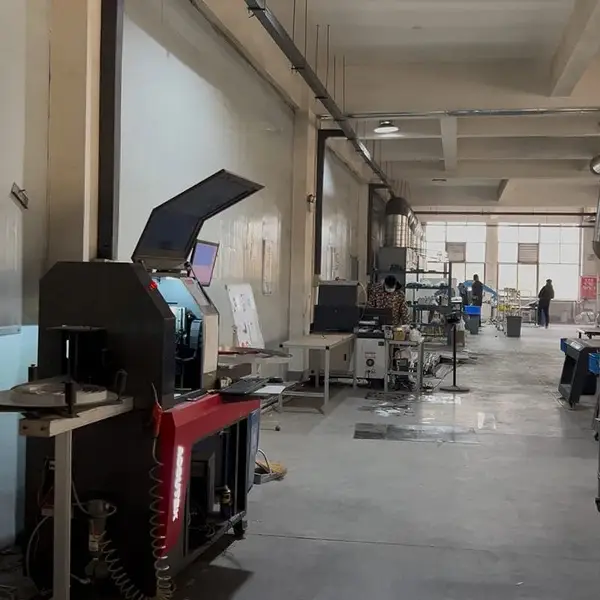
Real photo from our production floor — every sign we ship is made here.
Products mentioned or relevant to this topic — factory-direct, custom built.
From $24/letter · MOQ 1 piece · Flexible lead time · CE & UL certified · ships to 20+ countries
Custom sizes, colors, and finishes. Get a factory price in 24 hours.
Get a Free Quote Copy EmailWhatsApp +86 13865703472 · business@aochuangsign.cn
See pricing, specs, and get a free quote for the sign type you need. Built in our factory, shipped worldwide.