I've been in this trade since before LED was a thing. Twenty-seven years on the factory floor, and I still see the same mistake: sign shop owners grab three quotes, look at the bottom line, and pick the cheapest. Then they spend six months fighting with that supplier about yellowing acrylic and dead LEDs. Don't be that guy.
The ugly truth is that two quotes for what looks like the same sign can vary by 300%. It's not always the supplier screwing you — it's that you're comparing a Corvette to a go-kart. Both have four wheels and an engine, right? No. Same with signs. A $120 front-lit channel letter from our factory uses Mitsubishi acrylic and Samsung LEDs. That $80 quote from the other guy? Domestic acrylic that yellows in 18 months and LED modules that'll fail before your warranty expires.
Look, I've watched sign shops pay $800 for a front-lit letter from a domestic fabricator. Same 304 stainless, same Samsung LEDs. We ship that letter for $120. But you can't just throw numbers around. You need to know what you're actually buying. Here's the checklist I hammer into every new buyer.
First, acrylic thickness and source. A 3mm acrylic face from Mitsubishi or Degussa gives you 92% light transmittance and UV resistance that lasts 5-8 years. Domestic acrylic? 1-2 years before it's yellow and your customer is calling you. A 2mm face cuts 90% transmittance. Your customer won't notice the 2% difference but they will notice the 40% cost bump for 3mm. Get it in writing which thickness and which brand they're using. If they say "premium acrylic," ask for the brand name. Watch them fumble.
Second, LED modules. This is where most quotes hide their bullshit. Quickest way to spot bad LED modules: look at the solder joints. Dull gray = won't last 18 months. Shiny silver = proper lead-free solder. I've been saying this for a decade. SMD 2835 chips at 100-150 lm/W are industry standard. If they're quoting SMD 5050 for basic white light, they're selling you RGB chips for a job that doesn't need RGB. Quality modules from Samsung or Osram last 5+ years. Cheap modules die in 12-18 months.
L70 life needs to be 50,000 hours minimum. Get that number on the quote.
Third, material gauge. Stainless 304 is 1.0-3.0mm common. 316 has molybdenum for coastal areas — 20-30% more expensive. If you're putting a sign in Miami Beach and they quote 304, you'll be replacing it in 3 years. Aluminum is 1/3 the weight of steel, lasts 8-12 years outdoors. Get the gauge written down. "Heavy duty" means nothing. "1.5mm 304 stainless" means everything.
Fourth, finish specs. Brushed #4 finish looks different than mirror #8. PVD coating lasts longer than powder coat. Anodized aluminum has a natural rust-proof layer. Bake paint to any RAL color. If your quote just says "stainless steel," they could be sending you raw sheets with a sandpaper rub. I'm not joking.
I've seen this go wrong more times than I can count. A customer gets a CE-certified sign from a factory. Six months later the LEDs are flickering. They go back to the certificate and realize it's from 2018 and expired. CE marking costs 20,000-50,000 RMB. Most factories will say they have it. Ask to see the certificate with today's date. Watch them sweat.
UL 48 certification runs $4,000-15,000 and takes 4-9 months. That's real money and real time. If a supplier says they're UL-certified for $30 a letter, they're lying or they're sharing someone else's cert. ETL is a UL alternative, 10-30% cheaper. IP65 means dust-tight and water jets. That's minimum for outdoor. IP66 handles powerful jets, needed for coastal. NEC Article 600 governs US electrical. If they don't know that, walk.
Laser cutting tolerance on our floor is ±0.1mm. That means your letters fit exactly. If a quote doesn't mention tolerances, they're probably freehand cutting with a jigsaw. I've seen it.
The ugly truth is that factory-direct pricing saves you 50-65% on product. But shipping eats that if you're not careful. Express for small orders: 7-10 days, $30-100. Air freight: about 10 days, $4-12 per kg. Sea freight: about 65 days, $80-200 per cubic meter LCL. A full container is $1,200-3,000.
LCL gets your crate handled 6-8 times between our dock and yours. Every touch is a chance for damage. That's not in the brochure. I've seen crates show up with a forklift hole through the top. Don't cheap out on crating — we use foam, carton, then plywood. Ask your supplier what their packaging process is. If they say "standard packaging," ask what that means.
US Section 301 tariff hits about 30% on Chinese signs. Factor that in. Domestic fabrication for a stainless steel letter runs $200-700 installed. Factory-direct plus shipping plus tariff is still often half that. But you need to know the math before you buy.
Stop asking for a quote on "a 3-foot channel letter." That tells them nothing. Here's what a real spec looks like: "304 stainless steel, 1.5mm thick, brushed #4 finish. 3mm Mitsubishi acrylic face, UV-resistant. SMD 2835 Samsung LEDs, 4000K neutral color temp, L70 50,000 hours. IP65 outdoor rated. Front-lit only. Confirm CE certification with current date. Include lead time within 10 days. Pack in foam + carton + plywood crate."
Send that to three factories. Then you're comparing apples to apples. Anything less, you're just gambling.
Yes. 3mm acrylic cuts 92% light transmittance. 2mm cuts 90%. Your customer won't notice the 2% difference. But the 3mm sheet costs about 40% more because it's thicker and the UV-resistant grade costs more to produce. For outdoor signs that get direct sun, the UV resistance matters more than the thickness difference. For indoor signs where the light source is close, 2mm is fine. Don't let a supplier upsell you to 3mm indoor unless you need the durability against bumps.
304 has 18% chromium and 8% nickel. It's fine for 10+ years in normal conditions. 316 has molybdenum added to resist chloride corrosion. That matters for coastal environments, industrial areas with chemical exposure, or highway signs near salt spray. If you're in Ohio, 304 is fine. If you're on the Gulf Coast, pay the 20-30% premium for 316. Otherwise you're replacing pitted letters in 3 years.
You can't tell from photos. Ask for a sample module. Look at the solder joints — dull gray = cheap. Shiny silver = proper. Then run it for 48 hours at full brightness. If it dims or flickers, it's trash. The remaining project-specific details depend on the approved design, installation conditions and local code; confirm them before ordering.

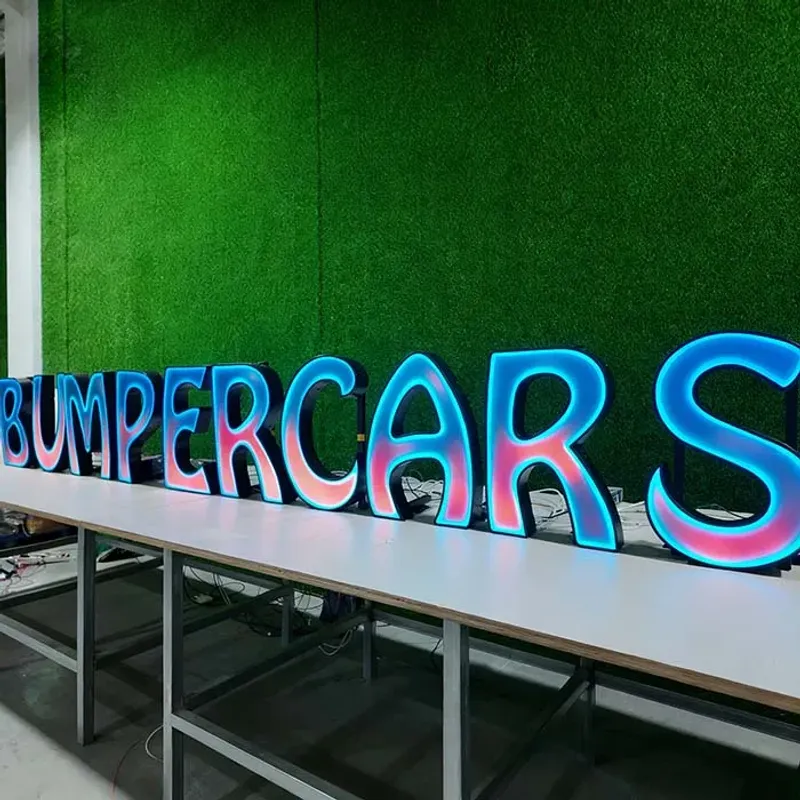
Real photo from our production floor — every sign we ship is made here.
Products mentioned or relevant to this topic — factory-direct, custom built.
From $24/letter · MOQ 1 piece · Flexible lead time · Project-specific compliance documents · ships to 20+ countries
Custom sizes, colors, and finishes. Get a factory price in 24 hours.
Get a Free Quote Copy EmailWhatsApp +86 13865703472 · business@aochuangsign.cn
See pricing, specs, and get a free quote for the sign type you need. Built in our factory, shipped worldwide.