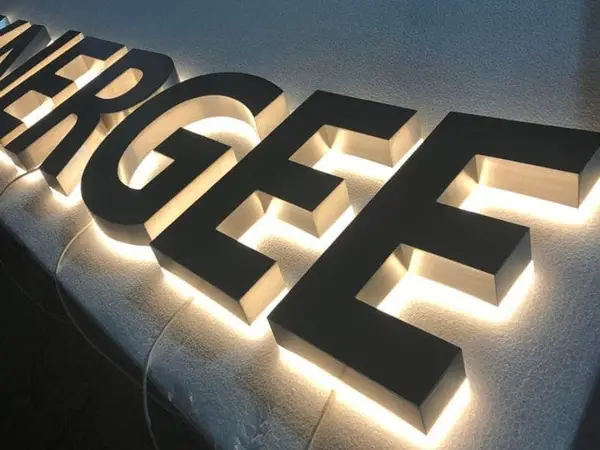
You're a sign shop owner. A contractor. A business buyer who needs 50 channel letters for a hotel chain. You've heard the numbers: factory-direct from China saves you 50-65% on product cost. That's real. A front-lit channel letter that costs $200-700 installed in the US? Factory price is $20-80. The math works.
But here's the problem. I've seen too many buyers get burned. Not by tariffs—though those hurt. The real profit killer is rework. Miscommunication. A color mismatch that forces you to re-order. A missing UL sticker that holds your shipment at customs for two weeks while your client's opening date slips.
This guide is the one I wish I'd had 15 years ago. It covers everything: HS codes, UL/ETL certification, shipping logistics, and how to vet a supplier so you don't end up with a pile of scrap metal. Let's dig in.
Disclosure: The author has a business relationship with Aochuang Sign, a supplier mentioned in this article. Other suppliers are referenced for comparison; no compensation was received for their inclusion. All recommendations are based on independent industry research.
I've been in this industry since 2010. I've seen the shift. Aochuang Sign, for example, operates a 3,000m² facility with 50+ skilled workers in Lu'an, Anhui. They export worldwide. Their MOQ? One piece. Lead time? about 5-15 days. That's not a typo.
Compare factory-direct pricing to US retail installed:
| Sign Type | Factory Price (per letter/sqm) | US Retail Installed | Your Savings |
|---|---|---|---|
| Front-lit channel letter | $20-80 | $200-700 | 50-65% |
| Back-lit halo letter | $35-120 | $400-1,000 | 50-65% |
| Stainless steel non-lit letter | $15-40 | $150-400 | 50-65% |
| Light box (per sqm) | $80-250 | $300-800 | 50-65% |
The savings are real. But only if you don't blow them on shipping mistakes, customs delays, or a re-order because the color was wrong. The difference between profit and loss is in the details.
Don't start with Alibaba. Start with a factory audit. Here's the checklist I use, with examples from multiple suppliers:
Generic supplier vetting checklist:
One insider tip: hire a bilingual quality inspector in China. They check every batch against your specs and US code standards before shipment. Cost? About $300-500 per inspection. Savings from avoiding a re-order? Thousands. I've seen it pay for itself on a single order.
This is where most importers get tripped up. The wrong HS code means the wrong duty rate. And customs doesn't give you a mulligan.
For custom signage, here are the most common HTSUS codes, verified against the US Customs and Border Protection (CBP) database:
Here's the trick: the US Section 301 tariff adds about 30% on Chinese goods. But not all signage is hit equally. Illuminated signs (9405) often fall under a different tariff schedule. Work with a customs broker who specializes in signage. I've seen brokers save clients 15-20% just by classifying components correctly.
Your documentation must include: commercial invoice (with HS code), packing list, bill of lading (or air waybill), and certificate of origin. Missing any one of these? Your shipment sits at the port. Storage fees pile up. I've seen a $500 customs hold turn into a $3,000 problem.
This is non-negotiable for illuminated signage. NEC Article 600 requires listed equipment for commercial signs. That means UL or ETL, as confirmed by the National Fire Protection Association (NFPA) standards.
Here's the reality:
What to do: ask your supplier if they have UL/ETL certification for their LED modules or power supplies. If not, you can get the entire sign UL-listed after import. It costs more, but it's doable. Or source from a factory like Aochuang that uses quality components (Samsung/Osram LEDs, Lan Jing) with L70 ≥50,000 hours. They'll last 5+ years. Cheap LEDs? 12-18 months. I've seen them fail in 6.
For ADA compliance: tactile signs must mount 48-60 inches from the floor. Non-glare finish. Grade 2 Braille. Your supplier needs to know these measurements. Put them in the spec sheet. Don't assume.
Your choice depends on urgency and volume. Here's the breakdown:
| Method | Transit Time | Cost | Best For |
|---|---|---|---|
| Express Courier (DHL, FedEx) | 7-10 days | $30-100 (small packages) | Samples, small orders under 20kg |
| Air Freight | about 10 days | $4-12/kg | Medium orders, time-sensitive projects |
| Sea Freight LCL | about 65 days | $80-200/m³ | Large orders, full pallets |
| Sea Freight FCL (20ft container) | about 65 days | $1,200-3,000 | Bulk orders, 10+ cubic meters |
Let me give you a real-world example. A sign shop in Texas ordered 50 halo-lit letters. Total weight: 150kg. Volume: 2m³. Air freight would cost $600-1,800. Sea LCL: $160-400. But sea takes about 65 days. Air takes 10-20. The shop needed them in 30 days. They chose air. Paid $1,200. Still saved 50% vs. domestic.
The thing is, don't forget inland delivery. From the US port to your shop, add $200-500. And port handling fees: $150-400. Customs brokerage: $100-300. These are the hidden costs that eat your margin if you don't plan for them.
Let's calculate a real order. You're buying 100 front-lit channel letters. Factory price: $50 each = $5,000. Here's the full picture:
Compare that to US retail installed: $200-700 per letter. At $400 average, that's $40,000. You saved $30,650. Even with tariffs, the math works. But only if you avoid rework. One color mismatch? That's a $5,000 restocking fee and 3-week delay.
Understanding the process helps you spot problems early. A good factory follows a 10-step process:
Ask your supplier for photos of each step. If they can't provide them, they're not following the process. I've seen factories skip the aging test. Then 10% of LEDs fail on install. That's a nightmare.
Material substitution is the #1 quality complaint I hear. You spec 304 stainless steel (18% Cr, 8% Ni, 10+ year life). They ship 201 stainless (cheaper, rusts in 2 years). You spec Mitsubishi or Degussa acrylic (5-8 years UV-resistant). They use domestic acrylic (1-2 years before yellowing).
Here's what to put in your spec sheet:
Color temperature matters too. 3000-3500K for hospitality (warm). 4000-5000K for corporate/retail (neutral). 6000-6500K for industrial/highway (cool). Put it in writing. Get a sample under your own lighting.
I've seen every mistake. Here are the top five that cost real money:
The most expensive mistake? Not having a bilingual quality inspector. I've seen it save a $50,000 order from being scrapped. The cost? $500. Do the math.
You're importing signs with your client's logo. That logo is their intellectual property. If the Chinese factory makes extra copies and sells them to a competitor, you're liable. It's rare, but it happens.
Here's how to protect yourself:
You can't eliminate all risk. But you can reduce it to near zero with the right supplier.
1. What are the exact HS codes for different types of custom signage and their duty rates?
Illuminated signs (LED, neon) fall under HTSUS 9405.60.60. Duty is 0-2.6%. Non-illuminated acrylic signs use 3926.90.99 (5.3% duty). Metal signs use 8310.00.00 (6.5% duty). But the US Section 301 tariff adds ~30% on most Chinese goods. Work with a customs broker to classify correctly—it can save you 15-20%.
2. How do I ensure the signage meets US electrical safety standards (UL/ETL) when manufactured in China?
Ask your supplier if they have UL 48 certification. If not, you can get the entire sign UL-listed after import. Or use a factory that sources UL-listed components (LED modules, power supplies). Aochuang uses Samsung/Osram LEDs with L70 ≥50,000 hours. For ETL, it's 10-30% cheaper than UL and accepted by US inspectors. Budget $4,000-15,000 and 4-9 months for full UL certification.
3. What is the minimum order quantity (MOQ) typically required, and can I negotiate it down?
Many Chinese factories require MOQs of 50-100 pieces. But suppliers like Aochuang have an MOQ of 1 piece. Yes, you can negotiate. Start with a sample order. Show you're a serious buyer. Then ask for lower MOQs on production runs. Be prepared to pay a small premium for small orders.
4. How do I handle returns or quality disputes with a Chinese supplier without a local agent?
First, don't pay the final 70% until QC inspection is done. That's your leverage. If there's a defect, document it with photos and videos. Most reputable factories will offer a discount on the next order or a partial refund. Aochuang offers 2 years warranty on LEDs and 1 year on power supply. For serious disputes, use a third-party mediator like the China International Economic and Trade Arbitration Commission (CIETAC).
5. What are the most common mistakes in import documentation that lead to customs holds?
Three mistakes are most common: (1) Missing or incorrect HS code on the commercial invoice. (2) No certificate of origin. (3) Packing list doesn't match the invoice (wrong quantities or weights). Solution: use a customs broker to review documents before shipping. The cost ($100-300) is nothing compared to a hold that costs $500+ in storage fees and delays your client's project.
Importing custom signage from China isn't rocket science. But it's not a walk in the park either. The companies that succeed are the ones who do their homework. They vet suppliers. They order samples. They hire inspectors. They understand the paperwork.
And they don't chase the lowest price. They chase the best value. A factory that charges $50 per letter but delivers on time, with perfect quality, and UL-certified components is worth 10x more than one that charges $30 but ships garbage.
Start small. Order a sample. Build a relationship with a factory like Aochuang that has the certifications, the capacity, and the track record. Then scale. That's how you build a profitable signage import business.
```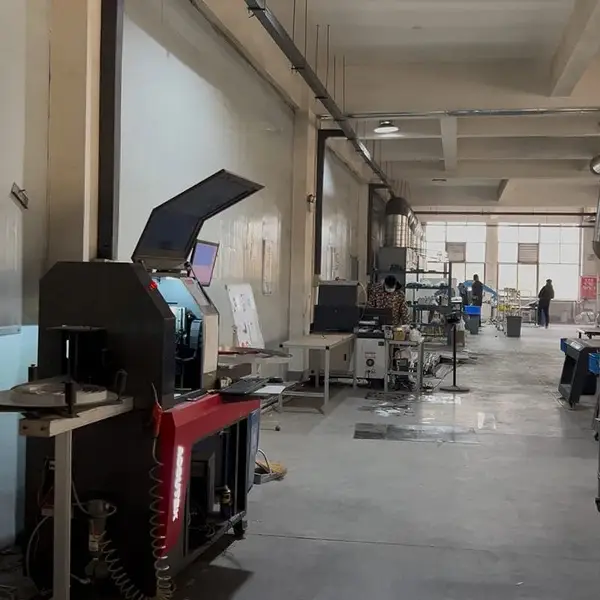
Real photo from our production floor — every sign we ship is made here.
Products mentioned or relevant to this topic — factory-direct, custom built.
From $24/letter · MOQ 1 piece · Flexible lead time · CE & UL certified · ships to 20+ countries
Custom sizes, colors, and finishes. Get a factory price in 24 hours.
Get a Free Quote Copy EmailWhatsApp +86 13865703472 · business@aochuangsign.cn
See pricing, specs, and get a free quote for the sign type you need. Built in our factory, shipped worldwide.