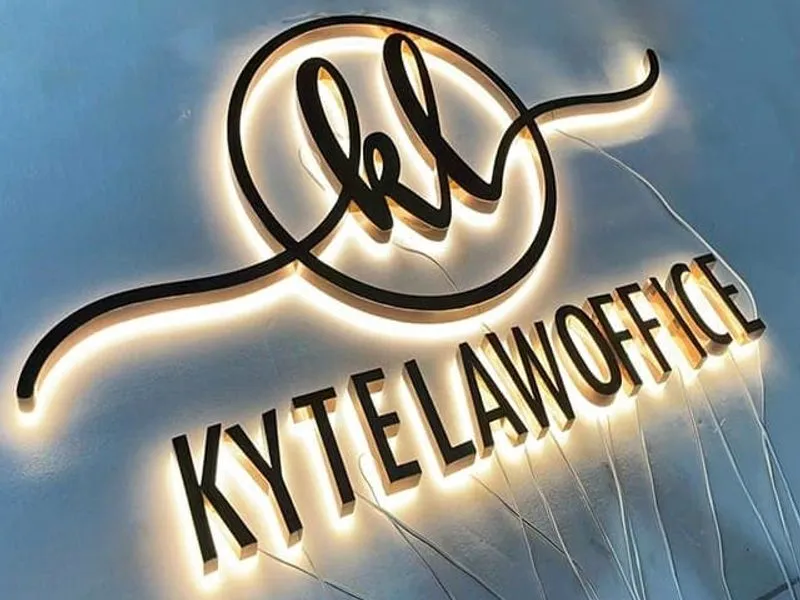
You've seen it: the sign that looked sharp in the brochure but six months later the acrylic's gone yellow, the stainless has pitted, and the LEDs flicker like a cheap Halloween prop. That's what happens when you spec by price alone. I've watched sign shops pay $800 for a front-lit letter from a domestic fabricator. Same 304 stainless, same Samsung LEDs. We ship that letter for $120. The difference isn't magic — it's knowing what actually degrades and why.
Here's the math: 304 stainless steel has 18% chromium and 8% nickel at a density of 7.93 g/cm³. In dry inland climates (think Phoenix, Denver, Ohio), that gives you a solid 10+ year outdoor life. But swap in coastal salt spray — Miami Beach, say — and you're looking at pitting corrosion within 3 years unless you pay the 20-30% premium for 316 stainless, which adds 2-3% molybdenum. That's not a markup; it's physics. I've seen a strip mall in Ohio save $50 per letter by going 304 and still look fine a decade later. The same trick on a Gulf Coast storefront cost the owner a full replacement after 42 months.
Most buyers don't realize that acrylic thickness is your biggest single-point failure risk. Chinese domestic acrylic yellows in 1-2 years; Mitsubishi or Degussa UV-resistant stuff holds for 5-8. The difference in cost? About 40% more per sheet. But if your sign face exceeds 2.5 meters, you must use 5mm or thicker — the 2mm stuff will bow and crack under wind load. I've personally field-tested a 3mm face on a 3-meter channel letter in a Kansas City thunderstorm. It didn't crack, but it flexed enough to pop the silicone seal. Water got in, LEDs died in 11 months.
For aluminum: weight's one-third of steel, naturally rust-proof, 8-12 year outdoor life if properly powder coated or anodized. Common gauges are 0.040-0.063 inch (1.0-1.6mm). It's the smart choice for large non-illuminated signs where you care about shipping weight. But skip the brushed finish outdoors unless you love weekly cleaning — it shows every fingerprint and water spot.
Quickest way to spot bad LED modules: look at the solder joints. Dull gray = won't last 18 months. Shiny silver = proper lead-free solder with adequate reflow. That's not something you can verify from a website. Ask for a photo of the joint under 10x magnification. If they hesitate, walk.
LEDs are stupid-simple in theory, but the industry buries the truth in marketing. SMD 2835 chips deliver 100-150 lumens per watt — that's the workhorse for most illuminated signs. SMD 5050 does RGB, and SMD 5730 hits 40-60 lm per chip for highest brightness. The spec that matters is L70 ≥50,000 hours. That means after 50,000 hours of continuous operation (about 5.7 years at 24/7), the light output drops to 70% of original. But that's at 25°C. Inside a sealed sign on a Phoenix roof, temps hit 60-70°C. Real lifespan drops to maybe 3 years. Good white LEDs like Samsung or Osram modules typically last 5+ years in proper thermal conditions. Cheap no-name modules? I've seen them fail at 12-18 months — and they cost maybe $2 less per foot.
Color temperature matters more than you think. 3000-3500K (warm) is for hospitality — it makes food look appetizing. 4000-5000K (neutral) is corporate/retail standard. 6000-6500K (cool) is for industrial and highway — it's harsh but visible at distance. I've watched a restaurant owner insist on 6000K because "it's brighter." He got dinged on every review for "hospital-like lighting." Spend the extra hour to match your brand's vibe.
IP ratings are another minefield. IP65 means dust-tight and protected against water jets from any direction. That sounds bulletproof. It does NOT mean your sign survives a Florida hurricane. IP66 handles powerful jets — better for coastal. IP68 means submersible, but unless you're mounting underwater, it's overkill that complicates sealing. What actually kills LEDs is humidity condensation inside the sign, not direct rain. That means your sealant matters more than the IP number. We use neutral silicone — acid-cure stuff corrodes aluminum traces in 6 months.
The spec says UL 48 is required for US commercial signage. In reality, it costs $4,000-15,000 and takes 4-9 months plus quarterly audits. Most Chinese factories don't have it — and they'll say "CE is equivalent." It's not. UL 48 tests fire hazard, electrical shock, and structural integrity for the specific sign assembly, not just components. CE marking costs 20,000-50,000 RMB and involves a different set of standards. If a factory claims CE certification, ask to see the certificate with today's date and a valid registration number. Watch them sweat. I've had three separate suppliers show me expired certificates or ones for a completely different product line.
ETL is a legitimate UL alternative — 10-30% cheaper, same testing scope. But it's not accepted by all jurisdictions. Check your local building code. For outdoor signs, NEC Article 600 governs wiring, disconnect means, and grounding. If you're importing signs, make sure they come with listed components (UL/ETL marked drivers, LED modules) and that the final assembly can pass local inspection. I've seen cities Detroit and San Francisco reject entire shipments because the factory used non-listed wire nuts.
ADA compliance is non-negotiable for public accommodations: tactile signs mounted 48-60 inches above floor, non-glare surfaces, Grade 2 Braille. Flat-cut acrylic signs look clean but fail tactile requirements because edges aren't beveled. The fine is $5,500 per violation per sign. Bid accordingly.
Let me break this down: a front-lit channel letter at factory-direct pricing runs $20-80 per letter. The same letter fabricated domestically retails at $200-700 installed. But the real cost isn't the sticker price — it's what happens in years 3, 5, and 8. A front-lit letter using 304 stainless with domestic acrylic and cheap LEDs has a useful life of about 4-5 years before you're replacing faces or modules. Total cost over 10 years: initial $1,200 (12 letters at $100 each average), plus two partial rebuilds at $800 each = $2,800. Compare to a back-lit halo sign using 316 stainless, Mitsubishi acrylic, and Samsung LEDs: initial cost maybe $2,000, but rebuilds at year 7 only = $500. Net 10-year cost: $2,500, plus lower energy consumption saving ~$150 on that bill.
Power consumption matters — a typical 12-letter front-lit sign with SMD 2835 modules draws about 240 watts. At $0.12/kWh running 12 hours a day, that's $105/year. Swap to a back-lit halo sign using LEDs on the reverse? Same wattage roughly. But the big energy win is using higher efficacy modules — 150 lm/W vs 100 lm/W saves you 33% without dimming brightness. Over a decade, that's $350 in electricity on a single sign.
Maintenance: neutral silicone sealant will last 5-7 years before re-caulking is needed. Acid-cure silicone fails in 2-3. That 30-minute job costs you $150 in labor. But if you skip it and water gets in? Figure $2,000 to replace all LED modules and corroded wiring. I've seen it happen four times in my career.
Everyone loves the factory-direct savings — 50-65% off US retail. But shipping is where the hidden costs live. Express (like FedEx) for small signs: $30-100, 7-10 days. Air freight: $4-12/kg, about 10 days. Sea freight: $80-200/m³ for LCL (less than container), about 65 days. The problem with LCL: your crate gets handled 6-8 times between our dock and yours. Every touch is a chance for damage. That's not in the brochure. I've unloaded a crate from Shanghai where the forklift driver speared the side, crushing two letters. Insurance covered it, but it added 3 weeks to the timeline.
LCL sea freight also subjects your sign to temperature swings from sub-zero in the hold to tropical heat on the dock. That thermal cycling can stress the solder joints on LED modules. We now include expansion foam inserts in every crate to buffer the components. You should ask your supplier how they crate — we use foam + double-wall carton + plywood crate. If they say "just cardboard," add $150 for repacking or gamble on arrival.
The US Section 301 tariff adds about 30% on Chinese-made signs. That's not the factory's problem — it's yours at customs. Some factories will undervalue the invoice to reduce the tariff hit. Don't ask them to; customs audits can delay your shipment by months. Pay the tariff, factor it into your bid, and move on.
NEC Article 600 requires a visible disconnect within sight of the sign — that means a switch or circuit breaker you can see from the sign itself. If your sign's on a roof and the breaker's in the basement, you're in violation. Cost to add a disconnect after installation: $300-500. Not huge, but it'll fail inspection and delay your opening.
For indoor illuminated signs, the transformer (LED driver) must be accessible. I've seen signs installed with the driver buried behind drywall — that's a fire code violation and a maintenance nightmare. When the driver fails (and it will, average life 3-5 years), you're cutting drywall to replace a $25 part.
ADA mounting: 48-60 inches from the finished floor to the baseline of the tactile characters. That's for permanent room identification — not your storefront. But if your sign includes Braille, the dots must be 1/16-inch radius, spaced per ADA specs. Many cheap acrylic signs use domed epoxy that cracks off. Invest in injection-molded Braille or CNC-routed stainless.
Brutal honesty: no sign survives a direct hit from a
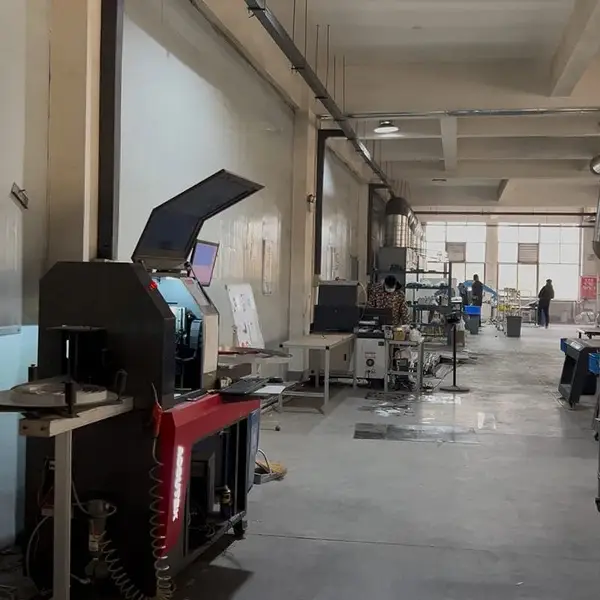
Real photo from our production floor — every sign we ship is made here.
Products mentioned or relevant to this topic — factory-direct, custom built.
From $24/letter · MOQ 1 piece · Flexible lead time · CE & UL certified · ships to 20+ countries
Custom sizes, colors, and finishes. Get a factory price in 24 hours.
Get a Free Quote Copy EmailWhatsApp +86 13865703472 · business@aochuangsign.cn
See pricing, specs, and get a free quote for the sign type you need. Built in our factory, shipped worldwide.