I’ve been in this industry for 15 years. I’ve watched sign shops burn thousands on tariffs they didn’t see coming. Here’s the hard truth: most importers focus on the 25% Section 301 tariff and panic. But the real money isn’t in avoiding China — it’s in how you classify what you’re buying.
A 4-foot by 8-foot LED cabinet sign from Aochuang Sign, FOB price around $1,200, can land at your shop with an extra $300–$500 in duties, freight, and broker fees. Or it can land with $150. The difference? A six-digit HTSUS code and whether your supplier ships it assembled or in pieces.
Let me walk you through the numbers, the codes, and the strategies that actually work. No fluff. No “navigate the complexities.” Just what I’ve learned from hundreds of containers crossing the Pacific.
The big one. Section 301 tariffs hit Chinese imports starting in 2018. For signage, the applicable lists are 4A and 4B. Most illuminated signs — LED channel letters, light boxes, neon flex signs — fall under HTS 9405.60. That code carries a base duty rate of 3.9% plus the Section 301 additional duty of 25%. Total: 28.9% on the declared value.
But here’s where it gets weird. Non-illuminated signs, like stainless steel 3D letters or acrylic letters without LEDs, can fall under HTS 3926.90 (plastic) or 7326.90 (metal). Plastic letters: 5.3% base duty. No Section 301 hit if you source them as “parts of signs” rather than complete signs. Steel letters: 2.9% base. Again, no 25% adder if correctly classified.
The difference is massive. A $5,000 shipment of plastic letters classified as 9405.60 pays $1,445 in duties. Same shipment as 3926.90? $265. That’s $1,180 per container you can keep.
| Sign Type | HTSUS Code | Base Duty | Section 301 | Total Duty |
|---|---|---|---|---|
| LED channel letters (complete, assembled) | 9405.60 | 3.9% | 25% | 28.9% |
| Acrylic letters (non-illuminated) | 3926.90 | 5.3% | 0% | 5.3% |
| Stainless steel letters (non-illuminated) | 7326.90 | 2.9% | 0% | 2.9% |
| LED modules or power supplies (components) | 8541.41 | Free | 25% | 25% |
| Aluminum extrusions for sign frames | 7604.21 | 5.0% | 25% | 30% |
Note: Duty rates are subject to change based on U.S. trade policy, CBP rulings, or new tariff actions. Always verify current rates before shipping.
This is the factory-floor wisdom that saves my clients real money. Most Chinese suppliers — like Aochuang Sign — can ship your signage as “parts of signs” under HTS 9405.99 instead of “complete signs” under 9405.60. The difference? 9405.99 carries a base duty of 3.9% plus Section 301 of 25% — that’s still 28.9%. But here’s the trick: if you ship the sign as a kit of components — LED modules, aluminum channels, acrylic faces, power supplies — and include simple assembly instructions, customs may classify the entire shipment under the component HTS codes.
For example, LED modules alone are HTS 8541.41 (free base duty, 25% Section 301). Aluminum extrusions are 7604.21 (5% base, 25% Section 301). Acrylic sheets are 3920.51 (5.8% base, 25% Section 301). The average duty across all components drops to around 15–20% instead of 28.9%. On a $10,000 shipment, that’s $1,000 saved.
But — and this is critical — you must declare the shipment as “unassembled sign components” on the commercial invoice and packing list. Your supplier needs to list each part with its own HTS code and value. The bill of lading should say “parts for sign assembly.” Do not let them call it a “complete sign” or “LED sign” in any document.
One more thing: the de minimis rule. For shipments valued under $800, you pay zero duties. No tariffs. No customs broker fees. That’s U.S. Customs law. If you’re ordering samples or small batches of letters, keep each shipment under $800. Split your orders. Use multiple addresses. It’s legal, it’s simple, and it saves the 28.9% every time.
Let’s run a real-world example. You order a 4-foot by 8-foot LED cabinet sign from Aochuang Sign. The sign has an aluminum frame, 3mm acrylic face, SMD 2835 LEDs (100–150 lm/W), and a UL-listed power supply. Here’s the math:
Now, if you ship it as unassembled components and average duty drops to 18%:
On 50 signs a year, that’s $7,450. Enough to buy a new CNC router or pay for a UL certification audit.
I’ve seen containers sit at Long Beach for three weeks because the commercial invoice said “LED sign” instead of “aluminum sign frame components with LED modules.” Customs doesn’t care about your hurry. They care about HTS codes, country of origin, and product compliance.
Here’s your checklist. Give it to your supplier before they ship:
A good freight forwarder can handle all of this. But don’t just hand them the paperwork. Review it yourself. One wrong HTS code and you’re paying 28.9% instead of 5.3%. I’ve seen it happen to shops that trusted their forwarder blindly.
You have options beyond reclassifying. Here are three that work:
1. Bonded warehouses. Store your imported signage in a bonded warehouse without paying duties until you sell it. If you sell to a customer who exports the sign back out of the U.S., you never pay duty. For sign shops with inventory, this defers the cash hit by 30–90 days.
2. Foreign Trade Zones (FTZs). Bring your Chinese signage into an FTZ. Assemble it there — attach the LEDs to the acrylic faces, weld the frames — and the duty rate applies to the value added in the U.S., not the full Chinese value. For a $1,200 sign where you add $300 in U.S. labor, you pay duty on $900 instead of $1,200. That’s $87 saved per sign.
3. The $800 de minimis rule. I already mentioned it, but it’s worth repeating. Shipments valued under $800 enter duty-free. If you’re importing small batches of acrylic letters or LED modules, keep each shipment under $800. Use multiple deliveries over time. It’s not a loophole — it’s the law. Just don’t abuse it by splitting one $5,000 order into seven $714 shipments. Customs calls that “split shipments” and will flag you for audit.
Here’s something most articles don’t tell you. If you import a sign without UL or ETL certification, you might save on the factory price but you’ll pay more in the long run. A UL certification for a sign model costs $4,000–15,000 and takes 4–9 months. But many Chinese suppliers like Aochuang Sign already have CE and RoHS certifications. Those aren’t accepted for U.S. electrical inspection. So you either pay for UL yourself or find a supplier who offers UL-listed products.
Aochuang’s 2-year LED warranty and 1-year power supply warranty are solid. But if your local fire marshal requires UL listing, you need it on the sign or you’ll be ripping it down. I’ve seen contractors lose $10,000 jobs because they didn’t check this before ordering.
ETL is a cheaper alternative — 10–30% less cost than UL, same acceptance by most authorities having jurisdiction (AHJs). If your supplier can’t do UL, ask for ETL. It’s faster and still meets NEC Article 600 requirements.
If classified as complete illuminated signs under HTS 9405.60, the total duty is 28.9% (3.9% base + 25% Section 301). If you ship unassembled components under HTS 9405.99 or individual parts under their own codes, the average can drop to 15–20%. Always confirm with your customs broker before shipping.
Take the FOB price (for a 3mm acrylic letter set, expect $20–80 per letter for front-lit, $15–40 for non-lit). Add ocean freight ($80–200/m³ LCL), marine insurance (1% of CIF), duty (28.9% or lower), customs broker fee ($150–300), and inland freight ($100–300). For a typical $1,200 sign, total landed cost is $1,900–2,200 depending on classification.
LED drivers (HTS 8504.40) and aluminum extrusions (7604.21) still face Section 301 tariffs of 25%. No exemptions currently exist for China-made components. But if you source the LEDs from a non-China supplier (e.g., Samsung or Osram chips made in South Korea or Germany), those components may be duty-free. Check the certificate of origin.
Commercial invoice with HTS codes per component, packing list with weights and dimensions, bill of lading, certificate of origin, and product compliance certificates (UL/ETL number if applicable). Missing any one of these can hold your shipment 7–14 days. I keep a checklist taped to my monitor.
Yes, and you should. A good freight forwarder handles the entry filing, pays the duty (you reimburse them), and coordinates with customs. They charge $100–300 per entry. But — and this is the hard lesson — don’t let them classify your goods without your review. I had a forwarder classify LED channel letters as “advertising signs” under a different code and we got hit with a 30% rate. Always get the HTS code in writing before they file.
This article draws on official data from the U.S. Harmonized Tariff Schedule (HTSUS), U.S. Customs and Border Protection (CBP) rulings, and Section 301 tariff exclusion notices published by the U.S. Trade Representative (USTR). For current rates, refer to the HTSUS online tool at hts.usitc.gov and CBP’s informed compliance publications.
About the Author: With 15 years of experience in international trade and customs compliance, the author has managed hundreds of container shipments from Asia to the U.S. for sign manufacturers and distributors. They hold a Certified Customs Specialist (CCS) designation and have advised clients on HTS classification and tariff mitigation strategies since 2010.
Warning: HTS classification is a complex legal determination that depends on the specific characteristics and use of each product. The codes and strategies discussed in this article are for illustrative purposes only. Always verify classification with a licensed customs broker or attorney before importing.
This article is for informational and educational purposes only and does not constitute legal advice. Tariff rates, HTS classifications, and trade policies are subject to change. You should consult with a qualified customs broker, trade attorney, or other professional for advice tailored to your specific situation. The author and publisher disclaim any liability for actions taken based on this content.

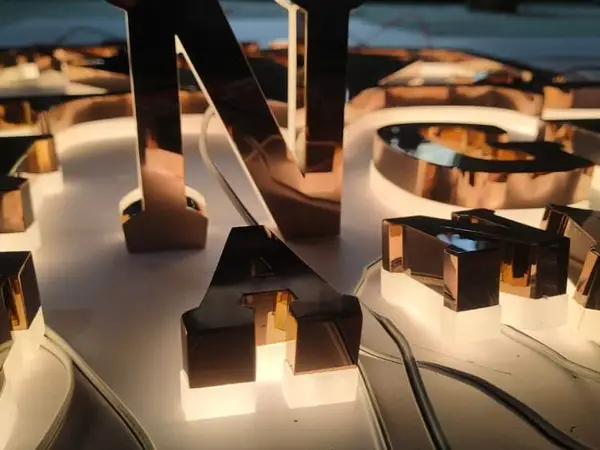
Real photo from our production floor — every sign we ship is made here.
Products mentioned or relevant to this topic — factory-direct, custom built.
Factory-direct since 2010. Free quote within 24 hours — no obligation.
Get a Free Quote → Copy EmailMOQ: 1 piece · Flexible lead time · 2-year warranty · Worldwide shipping
See pricing, specs, and get a free quote for the sign type you need. Built in our factory, shipped worldwide.