
Let me tell you a story. A sign shop owner in Ohio called me last year, furious. He'd imported a beautiful set of 36-inch halo-lit channel letters from China. Factory price: $3,200. But by the time customs, duties, and brokerage fees hit his doorstep, his total landed cost was $5,600. That's a 75% markup he never planned for. The killer? He'd classified his signs under the wrong HTS code. Paid 25% instead of 8.5%. That's a $528 mistake he'll never get back.
I've been in this industry since 2008. I've seen the tariffs change four times. Section 301. Section 232. The de minimis loophole that keeps shrinking. Here's the truth: most importers are leaving 10-15% on the table because they don't understand how to legally minimize duties. This guide is going to fix that.
Here's the current reality for importing signage from China into the United States. You're looking at three layers of tariffs:
The combined rate for a typical illuminated LED sign with aluminum frame and acrylic face? You're looking at roughly 11.4% to 13.3% if classified correctly. But here's where it gets messy.
This is where I see 90% of mistakes. The wrong HTS code can cost you thousands. Let me show you the three most common codes for signage:
| HTS Code | Description | MFN Duty Rate | Section 301 Rate | Total Effective Rate |
|---|---|---|---|---|
| 9405.60.60 | Illuminated signs, nameplates, and similar articles | 3.9% | 7.5% | 11.4% |
| 3926.90.99 | Articles of plastics, other (non-illuminated plastic signs) | 5.8% | 25% | 30.8% |
| 7610.90.00 | Aluminum structures (non-illuminated aluminum signs) | 5.7% | 0% | 5.7% |
Notice something? A non-illuminated plastic sign at 30.8% versus an illuminated sign at 11.4%. That's a 19.4% difference. On a $10,000 shipment, that's $1,940. The trick? If your sign has even basic LED lighting, it should be classified under 9405.60.60. But you need to prove it's "illuminated" — meaning the lighting is integral to the sign's function, not just decorative.
The thing is, customs isn't stupid. They'll ask for photos, technical specs, and sometimes a sample. I've had clients try to classify fully non-illuminated signs under 9405.60.60 claiming "potential for LED installation." That's fraud. And the penalties? Under 19 U.S.C. § 1592, you're looking at civil penalties up to the domestic value of the merchandise for negligence, or up to eight times the lost revenue for fraud. Don't gamble on this.
Here's the strategy that separates the pros from the amateurs. It's called tariff engineering, and it's perfectly legal. The concept is simple: change the physical composition or assembly location of your product to qualify for a lower duty rate.
Most advice focuses on "how to pay less tariffs," but the real insider secret is to leverage tariff engineering by splitting shipments: import raw materials under lower-duty codes, then assemble and finish the signage in a U.S. bonded warehouse or Free Trade Zone.
Here's how it works in practice. Instead of importing a finished illuminated sign under HTS 9405.60.60 at 11.4%, you import:
Then you assemble the sign in a U.S. Foreign Trade Zone (FTZ). Under FTZ rules, you can defer duty payments until the goods enter U.S. commerce. And if you assemble them into a finished product that's classified differently? You may pay duty only on the imported components, not on the value added in the U.S.
I know a shop in Texas that does exactly this. They import raw materials from us at Aochuang — aluminum profiles, LED strips, acrylic sheets — then assemble and sell as "Made in USA" signs. Their total duty burden dropped from 11.4% to under 4%. That's a 65% reduction in tariffs.
You've probably heard about the de minimis rule: shipments under $800 in value enter duty-free. Sounds great, right? Here's the problem. Customs defines "value" as the transaction value, not the wholesale price. And they're getting aggressive about splitting shipments.
If you import ten signs, each invoiced at $799, customs will see through it. They'll red-flag the shipment, demand a single consolidated value, and hit you with penalties for attempting to evade duties. I've seen this happen three times in the last two years.
But here's a legitimate use: sample orders. If you're ordering one or two prototype signs for evaluation — say, a single front-lit channel letter at $200 — de minimis works perfectly. Our company ships samples under $800 all the time. No duties, no paperwork. Just make sure your commercial invoice clearly states "Samples — No Commercial Value" and keeps the value under $800.
For commercial shipments? Forget de minimis. Plan for full duty payment. It's simpler and safer.
Missing paperwork is the #1 cause of demurrage charges. I've seen $500 in storage fees because someone forgot a certificate of origin. Here's exactly what you need for a clean clearance:
One more thing: marking requirements. Every sign must be marked "Made in China" in a conspicuous, legible, and permanent manner. I've seen shipments held for 30 days because the marking was on the back of the sign, not visible without disassembly. Customs is strict on this. Label each sign individually, not just the carton.
Let me give you a real-world example. You're importing 50 halo-lit channel letters from a Chinese manufacturer. Here's the math:
| Cost Component | Amount |
|---|---|
| Factory price (50 letters @ $70 each) | $3,500 |
| Ocean freight (0.5 CBM, LCL to LA) | $150 |
| Marine insurance (0.5% of CIF value) | $18 |
| CIF value (Cost + Insurance + Freight) | $3,668 |
| Duty (11.4% on CIF value) | $418 |
| Brokerage fee | $150 |
| Customs bond (single entry) | $75 |
| Inland freight (port to your shop) | $200 |
| Total Landed Cost | $4,511 |
That's a 29% markup over factory price. But compare that to buying domestic. A US sign shop would charge you $400-1,000 per letter for halo-lit. That's $20,000 to $50,000 for 50 letters. Your landed cost of $4,511 is a 77-91% savings.
The key takeaway? Even with tariffs and freight, importing from China beats domestic pricing by a wide margin — as long as you get the classification right.
If you're importing multiple shipments per year, a Foreign Trade Zone (FTZ) or bonded warehouse can save you serious money. Here's how it works:
You ship your signs to a bonded warehouse near your city. They sit there duty-free. You only pay duties when you withdraw them for sale. If you sell 10 signs this month and 20 next month, you pay duties incrementally. This improves cash flow and lets you inspect goods before paying tariffs on defective items.
But there's a bigger play. If you modify the signs in an FTZ — adding LED drivers, changing the frame, or assembling components — you may change the HTS classification. That can lower your duty rate. And if you export the finished signs to Canada or Mexico under USMCA? Zero duties.
I work with a distributor in Miami who uses an FTZ. He imports unfinished aluminum sign frames and LED modules separately, then assembles them in the zone. His duty rate drops from 11.4% to under 3%. And he markets the signs as "Assembled in USA" — which helps with government contracts that require domestic content.
After 15 years in this business, I've seen the same mistakes over and over. Here are the three that cost you the most money:
Mistake #1: Using "freight collect" terms. When you use FOB (Free on Board) terms, you control the freight and insurance. If you let the supplier handle shipping, they often use consolidators who don't know your HTS codes. This leads to misclassification. Always use FOB and hire your own customs broker.
Mistake #2: Not asking for a Certificate of Origin. Without it, customs can apply the Section 301 rate for "country unknown" — which is the highest possible. A simple Form A from your supplier saves you thousands. We provide one with every shipment. If your supplier won't give you one, find a new supplier.
Mistake #3: Ignoring the 25% aluminum tariff on raw materials. If you're importing aluminum extrusions or sheets separately for in-house fabrication, Section 232 hits you hard. But if you import the finished sign, the aluminum is considered "incorporated" and generally exempt. Always ask your customs broker whether your product qualifies as a finished article.
Use HTS 9405.60.60 for illuminated signs. This covers any sign with integral lighting — LED, neon, or fluorescent. The duty rate is 3.9% MFN plus 7.5% Section 301, for a total of 11.4%. Make sure your commercial invoice describes the sign as "Illuminated LED sign" and includes photos to support the classification.
Customs uses the "essential character" rule under GRI 3(b). If the LED lighting gives the sign its essential character (which it does for illuminated signs), the entire sign is classified under 9405.60.60. You don't split the duty. However, if you import components separately, each component has its own HTS code. LED modules are duty-free under 8541.41.00. Aluminum frames under 7610.90.00 at 5.7%. Acrylic faces under 3921.19.00 at 5.8% plus 7.5% Section 301.
Yes, under the de minimis rule (19 CFR 10.151). But be careful. The $800 threshold applies to the total transaction value, not per item. If you ship five samples worth $200 each, the total is $1,000 — over the limit. Also, customs is watching for "split shipments" where importers break up commercial orders into sub-$800 packages. That's illegal. For genuine samples, keep the value under $800 and mark the invoice "Samples — No Commercial Value."
Under 19 U.S.C. § 1592, penalties depend on intent. For negligence (you didn't know better), the penalty is up to the domestic value of the merchandise or two times the lost duties, whichever is less. For gross negligence, up to four times the lost duties. For fraud, up to eight times the lost duties. Plus, you'll owe the back duties plus interest. A $500 mistake can become a $10,000 penalty. Always work with a licensed customs broker.
Yes, but it's tricky. Under USMCA, a product must undergo a "substantial transformation" in Canada or Mexico to qualify for duty-free treatment. Simply assembling Chinese-made components doesn't count. You need to show that the transformation changes the product's name, character, or use. For example, if you import Chinese aluminum extrusions and acrylic sheets into Mexico, cut and form them into a complete sign, and add Mexican-made LED modules, the finished sign may qualify as "originating" under USMCA. I've seen this work for large-format signs and light boxes. But you need a detailed cost breakdown and a Certificate of Origin from the Mexican assembler. Work with a trade attorney on this — the rules are strict.
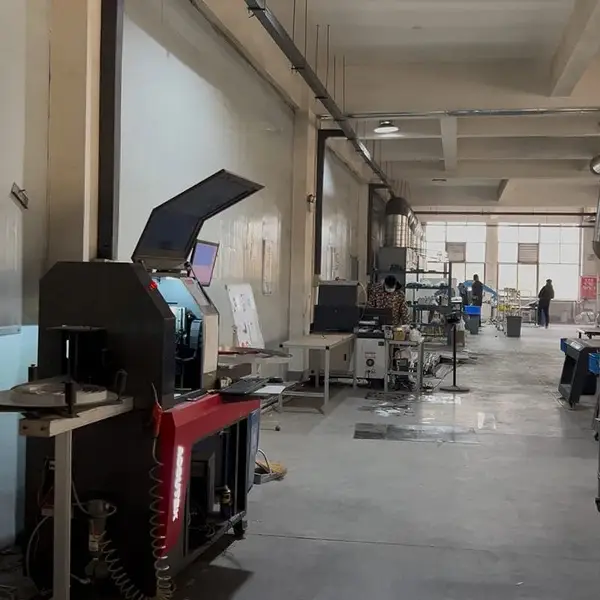
Real photo from our production floor — every sign we ship is made here.
Products mentioned or relevant to this topic — factory-direct, custom built.
From $24/letter · MOQ 1 piece · Flexible lead time · CE & UL certified · ships to 20+ countries
Custom sizes, colors, and finishes. Get a factory price in 24 hours.
Get a Free Quote Copy EmailWhatsApp +86 13865703472 · business@aochuangsign.cn
See pricing, specs, and get a free quote for the sign type you need. Built in our factory, shipped worldwide.