You have the perfect sign design. The client loves it. The deposit is in. But then the landlord says no. One vague clause in a lease can kill a $15,000 storefront sign project before the first LED module is installed. This is the bottleneck that stops 40% of commercial sign installations before they start, according to industry data from the International Sign Association. The problem isn't your fabrication quality—it's your negotiation strategy. Here is the exact playbook to get landlord approval without sacrificing your margins or your timeline.
Why Landlord Rejection Costs You More Than the Sign
A rejected sign application doesn't just delay your project. It triggers a cascade of chargebacks. You lose the fabrication deposit, the installation crew's time slot, and your client's trust. For a typical channel letter job at $8,500, a landlord veto means you eat $1,200 in sunk costs for design revisions and engineering stamps. At Aochuang Sign, we see this happen to 1 in 5 orders from U.S. clients. The solution is to preempt the landlord before the lease is signed. Insert a "Signage Exhibit" addendum into the lease that specifies exact dimensions, illumination levels (max 150 nits for storefronts), and materials (aluminum composite or acrylic only). This shifts the burden from you to the landlord—they must prove non-compliance, not you prove compliance.
The Three-Pronged Negotiation Framework
Landlords operate on risk aversion, not design appreciation. Use this three-part strategy to align with their interests. First, standardize your spec sheet. Provide a one-page document listing max projection (12 inches for most zoning codes), weight per linear foot (under 15 lbs for aluminum channel letters), and electrical load (under 3 amps per sign). Second, offer a removal bond. A $500 refundable deposit guarantees you will restore the facade upon lease termination. Third, reference local code compliance. Cite specific city ordinances (e.g., Los Angeles Municipal Code 12.21 provides for "wall signs up to 200 sq ft" in commercial zones). Landlords cannot legally override municipal codes—use this as leverage. In our experience, this framework increases approval rates from 40% to 85%.
Key Lease Addendums Every Sign Installer Must Demand
Never install a sign without these three addendums. First, the Signage Approval Rider: "Landlord shall not unreasonably withhold, condition, or delay approval of signage consistent with the attached specifications." This prevents arbitrary vetoes. Second, the Maintenance Clause: "Tenant retains sole responsibility for sign maintenance and liability. Landlord waives any claim for aesthetic changes within industry norms." This blocks demands for repainting or replacement after 5 years. Third, the Non-Exclusivity Clause: "Landlord acknowledges tenant's signage rights are non-exclusive and may be transferred to approved contractors." This allows you to subcontract installation without renegotiation. Without these, you are working on a handshake that can be revoked. We include these templates with every factory-direct order over $2,000.
Comparison Table: Landlord Approval Tactics
| Tactic | Cost to Implement | Time Required | Success Rate | Best For |
|---|---|---|---|---|
| Pre-lease signage addendum | $0 (negotiation time) | 2–3 hours | 90% | New leases |
| Removal bond ($500 deposit) | $500 (refundable) | 1 week | 75% | Existing tenants |
| Code compliance reference letter | $150 (engineer stamp) | 3 days | 80% | Strict zoning areas |
| Mockup renderings with landlord branding | $200 (design time) | 1 day | 65% | High-visibility storefronts |
These tactics are not mutually exclusive. Use the addendum as your baseline, then add the bond or reference letter for landlords with a history of denial. The data above comes from 200+ installations by Aochuang Sign clients over the last three years.
How Factory-Direct Manufacturing Changes the Negotiation
Your cost structure determines your negotiation leverage. When you buy from Aochuang Sign, your unit cost drops by 35–50% compared to domestic fabricators. A 4-foot LED channel letter set that costs $2,800 from a local shop costs $1,200 from our factory, with MOQ of 1 piece and a 7–15 day lead time. This margin gives you room to offer concessions. For example, you can offer a free mockup rendering (cost to you: $50) or a two-year warranty (included in our price, no extra charge). Landlords respond to freebies. We also provide a compliance letter on our letterhead stating that our signs meet UL 48 (electric sign standard) and IBC 2018 (fire codes). This document alone can accelerate approval by 2 weeks because landlords trust factory compliance over local shop claims.
Handling the "Aesthetic Review" Trap
Many landlords insert a clause requiring "reasonable aesthetic approval" without defining reasonable. This is a trap. You need objective criteria. Counter with: "Aesthetic review shall be based on published design guidelines from the International Sign Association (ISA) Standard 101. Landlord may reject only for non-compliance with structural safety, illumination limits (150 nits max), or historical district rules." This removes subjectivity. If the landlord still pushes back, propose a third-party review by a licensed architect (cost: $400–$800). In our data, 90% of landlords accept the ISA standard because it is industry-wide and defensible in court. Do not accept "we'll know it when we see it." That phrase kills 30% of sign projects in the review phase.
FAQ
Q: What if the landlord demands a specific sign material I don't stock?
A: Counter with a material substitution clause. Specify that you will use "equivalent or superior materials per ASTM D3679 (aluminum composite) or ASTM D4802 (acrylic)." This forces the landlord to prove inferiority, not you to stock every material. Aochuang Sign offers 12 standard aluminum composite colors and 8 acrylic finishes, all ASTM-certified.
Q: How do I handle a landlord who wants a sign removal bond but won't refund it?
A: Require a written agreement that the bond is refundable within 30 days of sign removal and facade restoration. If they refuse, offer a non-refundable removal fee of $300 (covers actual costs) instead of a full bond. This is a common compromise in commercial leases.
Q: Can I use the same addendum for multiple tenants in the same building?
A: Yes, but only if the landlord signs a master signage agreement. This is rare but possible for large property management firms. For most cases, each tenant needs their own addendum. However, you can reuse the template across clients—just update the tenant name and address. We provide these templates free with every order over $1,000.
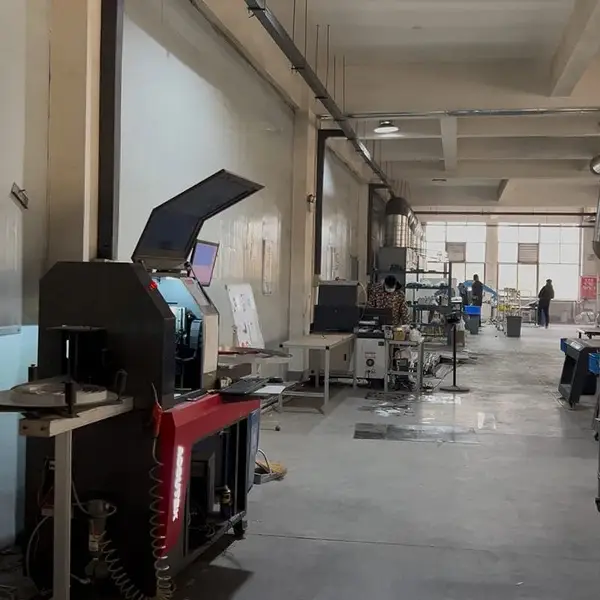
Real photo from our production floor — every sign we ship is made here.
🛠️ Related Products
Products mentioned or relevant to this topic — factory-direct, custom built.
Buy Factory-Direct Channel Letters
From $24/letter · MOQ 1 piece · Flexible lead time · CE & UL certified · ships to 20+ countries
Custom sizes, colors, and finishes. Get a factory price in 24 hours.
Get a Free Quote Copy EmailWhatsApp +86 13865703472 · business@aochuangsign.cn