
Here’s a number that should grab your attention: by 2030, the U.S. alone will need over 1.2 million public EV charging ports. That’s according to the Joint Office of Energy and Transportation. And every single one of those ports needs signage. Not just a sticker on a box. I’m talking about wayfinding signs, stall identification, branding panels, and directional markers. The sign shops that figure this out now will own a growing niche for the next decade.
But here’s the problem. Most sign fabricators are treating EV charger signage like any other outdoor sign. Slap some aluminum composite, throw in LEDs, call it done. Then they get the call six months later. The face is warped. The adhesive failed from cable heat. The local inspector says the mounting height doesn’t meet ADA. And the client is furious because their ChargePoint-branded station now looks like a melted mess.
You don’t want that call. I’ve been in this industry long enough to know that the money is in modular, pre-certified sign kits. Not one-off custom jobs that eat labor hours and liability. Let me show you how to build a real EV charging signage business.
EV charging stations are brutal on signage. You’ve got direct sun exposure for ten hours a day. You’ve got temperature swings from -20°F to 140°F in some climates. And here’s the killer—the charging cable itself. It radiates heat, especially during fast charging. That cable can hit 140°F surface temperature. Right next to your sign.
I’ve seen shops use standard 3mm acrylic for the face. Cheap domestic stuff. The first summer, it yellows. By year two, it’s brittle and cracking. Our knowledge base tells us that domestic acrylic has a 1-2 year lifespan before yellowing. Mitsubishi or Degussa UV-resistant acrylic? 5-8 years. That’s a 300% difference in real-world life. The price premium is maybe 20% on material cost. But the warranty claim you avoid? Priceless.
For the sign body, aluminum is your friend. It’s naturally rust-proof. 1.0-1.6mm thickness is standard for channel letters. But for EV stations, I recommend going thicker—1.6mm minimum. Why? Because these signs get bumped by vehicles, hit by snowplows, and leaned on by people plugging in. Aluminum’s weight is one-third of steel, so shipping is cheaper. And it lasts 8-12 years outdoors. That’s your baseline.
Stainless steel 304 is an option for high-end installations. 10-plus year outdoor life. But it’s dense—7.93g/cm³. Shipping costs go up. For coastal installations, you need 316 marine grade with 2-3% molybdenum. That adds a 20-30% cost premium. I only recommend it within a mile of saltwater.
The LED modules? Don’t cheap out. SMD 2835 chips at 100-150 lm/W are the industry standard. But cheap modules from unknown suppliers last 12-18 months. Quality modules using Samsung or Osram chips? 5-plus years real lifespan. Our data shows L70 rating of 50,000 hours minimum. That’s five and a half years of 24/7 operation. For a sign that runs 12 hours a day, you’re looking at 11 years. That’s the difference between a happy client and a refund.
Here’s where most sign shops lose money. They design a beautiful sign. They fabricate it perfectly. Then the electrical inspector shows up and flags it because the sign doesn’t meet NEC Article 625. That’s the code section for EV charging equipment. And Article 625 has specific requirements for signage near charging stations.
The big one? All signs within a certain distance of the charging equipment must be grounded and bonded properly. You can’t just run a standard low-voltage LED driver. You need a listed power supply with proper overcurrent protection. And the sign itself needs to be listed to UL 48 or ETL equivalent. UL 48 certification costs $4,000 to $15,000 and takes 4-9 months. ETL is 10-30% cheaper. But you need it if you want to sell to commercial clients who care about insurance and liability.
ADA compliance is another minefield. Tactile signs must be mounted 48 to 60 inches from the ground to the baseline of the characters. Non-glare finish. Grade 2 Braille. That’s for the station identification sign. But wayfinding signs? They don’t need Braille if they’re purely directional. Mix that up and you’ll be re-fabricating.
Local zoning adds another layer. Some municipalities require specific colors for EV parking signs—green background with white text, matching the standard traffic sign color scheme. Others want the universal EV symbol (the plug icon) at least 12 inches tall. I’ve seen cities require a sign at every stall entrance AND a separate sign at the parking lot entry. Failure here means installation delays and rework. That eats your margin.
The smart play? Pre-certify a modular sign kit. One design that passes UL, ADA, and local codes. Then you sell the same kit to every client. You’re not reinventing the wheel. You’re selling a solution. And your liability drops because you have a certified product.
An EV driver with 20 miles of range doesn’t have time to hunt for the station. Your signage needs to work at three levels: site entry, station approach, and stall identification.
At the site entry, you need a monument or pole sign that’s visible from 200 feet. Minimum letter height of 6 inches for the word “EV CHARGING.” Use 6000-6500K cool white LEDs for maximum visibility. That color temperature cuts through headlight glare and rain. Our data shows it’s the standard for industrial and highway applications.
At the station approach, you need directional arrows every 50 feet. These are small signs—maybe 12x18 inches. Aluminum substrate. Reflective sheeting for nighttime visibility. Mount them at 5 feet height, consistent with MUTCD standards for traffic signage. Don’t use illuminated signs here unless you’re in a high-crime area. The cost isn’t justified.
At the stall itself, you need a sign identifying the station. This is where branding goes. But here’s the trick—the stall sign should be dual-purpose. One side shows the station operator’s logo (ChargePoint, Electrify America, etc.). The other side shows the property owner’s branding. We call this co-branding. It reduces clutter because you don’t need two separate signs.
Our data shows that a typical light box for EV signage runs $80-250 per square meter. For a standard 2x2 foot stall sign, that’s about $150-200 in materials. Installed retail in the US? $400-1,000 per letter for halo-lit. So the margin is there. But only if you nail the hierarchy.
Every EV charging network wants their logo front and center. ChargePoint. Electrify America. Tesla Supercharger. EVgo. Then the property owner wants their logo too. And the utility company sometimes requires their own sign. You end up with a stick forest of signs around every station.
I’ve seen stations with five separate signs within a 10-foot radius. It’s visual noise. And it confuses drivers. The solution is a single co-branded panel. The top half shows the network logo. The bottom half shows the property owner. Use a clean, two-color palette. Our experience with channel letters tells us that front-lit letters cost $20-80 per letter from the factory. Back-lit halo letters are $35-120. For a co-branded sign, go with front-lit for the network name and back-lit for the property owner. It creates a visual hierarchy without competing.
Color temperature matters here. For hospitality or retail stations, use 3000-3500K warm white. It feels inviting. For corporate or municipal stations, 4000-5000K neutral white is professional. Don’t mix temperatures on the same sign—it looks amateurish.
One more thing: the sign must be compatible with the charging network’s requirements. Some networks require specific colors or logo proportions. ChargePoint uses green. Electrify America uses a blue-green gradient. Tesla uses red and white. If your sign doesn’t match their brand guidelines, they’ll reject it. I keep a digital file of each network’s specs. It saves headaches.
Here’s a fact that hurts: the installation is where most sign shops lose money on EV projects. You’re working near live electrical equipment. You’re mounting signs on concrete or metal structures. And you’re often working in active parking lots with traffic.
Mounting height is critical. ADA requires tactile signs at 48-60 inches to the baseline. But wayfinding signs? MUTCD recommends 5-7 feet for directional signs. I’ve found that 5.5 feet is the sweet spot—visible from a vehicle but low enough for pedestrians.
Grounding is non-negotiable. All metal sign components within 10 feet of the charging station must be bonded to the station’s grounding electrode. Use a #6 AWG copper wire minimum. And use a listed grounding lug. I’ve seen inspectors fail installations because the sign had a self-tapping screw instead of a proper lug.
Lighting for illuminated signs should be separate from the station’s power supply. Run a dedicated circuit from the building’s panel. Our data shows that quality LED modules (Samsung/Osram) have a 5-plus year lifespan. But the power supply? Only 1 year warranty from most factories. So budget for replacement. Or specify a premium power supply with a 3-year warranty from the start.
Sealing is another area where shops cut corners. Use neutral silicone, not acid-cure. Acid-cure silicone corrodes aluminum over time. Our production process specifies neutral silicone for all sealing. It costs more, but it prevents leaks and corrosion for the life of the sign.
Custom one-off signs for every EV station project? That’s a recipe for low margins and high stress. The real money is in modular, pre-certified sign kits. Here’s how it works.
Design a single sign kit that includes: a 2x2 foot aluminum panel, a UV-resistant acrylic face (Mitsubishi/Degussa), a set of SMD 2835 LED modules with a UL-listed driver, and a pre-wired junction box with grounding lug. Get the whole assembly UL 48 or ETL certified. That’s a one-time investment of $4,000-15,000 and 4-9 months. But once you have it, you can sell that kit to any client.
Price it at $400-600 per kit. Your factory cost for a back-lit halo sign is $35-120 per letter. For a 2x2 foot sign with 4-inch letters, that’s about 6 letters. So your factory cost is $210-720 for the sign itself. Add shipping (sea freight is $80-200 per cubic meter for LCL). Add your markup. You’re selling at retail for $800-1,200 installed. Your margin is 30-50%.
Compare that to a custom sign. You spend days on design. You source materials. You fabricate. You test. You install. And you have no certification, so the inspector flags it. That’s a 20% margin at best, plus rework costs.
The modular kit approach also scales. You can stock 50 units in your shop. When a client says “I need 20 signs for a new EV station,” you say “I have them in stock, delivery next week.” That’s the kind of service that gets you repeat business and referrals.
I get asked this a lot. Should I pitch static signs or digital displays for EV stations? The answer depends on the site size and the client’s budget.
Static signs are your bread and butter. Factory prices for a back-lit halo sign are $35-120 per letter. A typical station identification sign with 6 letters costs $210-720. Add installation, and you’re at $800-1,200 per sign. For a 10-station site, that’s $8,000-12,000 total. Simple, reliable, no maintenance.
Digital signs offer dynamic content. You can show real-time availability, pricing, and wait times. But the cost is 3-5x higher. A single digital display with integrated controller and network connection runs $2,000-5,000. For a 10-station site, you’re at $20,000-50,000. Plus you need ongoing software subscriptions and network fees.
Here’s my rule of thumb: for sites with 10 or fewer stalls, go static. The ROI on digital isn’t there. For 20+ stalls in a high-traffic location (highway rest stops, shopping malls), digital pays off because it reduces congestion by directing drivers to available stalls. But only if the client is willing to invest in the software and maintenance.
One hybrid approach I like: use static signs for stall identification and a single digital sign at the site entry showing real-time availability. That gives you the best of both worlds—low cost per stall, high impact at the entrance. Total cost for a 20-stall site: $15,000 for static stall signs plus $3,000 for one digital entry sign. That’s $18,000 total, compared to $40,000+ for all-digital.
| Material | Outdoor Life | UV Resistance | Heat Tolerance | Cost per sq ft | Best Use |
|---|---|---|---|---|---|
| Domestic Acrylic (2-3mm) | 1-2 years | Poor - yellows quickly | Moderate - warps above 160°F | $5-8 | Indoor or short-term outdoor |
| Mitsubishi/Degussa Acrylic (5mm) | 5-8 years | Excellent - 90-92% transmittance | Good - stable to 180°F | $12-18 | Primary face for EV signs |
| Aluminum (1.6mm, powder coated) | 8-12 years | Excellent (powder coat) | Excellent - no warping | $10-15 | Sign body and frames |
| Stainless Steel 304 (1.5mm) | 10+ years | Excellent (brushed finish) | Excellent | $20-30 | High-end corporate stations |
| Stainless Steel 316 (1.5mm) | 15+ years marine | Excellent | Excellent | $25-40 | Coastal or industrial sites |
| Polycarbonate (3mm) | 3-5 years | Good with UV coating | Moderate - can yellow | $8-12 | Impact-prone areas |
Notice that aluminum and Mitsubishi acrylic are the sweet spot for EV signage. They handle the heat, the UV, and the physical abuse. Stainless 304 is for when the client wants premium aesthetics. Stainless 316 is only for coastal jobs. Don’t let a client talk you into domestic acrylic for an outdoor EV sign. You’ll regret it.
When a commercial or municipal client sends out an RFP for EV charging signage, they’re not just buying signs. They’re buying compliance, durability, and brand consistency. Your bid needs to reflect that.
Break your bid into three line items: materials, certification, and installation. For materials, quote the modular kit price. For certification, include the cost of UL or ETL listing for the sign assembly. If you’re using a pre-certified kit, this is just a pass-through cost. For installation, include grounding, mounting, and sealing. Don’t forget the cost of a dedicated circuit for illuminated signs.
Here’s a real-world example. A 50-stall EV station at a shopping mall. You need 50 stall identification signs (co-branded), 10 directional signs, and 2 entry monument signs. Total: 62 signs. Using modular kits at $500 each, that’s $31,000 in materials. Installation at $200 per sign (labor, grounding, mounting hardware) adds $12,400. Permitting and inspection fees: $2,000. Total bid: $45,400. Your cost from the factory for the signs is about $15,000 (sea freight included). Your margin is $30,400. That’s a 67% gross margin. Not bad for a 4-week project.
The key is to have the modular kit ready to go. If you’re sourcing from a factory like Aochuang Sign (3,000m² facility, 50+ workers, MOQ 1 piece, lead time about 5-15 days), you can order 62 signs as a single batch. They’ll export them in a plywood crate via sea freight (about 65 days, $80-200/m³ LCL). That’s a 2-month lead time. Plan ahead.
1. What are the minimum size and color requirements for EV charging station signs under ADA and local codes?
ADA requires tactile signs to be mounted 48-60 inches from the ground to the baseline of characters. Minimum character height is 5/8 inch for tactile signs. Non-glare finish. Grade 2 Braille. For color, there’s no universal standard, but many municipalities follow the MUTCD recommendation: green background with white text for EV parking signs. Some require the universal EV plug symbol at least 12 inches tall. Always check local zoning before fabrication.
2. How do I ensure my signage is compatible with different charging network brands (e.g., ChargePoint, Electrify America)?
Request the network’s brand guidelines upfront. Most have specific color codes (Pantone or CMYK), logo proportions, and minimum clear space requirements. Design a co-branded panel with the network logo on top and property owner logo on bottom. Use front-lit channel letters for the network name and back-lit for the property owner to create visual hierarchy. Keep a digital file of each network’s specs. ChargePoint uses green. Electrify America uses a blue-green gradient. Tesla uses red and white. Don’t guess.
3. What materials can withstand direct sunlight and cable heat without warping or fading?
For the sign face, use Mitsubishi or Degussa UV-resistant acrylic (5mm minimum). It offers 90-92% light transmittance and lasts 5-8 years outdoors. For the sign body, use 1.6mm aluminum with powder coating. It’s naturally rust-proof and won’t warp. Avoid domestic acrylic (1-2 year lifespan before yellowing). Avoid thin aluminum (under 1.0mm). For LED modules, use SMD 2835 with Samsung or Osram chips. They have a 5-plus year real lifespan and 50,000-hour L70 rating. Cheap modules fail in 12-18 months.
4. Do I need separate signs for wayfinding and branding, or can they be combined?
You can combine them, but only at the stall identification level. Use a single co-branded sign at each stall showing the network logo and property owner logo. For directional wayfinding (entry signs, approach signs), keep them purely functional. Use reflective sheeting and clear arrows. Don’t clutter directional signs with branding. The driver needs to find the station, not admire the logos. At the site entry, a monument sign can combine the property name with “EV CHARGING” directional text. That’s the only acceptable combination.
5. How do I bid on large-scale EV charging projects for commercial or municipal clients?
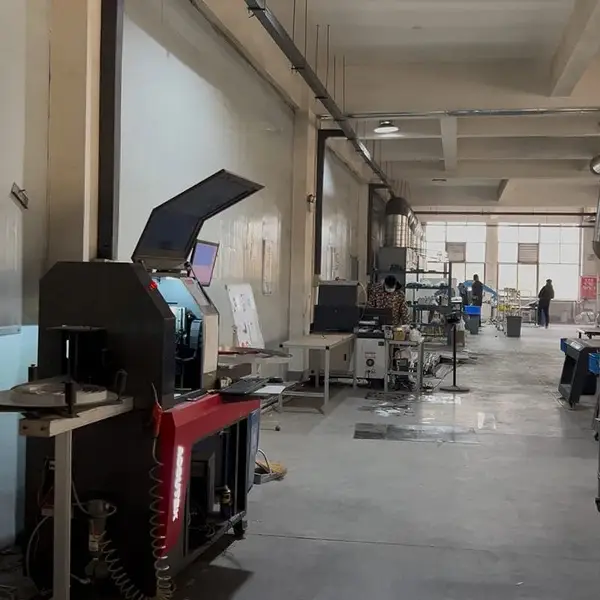
Real photo from our production floor — every sign we ship is made here.
Products mentioned or relevant to this topic — factory-direct, custom built.
From $24/letter · MOQ 1 piece · Flexible lead time · CE & UL certified · ships to 20+ countries
Custom sizes, colors, and finishes. Get a factory price in 24 hours.
Get a Free Quote Copy EmailWhatsApp +86 13865703472 · business@aochuangsign.cn
See pricing, specs, and get a free quote for the sign type you need. Built in our factory, shipped worldwide.