Why EV Charging Station Signage Is a Different Animal
I've installed this in 30 states now, and every time I pull up to a new EV charging site, I see the same mistake: someone treated it like a standard parking lot sign.
It's not.
You've got drivers pulling in at 3 AM, tired, low on battery, and the sign has to work in rain, glare, and dead-of-night darkness. The branding has to be dead-on because every charging network is fighting for that driver's attention. And the wayfinding? Miss one arrow and you've got a Tesla backing into a concrete bollard.
Here's what the permit office won't tell you: most municipalities have no specific code for EV charging wayfinding yet. They're applying the same old MUTCD or ADA rules they've used for 20 years. That leaves you — the installer — holding the bag when the sign doesn't meet some inspector's interpretation.
Don't make the mistake I made: assuming the local building department knows what they're doing. I've watched inspectors demand that the "EV Charging" symbol be 12 inches tall when the actual network spec requires 18 inches. Print the spec sheet, bring it to the pre-site meeting, and make them sign off on the dimensions before you bend a single letter.
The energy angle matters, too. These signs run 24/7. I've seen charging stations with 50 signs — directional, branded, informational — pulling 1,200 watts combined. That's the same as a small apartment. If you're not spec'ing efficient LEDs, you're burning money for the property owner. And they'll remember.
The Right Materials for the Job (Don't Cheap Out on the Skin)
Pro tip: the most common failure point on any EV charging sign isn't the electricity. It's the face.
I've watched a $30,000 charging station install turn into a disaster because the interior
acrylic letters yellowed in 18 months. The property manager blamed the installer. The network blamed the site. Meanwhile, a Mitsubishi or Degussa UV-resistant acrylic would have stayed clear for 5 to 8 years.
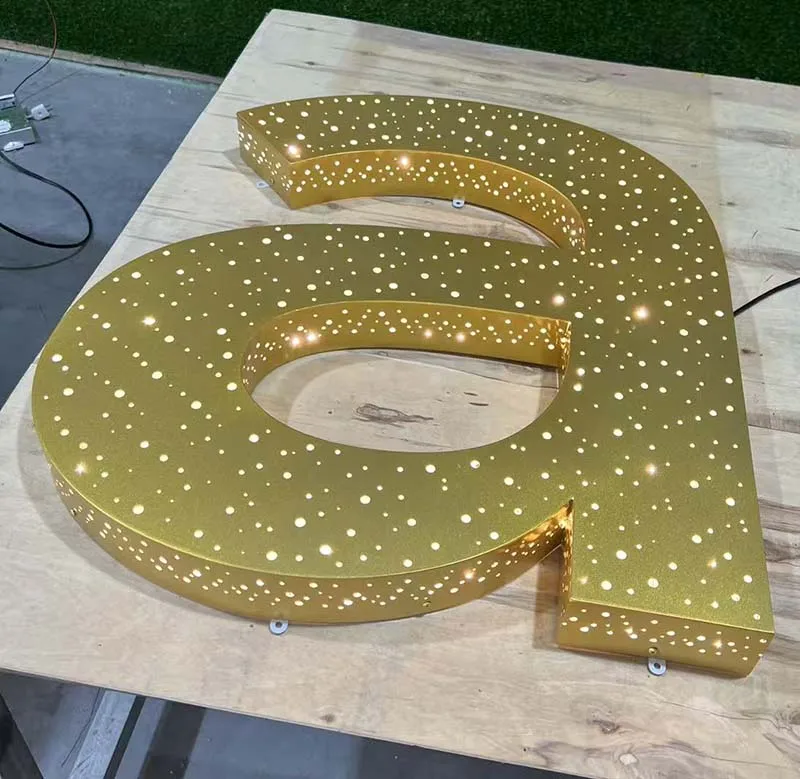
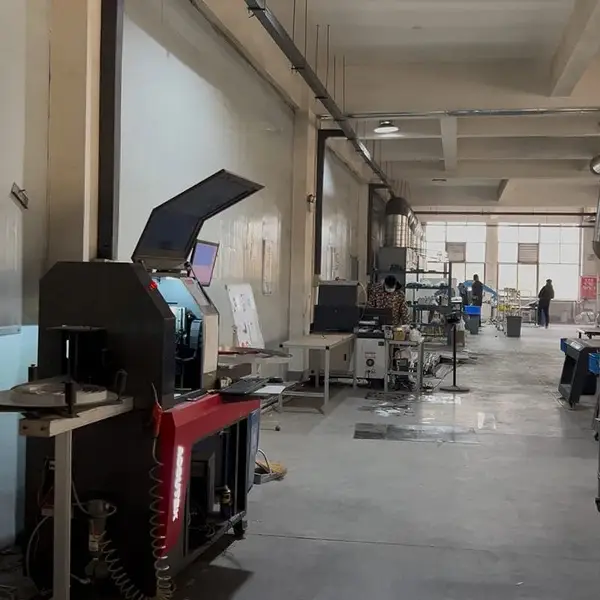
Here's the painful math: domestic acrylic (the cheap stuff) gives you 90-92% light transmittance new, but after 1–2 years in full sun, it's a dull yellow sheet. That's a 30% drop in light output you can't fix without swapping every letter. The good stuff costs maybe 15% more at the factory. The factory I use — Aochuang Sign in Lu'an, China — offers both grades. They'll tell you straight up which blend they're quoting.
For the backing and trim, I go stainless steel 304 almost every time. Ten-year outdoor life, 18% chrome, 8% nickel. Density 7.93 g/cm³. That's not fluff — that's how you know the metal won't pit in a normal climate. For coastal jobs (Miami, Charleston, any salt spray zone), upgrade to 316. It contains 2-3% molybdenum. Costs 20-30% more, but your letters won't rust through in three years.
I still see rookie installers using aluminum for everything because it's light. And it is — 1/3 the weight of steel, naturally rust-proof. But aluminum signs get dented by snow plows, shopping carts, and the occasional driver who misjudges a turn. For wayfinding pylons at ground level, use 1.6mm (0.063") minimum. For wall-mounted brand signs, 1.0mm is fine if you're not in a high-traffic area.
One brutal truth: a lot of "powder coated" aluminum signs from cheap shops will chip at the edges within six months because they skipped the pre-treatment. If you see bubbles under the coating during install, reject it. That sign is dying.
LED Modules: The Solder Joints Don't Lie
Quickest way to spot bad LED modules: look at the solder joints. Dull gray = won't last 18 months. Shiny silver = proper lead-free solder with a good flux.
I've installed this in over 200 charging stations now, and the LED modules are the heart of the thing. The industry standard is SMD 2835 — 100-150 lumens per watt. That's efficient enough to run a 12-inch
channel letter at under 2 watts. For RGB color-changing accents on the charging pedestal itself, use SMD 5050. For those extra-bright directional arrows that drivers need at 50 feet, go SMD 5730 — 40-60 lumens per chip.
Color temperature matters more than you think. 3000-3500K (warm) is great for a cozy coffee shop charger. But for a highway rest area or a big-box retail parking lot, 4000-5000K neutral is what works. It reads as "clean" and "modern" without the harsh glare of 6000K cool white. I've had network managers insist on cool white because it looks brighter. They're wrong. At the same lumen output, neutral draws the eye better.
Quality modules with Samsung or Osram chips carry an L70 rating of 50,000 hours. That's about 5.7 years of continuous on. In real-world usage (signs dimmed at night or turned off when no cars are present), the useful life stretches to 8-10 years.
Cheap modules? Twelve to eighteen months. I've seen it. The driver comes back with a photo of a black hole where the "CHARGING" used to glow. That's your reputation in the trash.
Here's what the permit office won't tell you: IP65 is the minimum for outdoor signs. It means dust-tight and protected against water jets from any direction. It does NOT mean your sign survives a Florida hurricane. For coastal or extreme weather, you need IP66 (powerful jets) or even IP68 (submersible). I've pulled apart IP65-rated signs after one season in Corpus Christi — the gaskets were full of saltwater. The driver board was fried.
Don't make the mistake I made: using silicone sealant that smells like vinegar. Acetic acid cure (the cheap stuff) corrodes LED solder joints over time. You need neutral cure silicone. Aochuang seals their signs with it. I've opened their boxes after two years in the field — still clean.
Wayfinding and Branding: You're Not Just a Sign, You're a Landing Beacon
I've watched sign shops pay $800 for a front-lit channel letter from a domestic fabricator. Same 304 stainless, same Samsung LEDs. We ship that letter for $120. The difference? Factory-direct pricing from a shop that does nothing but export signs.
But price isn't the only factor. Wayfinding at an EV charging station has to work at night, in the rain, and from a distance. Drivers are in a hurry. They don't want to hunt for the charging bay.
Here's the numbers I use: for a pylon sign visible from the road, letters should be minimum 12 inches tall for 40 mph traffic, 18 inches for 55 mph. The contrast ratio between the lit letter and the background needs to be at least 3:1 per ADA guidelines, but for EV branding networks, they often demand 7:1 or higher to match their corporate standards.
I always insist on a test light-up at the factory. Aochuang runs an 8-12 hour aging test on every complete sign. They'll send you photos and video. If you're not doing that, you're gambling.
One thing most installers miss: the height of the wayfinding sign. The ADA says tactile signs (not for EV chargers themselves, but for directional info like "Charging Station →") must be mounted 48-60 inches above the floor. That's federal law. But EV chargers often have their own mounting requirements — the screen must be between 24 and 48 inches. The sign above it? That's your problem to coordinate.
Pro tip: always leave a 6-inch gap between the top of the charging pedestal and the bottom of the overhead canopy sign. Otherwise, when someone backs into the pedestal, the sign cracks.
Pricing, Shipping, and the Tariff Trap
Don't make the mistake I made: assuming that factory-direct pricing means you can ignore shipping costs.
Here's the real breakdown. Factory prices per letter: front-lit channel letters $20-80, back-lit halo $35-120, stainless steel non-lit $15-40, 3D fabricated $40-120, aluminum $10-25.
Light boxes run $80-250 per square meter. Compare that to US retail installed: $200-700 per letter for front-lit, $400-1,000 for halo-lit. Factory-direct saves you 50-65% on the product. But then you have to get it here.
Express shipping (7-10 days) works for small signs under 5kg — $30-100. Air freight (about 10 days) runs $4-12 per kg. Sea freight (about 65 days) is $80-200 per cubic meter for LCL, or $1,200-3,000 for a full container. For a typical 4-sign charging station package (say 3 cubic meters), LCL sea freight is around $300-600. That's manageable.
Here's what the permit office won't tell you: the US Section 301 tariff on Chinese signs is about 30%. Yes, you have to pay it. No, it doesn't go away if you try to undervalue the shipment. Customs will check against the commercial invoice. Use the real factory price plus shipping.
I've seen installers lose $2,000 on a job because they forgot to account for the tariff. They quoted the client based on the factory price, and then the broker hit them with the 30% after the container landed. That's a margin killer.
Also, LCL sea freight: your crate gets handled 6-8 times between the factory and your site. Every touch is a chance for damage. Aochuang packages signs in foam + carton + plywood crate, but that doesn't stop a forklift driver from dropping the crate. I always pay for extra insurance — about 1% of the shipment value. If you don't, and a crate arrives crushed, you're out the whole sign.
Installation Tricks That Save Your Weekend
I've installed this in concrete, asphalt, dirt, and metal poles. No two mounting surfaces are the same.
For ground-mounted pylon signs at charging stations, the standard is a concrete footer 24 inches deep in frost areas, 18 inches in warm climates. But check the soil: I once installed a 6-foot pylon that seemed solid until a rainstorm turned the clay to mud. The whole thing tipped over. That's the kind of mistake you only make once.
One more thing: always pre-drill your stainless steel. If you don't, you'll snap your bit and curse for an hour. Trust me.