You got the quote: $4,000 for ten front-lit letters, installed. Feels like you're buying a used car, not a sign. Most business owners don't realize they're paying for a multilevel distribution chain—designer, sales rep, local fabricator, installer—each taking a cut. I've watched sign shops pay $800 for a front-lit letter from a domestic fabricator. Same 304 stainless, same Samsung LEDs. We ship that letter for $120. That's not a discount; that's the starting point. Let me show you where the real money goes.
Here's the math: A typical 10-letter front-lit sign in 304 stainless with SMD 2835 LEDs. Factory-direct price: $50–80 per letter, so $500–800 for the sign body. Domestic fabrication runs $200–700 per letter installed—$2,000–7,000 total. That 60%–80% markup isn't for better quality; it's for overhead, showroom rent, and the salesperson's commission. Your local guy might use the same LED modules I do. The difference is my shop doesn't have a fancy lobby.
But factory-direct isn't always the answer. There are pitfalls, tariffs, and shipping surprises. This article is the kind of conversation I'd have with a contractor over coffee: no bullshit, just numbers and experience.
Let's dissect a single illuminated channel letter. The three big cost centers are the metal housing, the acrylic face, and the LED system. A stainless steel 304 letter (1.5mm thick, 40cm tall) costs me about $8–12 in raw material. Add laser cutting, TIG welding, grinding, and polishing—another $10–15 in labor. The acrylic face, 3mm UV-resistant Mitsubishi, runs $4–8. LEDs? Quality SMD 2835 modules from Samsung or Osram cost $0.20–0.40 per module; a typical letter needs 20–30 modules. That's $4–12. Then there's wiring, silicone sealing, and packaging.
Most buyers don't realize that the LED driver (power supply) is the weakest link. A cheap driver costs $3 and fails in 18 months. A Mean Well driver costs $18–25 and lasts 5+ years. Our warranty: 2 years on LEDs, 1 year on power supply. If you see a "lifetime warranty" from a factory, run. There's no such thing; they mean the product's life, which is whatever they decide.
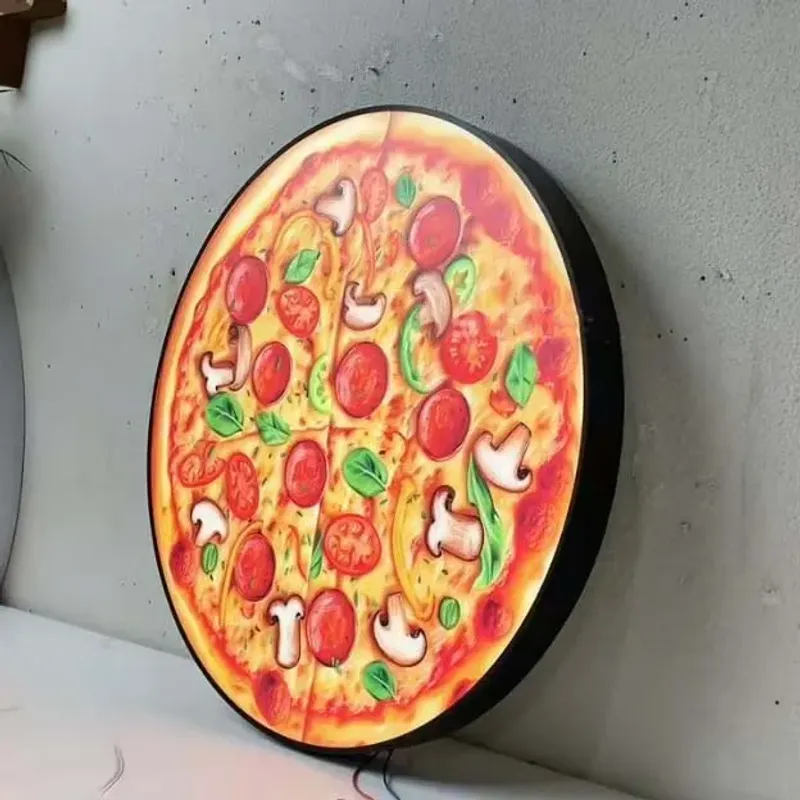
Let me break this down: A front-lit letter from our factory: $20–80. Back-lit (halo) letter: $35–120. Stainless steel non-lit: $15–40. Aluminum non-lit: $10–25. Light boxes: $80–250 per square meter. Neon flex signs: $30–200. Compare to US retail installed: $200–700 for front-lit, $400–1,000 for halo-lit per letter. That's not a typo. The mark-up is real, and it's justified by local labor rates, insurance, and speed. But if you're ordering 20 letters and have a month, you're throwing away thousands.
One rookie mistake I see all the time: ordering 2mm acrylic for a sign over 2.5 meters wide. Warps like a potato chip in wind. At that size, you need 5mm minimum. We CNC cut it with ±0.1mm accuracy, but if the spec's wrong, the sign's trash.
The product cost is just the beginning. Shipping can add 10–40% depending on method. Express (DHL, FedEx, UPS): 7-10 days, $30–100 for small parts. Air freight: about 10 days, $4–12 per kg. Sea freight: about 65 days, $80–200 per cubic meter LCL or $1,200–3,000 for a full container. Most business owners don't plan for that 2-month lead time. They need the sign in three weeks and end up paying airfreight rates that eat all the savings.
And here's the kicker: Section 301 tariffs on Chinese goods add roughly 30% to the declared value. If your sign invoices at $1,000, you're paying another $300 at customs. That's not in the factory's price. You need to factor that into your total cost.
IP65 sounds impressive. It means water jets from any direction. It does NOT mean your sign survives a Florida hurricane. For coastal or high-wind areas, spec IP66 (powerful jets) or IP68 (submersible). We use neutral silicone sealant and an 8–12 hour aging test before shipping, but if your installer doesn't seal the mounting holes properly, you'll get condensation inside. That's not our fault, but it's your problem.
Sea freight LCL is especially rough. Your crate gets handled 6–8 times between our dock and yours. Every touch is a chance for damage. That's not in the brochure. I've seen letters arrive dented because the freight forwarder stacked heavy boxes on top. We pack with foam, carton, and plywood crates, but no packaging survives a careless forklift. If you can, go for air freight or share a full container with another buyer.
CE marking costs 20,000–50,000 RMB. Most factories will say they have it. Ask to see the certificate with today's date. Watch them sweat. CE is valid only with valid EU Notified Body involvement. If the certificate's expired or generic, it's worthless paper. For the US, you need UL 48 or ETL. UL costs $4,000–15,000 and takes 4–9 months with quarterly audits. ETL is a UL alternative, 10–30% cheaper, and faster. Most Chinese factories don't have UL because it's expensive. We offer both CE and ISO 9001, but if you're selling in the US and your sign gets inspected, no UL = no occupancy permit.
The spec says UL is mandatory for electrical signs under NEC Article 600. In reality, many local inspectors accept ETL or even just a manufacturer's declaration. But who wants to gamble? A $5,000 fine or a lawsuit because your sign caught fire? That's not worth saving $200 per letter. If your project is in a strip mall in Ohio, you might get away with CE. For a hospital or government building, you need UL. Point blank.
ADA compliance is a whole other beast. Tactile signs must be mounted 48–60 inches above the floor, have non-glare finish, and Grade 2 Braille. If you're doing a directory or room sign, make sure the factory has experience with ADA standards. Most don't. We do, but only because we've had to redo orders twice.
Acrylic: Mitsubishi or Degussa UV-resistant acrylic lasts 5–8 years outdoors before yellowing. Domestic acrylic? 1–2 years, then it looks like a old windshield. We don't use domestic unless a client begs. Light transmittance: 90–92% for quality acrylic. Cheap stuff is 70% – your sign will look dim from day one. For letters over 2.5m, use 5mm or thicker, even if the design calls for 3mm. Trust me on this.
Stainless steel 304 has 10+ year outdoor life with 18% chromium and 8% nickel. Density 7.93 g/cm³. Common thickness 1.0–3.0mm. For coastal areas, you need 316 with 2–3% molybdenum – it resists salt corrosion. 316 costs 20–30% more. For a strip mall in Ohio, 304 is fine. For Miami Beach, pay for 316 or you're replacing letters in 3 years. We use brushed #4 or mirror #8 finish, then PVD or powder coat for extra protection.
Aluminum is 1/3 the weight of steel, naturally rust-proof, and lasts 8–12 years outdoor. Finishes: anodized, powder coated, brushed. It's cheaper than stainless but less rigid. For large letters, aluminum can flex in wind. We use 0.040–0.063 inch (1.0–1.6mm) thickness. Good for non-illuminated signs or light boxes.
Quickest way to spot bad LED modules: look at the solder joints. Dull gray = won't last 18 months. Shiny silver = proper lead-free solder. Our modules use SMD 2835 (industry standard, 100–150 lm/W) or SMD 5730 (highest brightness, 40–60 lm/chip). Color temperature: 3000–3500K warm for restaurants and hotels, 4000–5000K neutral for corporate and retail, 6000–6500K cool for industrial signs and highways. L70 rating of 50,000 hours means 50% lumen maintenance – that's about 11 years at 12 hours/day. Cheap modules use low-grade bins and fail in 12–18 months. I've seen it.

Real photo from our production floor — every sign we ship is made here.
Products mentioned or relevant to this topic — factory-direct, custom built.
From $24/letter · MOQ 1 piece · Flexible lead time · CE & UL certified · ships to 20+ countries
Custom sizes, colors, and finishes. Get a factory price in 24 hours.
Get a Free Quote Copy EmailWhatsApp +86 13865703472 · business@aochuangsign.cn
See pricing, specs, and get a free quote for the sign type you need. Built in our factory, shipped worldwide.