I've been inside more barbershops than most barbers. And what I see out there – those so-called "vintage modern" barber poles – makes me want to grab a wrench and start fixing things. The cheap plastic crap, the LEDs dying after six months, the "chrome" that's actually painted ABS. It's an insult to the trade.
Here's what nobody tells you: a real barber pole sign isn't a decoration. It's a piece of electrical equipment that has to survive rain, snow, sun, and someone's uncle hitting it with a broom. If you're about to buy one, read this first. I've got 16 years of burned fingers and angry phone calls to back up every word.
Look, a barber pole has three main pieces: the shell, the lighting, and the rotation mechanism (if it's the spinning kind). And every single one can be a disaster if you cheap out.
The shell. You've got two real options: stainless steel or high-quality acrylic. That "vintage" look with the red, white, and blue stripes? Those stripes are usually painted on. If they're not clear-coated properly, they'll fade in two years. I've seen it. Mitsubishi acrylic – the good stuff – gives you 90-92% light transmittance and lasts 5-8 years before yellowing. The domestic knockoffs? You get 1-2 years, then it looks like a sick banana. The stainless versions – 304 grade, 1.0-1.6mm thick – will last 10+ years outdoors. If you're on a coast, pay the 20-30% premium for 316. Or don't cry when the salt air pits your pretty pole.
The lighting. This is where 90% of the industry lies to you. Those cheap LED strips they cram inside? SMD 2835 chips running at 100-150 lm/W, rated for L70 at 50,000 hours – that's the marketing. The reality is that cheap modules die in 12-18 months because the solder joints are dull gray and the manufacturer skipped the burn-in test. I can spot a bad joint from across a room. Shiny silver means proper lead-free solder. Dull gray means you'll be replacing it before your next haircut. A decent barber pole should use Samsung or Osram modules. Or at least quality Chinese chips like Lan Jing. Anything less is a scam.
Here's a brutal truth no one in the sign industry will say: that spinning pole you love? It has a motor. You want one with ball bearings, not bushings. Bushings are for office chairs, not machines that run 12 hours a day. A sealed motor with ball bearings will cost you maybe $40 more. It'll run for years. The bushings version will start squeaking in 6 months, then seize up. I've watched this go wrong: a shop in Chicago bought 20 cheap poles for a chain. Seven stopped spinning within a year. The whole order got shipped back.
Everybody wants "vintage modern" these days. They want the old-school candy-stripe look but with clean lines and LED inside. Fine. But the execution is where most designers get it backward.
The ugly truth is that "vintage" doesn't mean "made cheaply." Real vintage poles were cast iron, glass, and neon. That's why they're still standing. Modern knockoffs use thin aluminum (0.040-0.063 inches) with powder coating. That's fine – aluminum is naturally rust-proof, weighs 1/3 of steel, lasts 8-12 years outdoors. But the finish matters. Brushed or anodized? Good. Matte powder coat? Check if it's UV-stable. I've seen poles that turned chalky brown after one summer in Arizona.
Color temperature matters. I don't care if you're going for a "vintage feel." Use 3000-3500K warm white for the halo effect – that's hospitality, cozy, old-timey. If you throw in 6000K cool white, it looks like a gas station. I've been in bars where they mixed warm and cool and it looked like a police cruiser. Don't do that. For the red and blue stripes, you want saturated colors. That means high-quality SMD 5050 RGB LEDs, not the generic 2835 white strips with colored lenses. The difference is night and day. I can show you one versus the other on a bench test. The cheap ones look pink and baby blue; the real ones pop like a firetruck.
You see those ads: "factory-direct, save 50%!" I run a factory. That's not a lie, but it's not the whole truth either. Let me break down the numbers so you don't get burned.
At Aochuang Sign, we've been doing this since 2010. 3,000 square meters, 50+ skilled workers, exporting worldwide. A front-lit barber pole – say 1.5 meters tall, stainless shell, acrylic stripes, LED inside – that's maybe $120-200 from our dock. US retail installed? You'll pay $400-1,000. So yes, you save 50-65% on the product. But shipping kills a lot of that. Express freight for a pole that fits a 30x30x150cm box? $30-100 if it's small, but a full-sized pole? Air freight at $4-12 per kilo. Sea freight if you're ordering ten poles? LCL runs $80-200 per cubic meter, about 65 days. And here's what nobody tells you: your crate gets handled 6-8 times between our dock and your front door. Every touch is a chance for a dent. That's not in the brochure.
Certifications? Also not in the brochure. CE marking costs 20,000-50,000 RMB. Most factories will say they have it. Ask to see the certificate with today's date. Watch them sweat. UL listing is $4,000-15,000 per model and takes months. If you're selling to US commercial shops, they'll demand it. Don't believe the guy who says "it's basically UL." There's no basically. For outdoor barber poles, you need at least IP65 – dust-tight and water jets from any direction. IP66 for coastal. And IP68 if your pole is going to be submerged. Which it shouldn't be, but people put these things in weird places.
Here's a story. I've watched sign shops pay $800 for a front-lit letter from a domestic fabricator. Same 304 stainless, same Samsung LEDs. We ship that letter for $120. The difference? The guy in the US has a mortgage and a salesperson. We have a laser cutter and a grinder. But that $800 includes installation support and a guy who'll answer the phone at 10pm. You decide what that's worth. For a barber pole, I'd say the middle ground is your best bet: order from a factory like mine, but have a local installer handle the mounting and electrical. That's how you get the vintage modern look without the vintage-modern headaches.
I've delivered poles that arrived perfectly, only to hear they shorted out after two months. 95% of the time, it's the install. Not the sign.
First, mounting. Your barber pole needs to be secured to a structural wall. Not drywall. Not stucco. If you're bolting into brick or concrete, use stainless steel anchors. If it's wood framing, lag bolts with washers. And seal the holes with neutral silicone – not the acid-cure crap that eats through rubber gaskets. I've seen this go wrong: a pole mounted with no sealant, rain ran inside, pooled at the bottom, shorted the power supply. Warranty claim denied because the damage was water ingress. Simple fix ignored.
Second, electrical. NEC Article 600 covers signs. That means a dedicated circuit, a disconnect switch within sight, and GFCI protection if it's within reach of water. For a barber pole mounted on the facade, you probably need a 20-amp circuit. Don't just plug it into an outdoor outlet with an extension cord. That's illegal and dangerous. I've had customers argue with me about this. "It's just a light!" they say. And I say, "It's a 120-volt device with a motor and an LED driver that can arc if the seal fails." Trust me, I've seen the aftermath.
Maintenance? Here's a quick checklist. Every spring, clean the acrylic with a damp microfiber cloth – no ammonia, it'll craze the surface. Check the seals. If you see dried-out silicone, reapply. Listen to the motor. If it's making a grinding sound, replace it before it locks up and overheats. And the LEDs? They're rated for 50,000 hours, but that's assuming good heat dissipation. If your pole is in direct sun, the internal temperature can hit 65°C. That cuts lifespan in half. Choose a location with some shade, or spec a pole with a heat sink. Yes, pole heat sinks exist. You'll pay an extra $50. Worth it.
I'm not trying to sell you anything here. I'm telling you what I'd tell my own brother if he was opening a barbershop. Don't buy the $150 Amazon pole. Don't trust the "vintage" label on a mass-produced plastic tube. And for the love of God, don't mount it yourself unless you know how to seal an electrical box.
The best barber pole I've ever seen? A 1950s model rebuilt with Samsung LEDs, a ball-bearing motor, and a brushed stainless shell. The owner paid $600 for the factory shell and threw in another $300 for the rebuild. It's been spinning seven years without a hiccup. That's vintage modern done right. Not cheap. Just smart.
If you want a pole that'll outlast your career,

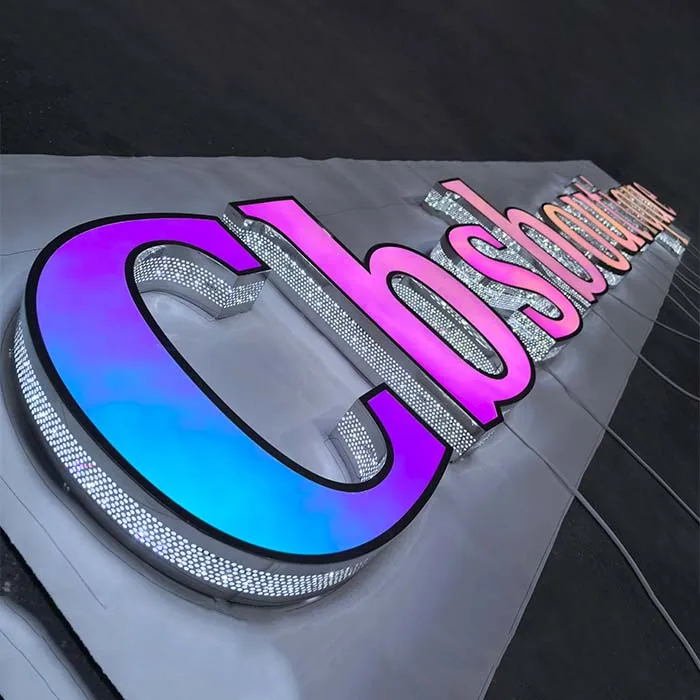
Real photo from our production floor — every sign we ship is made here.
Products mentioned or relevant to this topic — factory-direct, custom built.
From $24/letter · MOQ 1 piece · Flexible lead time · CE & UL certified · ships to 20+ countries
Custom sizes, colors, and finishes. Get a factory price in 24 hours.
Get a Free Quote Copy EmailWhatsApp +86 13865703472 · business@aochuangsign.cn
See pricing, specs, and get a free quote for the sign type you need. Built in our factory, shipped worldwide.