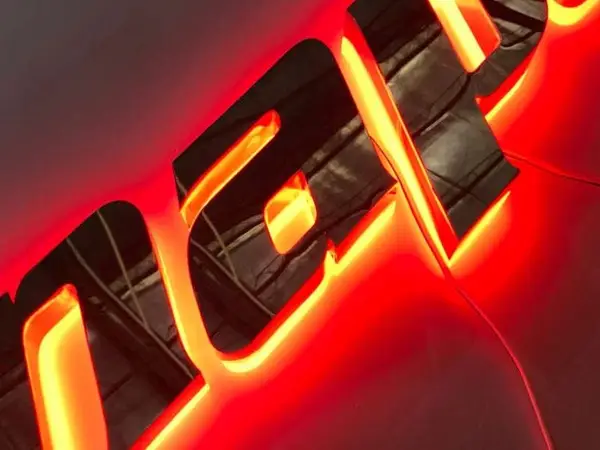
Barbershop signage is having a moment. Walk through any gentrifying neighborhood and you’ll see it: polished stainless steel poles wrapped in crisp red, white, and blue stripes. Some glow at night. Others spin slowly. Every one of them screams “old-school craftsmanship” – but the guts are anything but old.
The thing is, your clients want vintage aesthetics without vintage headaches. Real neon poles break. They leak. They suck power. And when a glass tube cracks, you lose a whole day of rental income. That’s why the industry has shifted hard toward LED barber poles. But not all LED poles are created equal. And not all “vintage” designs are worth the metal they’re cut from.
Here’s the problem: most sign shop owners we talk to jump straight to aesthetics – the stripe pattern, the color temperature, the 3D crown on top. They forget that a storefront sign has to survive rain, snow, sun, and the occasional delivery truck bump. Over my 15 years in commercial signage, I’ve seen too many beautiful barber poles fail within 18 months because the spec was wrong from the start.
So let’s fix that. This article digs into what actually works: real materials, honest cost numbers, and the installation details that separate a five-year sign from a fifteen-year icon.
I still love the glow of real neon. Nothing matches it for warmth and color purity. But if you’re selling a sign to a working barbershop owner who needs zero downtime, LED wins on every metric that matters.
| Feature | Real Neon (Glass Tube) | LED Strip / Module (SMD 2835) |
|---|---|---|
| Lifespan (L70) | 10,000–15,000 hours | 50,000+ hours |
| Warranty | Typically 6 months – 1 year | 2 years LED, 1 year power supply (Aochuang standard) |
| Brightness | 30–50 lm/ft (varies by gas) | 100–150 lm/W (SMD 2835) |
| Power consumption (per ft) | ~15–20 watts | ~4–6 watts |
| Weather resistance | IP65 max (enclosed), prone to cracking | IP65–IP68 available (sealed with neutral silicone) |
| Color consistency over time | Degrades, needs replacement | Stable for 50,000 hrs (Samsung/Osman chips) |
The gap isn’t small – it’s a factor of three to five in lifespan. And because LED modules are individually sealed in silicone during our production process, water intrusion is almost eliminated. We run every sign through an 8- to 12-hour aging test before it ships. Real neon just can’t take that kind of abuse.
Now, price is a different story. A quality LED barber pole (front-lit, acrylic face) runs $20–80 per letter at factory-direct pricing. A custom hand-bent neon pole of similar size? You’re looking at $200–500 per letter from a US neon shop, plus shipping fragile glass. But here’s where the value flips: if you import the LED pole, your total cost landed (including the 30% Section 301 tariff) is still 50–65% below domestic fabrication. Your margin stays healthy.
Hard-won wisdom: always specify SMD 2835 modules from known brands – Samsung, Osram, or Lan Jing. Cheap Chinese LEDs will yellow and dim within 12–18 months. That’s the difference between a sign you can warranty for 2 years and one you’ll be replacing for free before the barber’s first lease renewal.
The barber pole itself is the hero of the sign. But the backing, the frame, and the mounting structure matter just as much. I’ve seen plenty of “vintage” poles made from painted mild steel that rust through in two years.
Here’s the short version: use stainless steel 304 for the pole body and brackets. It lasts 10+ years outdoors. If the barbershop is within a mile of salt water (coastal towns), step up to 316 marine grade. Yes, it’s 20–30% more expensive – but that extra 5% molybdenum stops pitting corrosion cold. I’ve shipped 316 signs to beachfront shops in Florida that still look new after 8 years.
For the illuminated part: acrylic faces should be UV-resistant. Genuine Mitsubishi or Degussa acrylic holds 90–92% light transmittance and stays clear for 5–8 years. Domestic acrylic? You’ll see yellowing in 1–2 years. Don’t cheap out. And if the pole is taller than 2.5 meters, insist on 5mm acrylic. Anything thinner and the wind will bow it – or crack it.
Aluminum is fine for light boxes and internal frames – it’s one-third the weight of steel and naturally rust-proof. But for the visible pole that takes daily bumps and weather, stainless is the only answer. Period.
Your clients fall into two camps: those who want it yesterday (custom local fab) and those who want to save serious money (import). Let’s break it down with real numbers.
| Factor | US Custom Shop (Small batch) | Import from China (Aochuang example) |
|---|---|---|
| Price per barber pole (3ft illuminated) | $600 – $1,200 | $200 – $400 (FOB) |
| Lead time | 2–4 weeks | 7–15 days (production) + 7–15 days air freight |
| MOQ | 1–5 pieces typical | 1 piece (yes, one) |
| Warranty | Often 1 year labor only | 2 years LEDs, 1 year PSU (written) |
| Certifications | UL/ETL (included) | CE, RoHS, ISO 9001; UL/ETL available (costs $4k–15k extra) |
| Shipping cost (to US) | Local delivery $50–200 | Air $4–12/kg; Sea $80–200/m³ LCL |
| Tariff (Section 301) | 0% | ~30% on value |
The import numbers work if you plan ahead. Sea freight takes about 65 days, so you need to order for a project pipeline. Air freight (about 10 days) makes sense for single poles or urgent installs. And yes – you can import just one pole. MOQ of 1 is standard at my factory.
But here’s the reality: if you need UL listing for a US commercial permit, an imported pole will add $4,000–15,000 for UL testing and quarterly audits. Most sign shops pass that cost to the client, or they use ETL (10–30% cheaper, same acceptance in most jurisdictions). For a single barber pole, the UL hit might not be worth it. Instead, verify the factory uses UL-recognized components – it’s cheaper and still satisfies many local inspectors.
You’ve got the pole. Now you have to get it on the wall without electrocuting anyone or violating NEC Article 600. Here’s the step-by-step that most design blogs skip.
First, mounting height. If the sign includes tactile elements (like a raised barber pole for ADA compliance), the bottom must be 48–60 inches above the finished floor. Also, any illuminated pole that’s within reach of the public needs to be scratch- and impact-resistant – acrylic with a polycarbonate overlay is the standard.
Second, wiring. LED barber poles run on low-voltage DC (usually 12V or 24V). The power supply should be housed in a weatherproof enclosure (IP65 minimum) and hardwired to a dedicated GFCI circuit. Never use a plug-in adapter for an exterior sign – inspectors will flag it. We always ship our signs with a 6-foot lead of outdoor-rated SJOW cable, but your electrician should confirm the local code.
Third, anchoring. A 5-foot stainless pole with a 12-inch base weighs 25–40 pounds. That doesn’t sound heavy, but wind load on a 5-foot lever arm is substantial. Use 1/4-inch stainless expansion bolts into masonry or a through-bolt system on wood framing. My rule of thumb: if the pole extends more than 3 feet from the wall, add a second bracket at 18 inches from the base.
Permitting is where most sign owners trip up. Many cities require a structural engineer’s stamp for any sign over 8 feet tall or projecting more than 12 inches. A simple barber pole attached flush to the facade usually skips that – but always check. I’ve seen a $2,000 pole get rejected because the shop owner didn’t pull a $150 permit.
I’ve spent 15 years watching signs go up and come down. Here are three lessons you won’t find in a glossy brochure.
1. Silicone is your best friend and worst enemy. Neutral-cure silicone is essential for sealing acrylic to metal – acid-cure will fog the plastic within months. But even neutral silicone needs time to cure (24–48 hours) before the sign sees rain. We schedule that day specifically in our 10-step production flow. If a factory skips the “sealing with neutral silicone” step and goes straight to packing, the sign leaks. No exceptions.
2. Heat kills LEDs faster than water

Real photo from our production floor — every sign we ship is made here.
Products mentioned or relevant to this topic — factory-direct, custom built.
From $24/letter · MOQ 1 piece · Flexible lead time · CE & UL certified · ships to 20+ countries
Custom sizes, colors, and finishes. Get a factory price in 24 hours.
Get a Free Quote Copy EmailWhatsApp +86 13865703472 · business@aochuangsign.cn
See pricing, specs, and get a free quote for the sign type you need. Built in our factory, shipped worldwide.