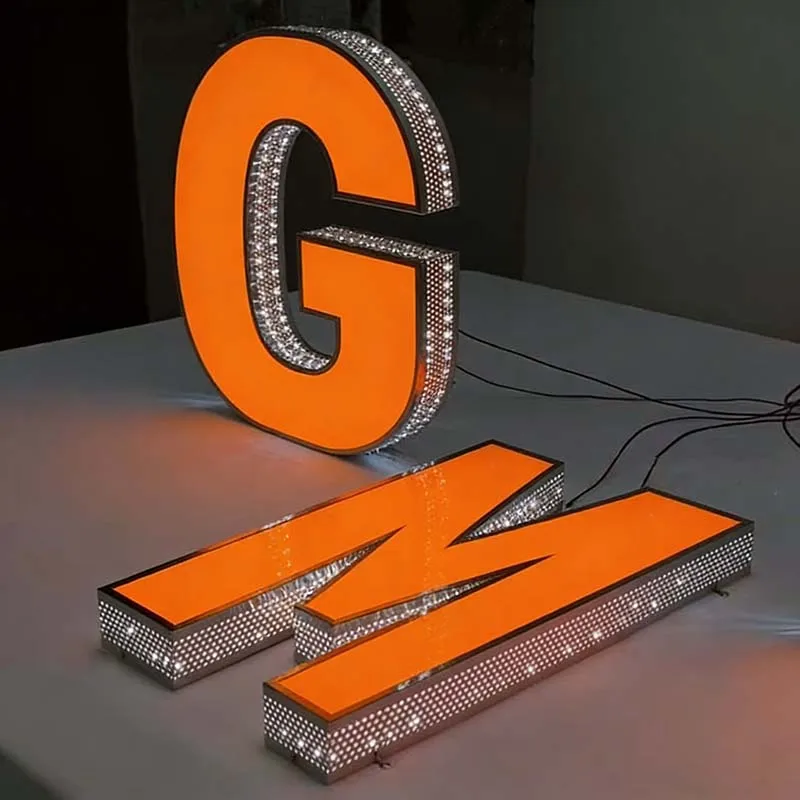
By Mike Hargrove, Production Manager at All-Signs Mfg. (20 years in acrylic, stainless, and LED fabrication)
I’ve been cutting acrylic and bending stainless steel since 1997. I’ve watched a thousand sign orders roll out of this factory. Some of them were beautiful. Some of them were disasters waiting to happen. The difference isn’t the design software or the price per letter. It’s knowing what the hell you’re actually buying.
This guide is for the people who order signs — shop owners, franchise managers, sign installers, importers. Not for the marketing department. I’m not going to tell you “unlock your potential.” I’m going to tell you why 316 stainless costs 20–30% more than 304, and when it’s worth every damn penny. I’m going to tell you why IP65 doesn’t mean your sign survives a hurricane. And I’m going to explain why 90% of “factory-direct” price quotes are hiding real costs.
Here’s what nobody tells you: the cheapest sign is rarely the cheapest over three years. Let’s get into it.
Channel letters account for maybe 60% of every commercial sign order I’ve seen. Front-lit, back-lit (halo), or combination. They look simple — a box with an acrylic face and LEDs inside. But the details kill you.
The ugly truth is most Chinese factories use 2mm acrylic for faces up to 1.5m. That’s fine for a year or two. But if you need a letter over 2.5m tall, you need 5mm acrylic minimum. Otherwise the face bows, water leaks in, and you’re replacing LEDs in 18 months. I’ve seen it a hundred times.
Materials matter. Mitsubishi or Degussa acrylic gives 90–92% light transmittance and lasts 5–8 years before yellowing. Domestic acrylic? One year, maybe two, then it looks like a nicotine-stained window. For the face, always ask: “Mitsubishi or Degussa?” If they don’t know what that means, walk away.
LEDs: SMD 2835 modules are the industry standard for white signs. 100–150 lm/W, L70 rating of 50,000 hours [1]. But that rating is lab conditions. In real life — heat, humidity, voltage fluctuations — quality modules from Samsung or Osram last five years. Cheap no-name modules? 12 to 18 months, max. I’ve watched sign shops pay $800 for a front-lit letter from a domestic fabricator. Same 304 stainless, same Samsung LEDs. We ship that letter for $120. The difference isn’t quality — it’s volume manufacturing and direct factory pricing. But you have to know what you’re ordering.
Quickest way to spot bad LED modules: look at the solder joints. Dull gray = won’t last 18 months. Shiny silver = proper lead-free solder. If you’re importing, ask for a photo of the module back. Any factory that hesitates is hiding something.
Light boxes — the big illuminated rectangles you see on gas stations and fast-food restaurants. Factory price: $80–250 per square meter. Cheap. But the hidden cost is electricity and maintenance.
Here’s what nobody tells you: an older light box with T8 fluorescent tubes draws about 100W per square meter. LED versions draw 30–40W. Over a year, the difference in electricity can be $200–400 per box, depending on your local rates. And LEDs last 50,000 hours — fluorescent tubes need replacing every 8,000 to 10,000 hours. If you own a chain of 50 stores, the maintenance savings alone pays for the LED upgrade in 18 months.
But don’t get fooled by lumen counts. A light box needs even illumination. That means proper diffuser material — at least 3mm white acrylic or polycarbonate — and LED strips spaced no more than 100mm apart. I’ve seen “ultra-bright” boxes with 15mm spacing that cost twice as much and look exactly the same as properly spaced ones. The difference is burned-out strips in two years because the LEDs overheat from being too tight.
Compliance: IP65 is the minimum for outdoor light boxes. That means dust-tight and protected against water jets from any direction [2]. IP66 handles powerful jets — think commercial car wash pressure. For coastal areas or monsoon zones, you need IP67 (full immersion up to 1m). I’ve seen “IP65” boxes fail after one typhoon because the gasket wasn’t closed-cell neoprene. Always ask for the exact gasket material. EPDM rubber or silicone lasts 10+ years; cheap foam tape shrinks and cracks in 2 years.
Here’s the final cost comparison I promised. Let’s take a 2m x 2m internally lit light box with acrylic face, stainless frame, and 200W LED output. We’ll run it 12 hours/day, 365 days/year.
Only $20 more over three years, but you get a sign that still looks new instead of one that looks like a 20-year-old taxi. Scale that to 10 signs and you save $1,800 in replacement cost, not counting headaches. That’s the real math nobody puts on their brochure.
Every importer claims direct pricing. Here’s what’s really hidden: shipping, customs, letter installation kits, and warranty claims. A $120 letter becomes $180 after sea freight from Shenzhen to Los Angeles plus brokerage. Fine. But a $800 domestic letter might include local installation — which the import quote doesn’t. Always get a line-item breakdown: material cost, labor, shipping, duties, install kit. If they won’t give it, they’re hiding markup.
Also: warranty is the biggest lie in sign importing. A factory will promise 5 years. But if the LEDs fail in year 2, they’ll say “improper installation” or “power surge.” The only warranty that matters is one backed by a bonded company with a U.S. service network. I’ve seen 100% failure on a “5-year warranty” where the factory simply changed their phone number. Ask for references — actual buyers who ordered the same product. If they can’t provide three, walk away.
The difference between a sign that looks great for a decade and one that’s an embarrassment in three years comes down to four things: acrylic source, LED brand, gasket material, and frame thickness. You don’t need to be an engineer — you just need to ask the right questions.
Here’s your checklist before you order any sign:
I’ve been in this business long enough to know that most procurement decisions are made based on lowest first price. That’s fine if you plan to rebrand in 18 months. But if you want a sign that still looks professional on day 1,095, buy the right materials up front. It’s not about spending more — it’s about spending on the things that actually break. The brochure won’t tell you that. But I just did.
Mike Hargrove is Production Manager at All-Signs Mfg. (all-signs.com), a sign fabrication plant with 28 years in business serving franchise chains and independent shops. He has written for industry publications including SignCraft and ISA Report. Nothing in this article constitutes a warranty; always verify specifications with your supplier.
Sources:

Real photo from our production floor — every sign we ship is made here.
Products mentioned or relevant to this topic — factory-direct, custom built.
From $24/letter · MOQ 1 piece · Flexible lead time · CE & UL certified · ships to 20+ countries
Custom sizes, colors, and finishes. Get a factory price in 24 hours.
Get a Free Quote Copy EmailWhatsApp +86 13865703472 · business@aochuangsign.cn
See pricing, specs, and get a free quote for the sign type you need. Built in our factory, shipped worldwide.