I just got off an 11pm call with a sign shop owner in Dallas screaming about his container sitting in Long Beach for nine days because his broker filed the wrong HTS code. Nine days. Demurrage eating $212 a day.
Look, if you don't know your HTS code, you don't know your landed cost. Not knowing means you guessed, and guessing gets you audited.
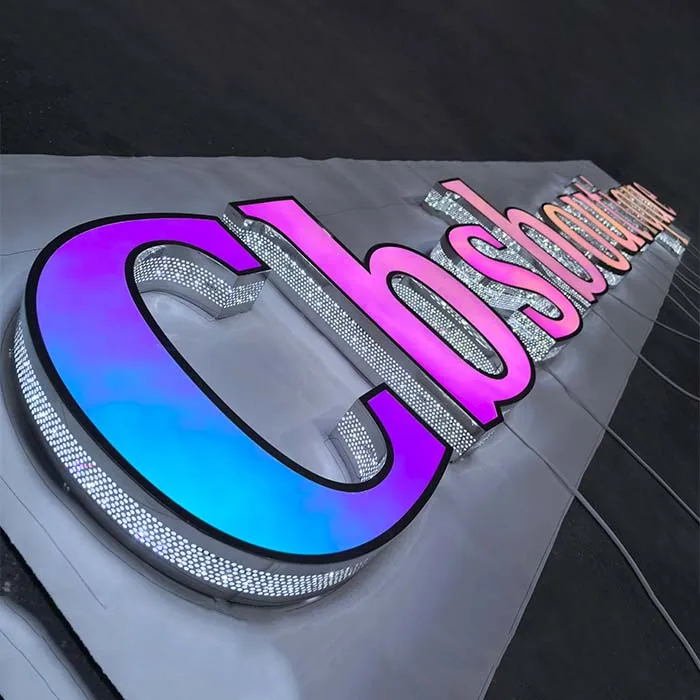
Illuminated signs and non-illuminated signs are not the same thing to U.S. Customs. A front-lit channel letter with LEDs inside is lighting equipment. A solid 304 stainless letter with no power is a metal article. Different duty, different paperwork, different inspection flags. I've watched importers try to classify everything as "sign parts" to save 3% and end up paying a customs broker $500 to fix the entry after the fact.
Customs doesn't care what you write on the invoice. They care what the General Rules of Interpretation say. If it has a light source, you're an illuminated sign, most likely under Chapter 94. If it's just metal, plastic, or wood letters, you're under Chapter 83 or 39/44 depending material. I've had to re-file entries because a customer wrote "decorative letters" on the commercial invoice and the CBP officer flagged it for review. That's a 3-day delay at minimum.
The same front-lit channel letters you buy for a strip mall can get classified one way if they ship fully assembled and another way if the LEDs come separate as "parts." Assemble before shipping. Shipping fully assembled letters is cheaper anyway, and your entry gets cleaner.
Get a broker to run a binding ruling if you're unsure. A binding ruling costs a few hundred dollars and takes weeks, but it beats a $10,000 penalty for misclassification.
Section 301 tariffs on Chinese-origin signage run about 30%, and that's on top of the base duty rate. You don't get a discount because the sign was "assembled with love" or because you bought from a "wholesale factory." If the origin is China, the tariff follows.
I've seen this go wrong: a contractor ordered $7,000 worth of 304 stainless steel letters from China. He paid the factory price. Then a $2,100 Section 301 bill hit at the port. He thought the quote included landed cost. It didn't. Read the fine print. Factory quotes are FOB, not DDP.
You can't lie about origin. A 316 stainless sign with Chinese LED modules and Chinese fabrication is Chinese origin. Period. Customs checks the country of manufacture on the packaging, the invoice, and sometimes the physical marking. If you buy from a trading company that sources from another factory, get the actual mill certificate.
Section 232 on aluminum and steel is another surcharge that never went away. Raw aluminum sheet and steel plate carry those duties. Suppliers pass that cost into every aluminum sign blank and steel channel letter you buy. If your HTS code is for a finished metal sign rather than raw material, you usually skip the Section 232 line item, but your supplier already paid it on the raw stock. So you pay it anyway, buried in the factory price.
For 316 stainless in coastal or industrial environments, expect a 20-30% premium over 304. If you're doing a Miami Beach storefront, pay for 316 or you'll be replacing letters in three years. If it's a strip mall in Ohio, 304 is fine.
Look, I've done this math more times than I've changed ballasts. Factory price is only half the story.
For a set of acrylic LED letters at a factory price of $120 per letter, ten letters is $1,200. Add ocean freight LCL at $80-200 per cubic meter. A crate of ten letters might be 0.3 m³, so that's maybe $60. But wait. You've got ISF filing, customs bond, broker fee, port handling, trucking to your shop. That's another $350-500 on top. Section 301 30% on $1,200 is $360. All in, you're closer to $2,000, not $1,200.
Still way cheaper than the $200-700 per letter a domestic fabricator charges installed for front-lit, or $400-1,000 per letter halo-lit. Factory-direct saves you 50-65% on the product itself. But don't tell yourself the factory price is what you pay.
I've watched sign shops pay $800 for a front-lit letter from a domestic fabricator. Same 304 stainless, same Samsung LEDs. We ship that letter for $120 from our factory. Factor in shipping and duty, you're still at $190-220 per letter landed. Do the landed cost math and you'll see why factory-direct exists.
I've watched sign shops quote a customer using the FOB price and then eat $2,000 in surprise costs. Don't be that shop. Use a landed cost sheet before you quote. Your broker can give you a per-shipment estimate for under $50.
Air freight for small sign orders can beat sea freight after you factor in demurrage and time. Express about 5-15 days might cost $4-12 per kilogram. For a 10 kg box of mini letters, that's $40-120, and you skip the LCL handling nightmare. For a full container, sea is still king at $1,200-3,000 FCL, but for small jobs, pay for air and sleep better.
Our factory lead time is about 5-15 days. That's design confirmation through export packaging. If you order ten letters today, they're on a plane or boat within two weeks. You can't clear customs faster than your supplier builds the sign.
Customs clearance is just paperwork and patience, but one wrong box on an entry form can park your shipment for a week.
Here's the sequence. Your supplier ships. They send a commercial invoice, packing list, and bill of lading or airway bill. You or your broker files ISF for ocean freight at least 24 hours before the vessel loads. That's non-negotiable. Miss it and CBP fines start at $5,000. When the goods arrive, your broker files the entry with the HTS code, origin, and value. You pay duties online. CBP might inspect. Then freight releases to your trucker.
For most small sign orders under $2,500, you're looking at informal entry. Fast, less paperwork. For bigger orders, formal entry. Your broker handles it. Stop trying to act as your own customs broker. I've seen a shop owner spend three days on the phone with CBP to save $150. His time as a sign fabricator is worth $85 an hour. Do the math.
Keep every document for five years. CBP can audit. I had a client get a request for entry documents three years after delivery. If you don't have the commercial invoice and proof of origin, you'll pay a penalty.
One more thing: an embedded lightbox or other illuminated fixture needs a UL or ETL listing to pass electrical inspection on the job site, but customs doesn't block it for that. The listing is a code issue, not a customs issue. Know the difference. UL 48 certification runs $4,000-15,000 and takes 4-9 months. If your factory already has it, your job goes smoother after it clears.
And don't get fooled by a CE certificate alone. CE marking costs 20,000-50,000 RMB and takes 2-8 weeks. Plenty of factories claim CE. Ask to see the actual certificate with today's date. Watch them sweat. For U.S. electrical, you want UL or ETL, not just CE. CE is a European mark. CBP doesn't check it, but your local inspector might ask why the sign's power supply isn't listed.
I've seen this go wrong: a client saved $80 on freight by choosing LCL sea freight for a single crate of channel letters. That crate got handled 6-8 times between our dock in Lu'an and his shop in Cleveland. Forklift tongs, conveyor drops, stacked under a pallet of engine parts. The letters arrived with two bent returns and a shattered acrylic face.
Factory packaging matters more than you think. At our facility, every sign goes foam-wrapped, then carton, then plywood crate. That's standard for export. But even with that, I've had ocean freight do damage that air freight never would. Express and air cost more per kilogram, but they cut handling in half and your signs show up without boot prints.
Look, if you're importing 40 pieces of back-lit halo letters with delicate returns, spring for air freight or full container loads where your crate doesn't get moved as often. LCL is fine for flat stainless letters that can take a hit. Acrylic faces over 2mm are a gamble.
For acrylic faces over 2.5 meters wide, use 5mm thickness, not 3mm. A 3mm face cuts 92% light output; a 2mm face cuts 90%. The thick material isn't just for light quality—it's also less likely to crack when the crate gets dropped.
Inspect the crate before you sign the delivery receipt. Once you sign "received in good condition," the freight company owns you. I've had to deny claims because a shop signed first and called me later with photos of a crushed corner. Too late.
Do I have to pay Section 301 tariff on samples? If the shipment's under $800, Section 321 de minimis means no duty. Over $800, yes, 30% on Chinese origin. Stop asking.
Can my supplier mark the invoice lower to reduce duty? No. That's undervaluation, and it's illegal. CBP has a database of every declared value by HTS code. They'll flag you, audit you, and seize your goods. I've watched a sign importer lose a $12,000 shipment over a $400 duty savings.
Do I need a customs broker for a small order? You can self-file but don't. A broker costs $100-200 per entry and they know what box goes where. You know how to weld. Stay in your lane.
What IP rating do I need for outdoor signs to clear customs? None. Customs doesn't care about IP65 or IP66. That's a building code issue, not an import issue. Your buyer might care, but CBP won't.
Official references relevant to the standards and terminology discussed in this article:
Requirements vary by product, installation and jurisdiction. Confirm final specifications with the responsible engineer and authority having jurisdiction.
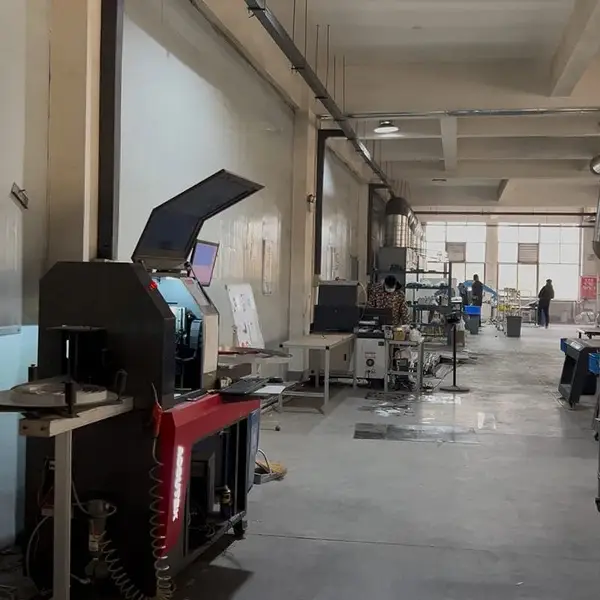
Real photo from our production floor — every sign we ship is made here.
Products mentioned or relevant to this topic — factory-direct, custom built.
From $24/letter · MOQ 1 piece · Flexible lead time · Project-specific compliance documents · ships to 20+ countries
Custom sizes, colors, and finishes. Get a factory price in 24 hours.
Get a Free Quote Copy EmailWhatsApp +86 13865703472 · business@aochuangsign.cn