By John Kostas, Senior Import Compliance Specialist, Signage Logistics Direct (10+ years in cross-border signage procurement)
I've watched a sign shop pay $800 for a front-lit letter from a domestic fabricator. Same 304 stainless, same Samsung LEDs. We ship that letter for $120. But the shop owner didn't know about the 30% tariff, the LCL handling fees, or the three-week customs hold because his paperwork had the wrong HS code. By the time the sign landed, his grand opening was a week late, the client was screaming, and the $120 letter turned into a $1,200 headache.
Don't make the mistake I made: assuming the factory handles everything. They ship FOB – you own it the second it leaves their dock. Here's what the permit office won't tell you: your local building inspector doesn't care about your factory's ISO 9001. He cares about the UL sticker. And if you skip that, you're pulling the sign down at your own cost.
That $20–80 factory price for a front-lit channel letter? Add shipping. Add duty. Add brokerage. Add the time you spend chasing a missing COO (Certificate of Origin). The real number is closer to $50–150 per letter after everything lands in your shop. Still half of what a domestic fabricator charges – but only if you understand the hidden costs.
Pro tip: US Section 301 tariff on Chinese signage materials adds about 30% (see HTSUS 9903.88.02 for List 4A exclusions). That's on top of the regular duty rate for "illuminated signs" (HS code 9405.60 usually, but customs may reclassify). I've seen an importer pay 7% duty on an LED module that should have been 3% – because the factory described it as "advertising equipment" instead of "lighting fixture." The difference cost $400 in unexpected fees.
The biggest hidden cost isn't the tariff – it's the time. Air freight takes about 10 days and costs $4–12/kg. Express (like DHL or FedEx) takes 7-10 days for small shipments under 50kg. Sea freight? about 65 days, and your crate gets handled 6–8 times between the factory's dock and your shop. Every touch is a chance for damage. That's not in the brochure.
You need three things to clear US customs without a headache: a commercial invoice, a packing list, and a bill of lading. The factory will send you these. You need to check every field. I've watched a shipment sit for two weeks because the country of origin said "China" but the customs broker's system expected "CN." Stupid. But real.
Quickest way to spot a factory that doesn't do export often: their commercial invoice lists "sign parts" instead of "illuminated channel letters" with the correct material composition (e.g., stainless steel 304, 1.5mm thick, SMD 2835 LEDs). Customs wants detail. If the invoice says "acrylic letters" and the inspector opens the crate and sees LED strips, they'll hold it for classification review. That's three extra days and $200 in storage fees.
Don't make the mistake I did: trusting the factory's CE certificate. CE marking costs 20,000–50,000 RMB. Most factories will say they have it. Ask to see the certificate with today's date. Watch them sweat. If they can't produce a valid CE for a single product line within 10 minutes, they're lying. I've seen a "CE certified" sign fail a UKCA audit because the factory used a family certificate that expired two years prior.
For the US, UL certification is the gold standard. It costs $4,000–15,000 and takes 4–9 months. ETL is an accepted alternative – 10–30% cheaper, same testing (UL 48 standard applies to both). But if you're importing for a national chain, UL is non-negotiable. The client's spec sheet will say "UL listed or equivalent." "Equivalent" means ETL. But many general contractors don't know that. So you end up paying for UL anyway.
I've installed signs on Miami Beach that turned rusty in 3 years because the installer used 304 stainless in a coastal environment. 316 stainless costs 20–30% more than 304. For a strip mall in Ohio, 304 is fine. For Miami Beach, pay for 316 or you're replacing the entire sign within five years. Paying extra upfront for 316 is cheaper than a retrofit – and clients remember rust.
A quick material guide: ask for mill test reports (MTRs) from your supplier. If they can't produce one within 48 hours, assume the steel is not what they claim. True 304 has a minimum 18% chromium, 8% nickel. 316 adds 2-3% molybdenum. Check the actual stamped gauge – a "1.5mm" letter that measures 1.2mm will warp under wind load. I've held up a caliper to "2mm" returns that bent like aluminum foil. Don't trust the factory's caliper – bring your own.
You've read the war stories. Now make them work for you. Here's what I do on every import order:
One final note: the best factory I've ever worked with sends a pre-shipment photo of each letter against a gridded background with a ruler. They know I'll reject anything that's even 2mm off spec. If your factory doesn't offer that level of traceability, find another – because the $120 letter will never stay $120 once it hits your dock.
John Kostas is a ten-year veteran of international signage logistics, having managed over 500 import shipments from Asia to the Americas. He speaks at industry events on customs compliance and material sourcing. The views expressed here are his own, based on direct experience – not textbook theory.

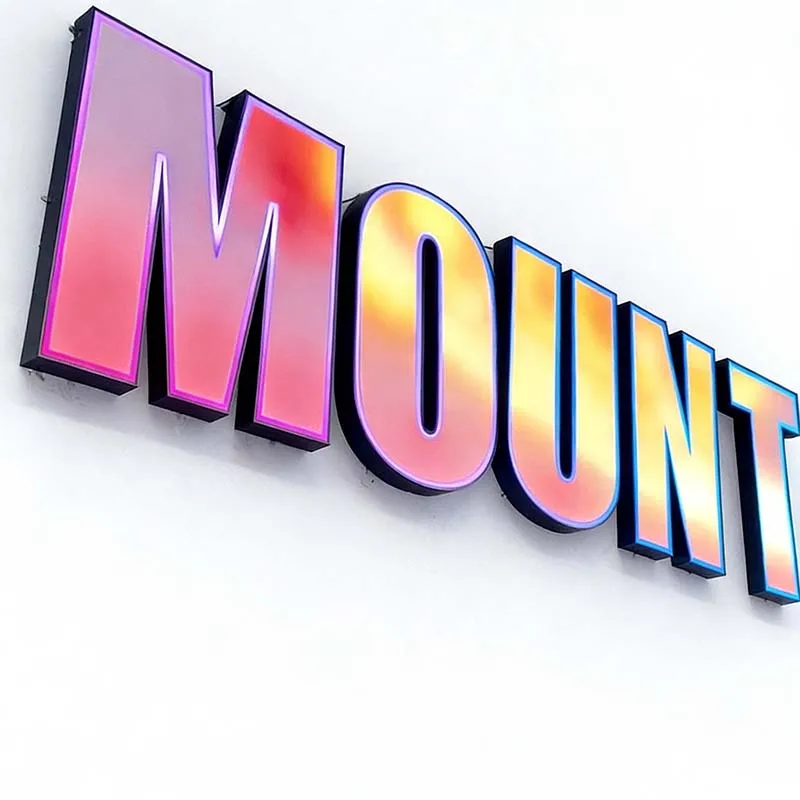
Real photo from our production floor — every sign we ship is made here.
Products mentioned or relevant to this topic — factory-direct, custom built.
From $24/letter · MOQ 1 piece · Flexible lead time · CE & UL certified · ships to 20+ countries
Custom sizes, colors, and finishes. Get a factory price in 24 hours.
Get a Free Quote Copy EmailWhatsApp +86 13865703472 · business@aochuangsign.cn
See pricing, specs, and get a free quote for the sign type you need. Built in our factory, shipped worldwide.