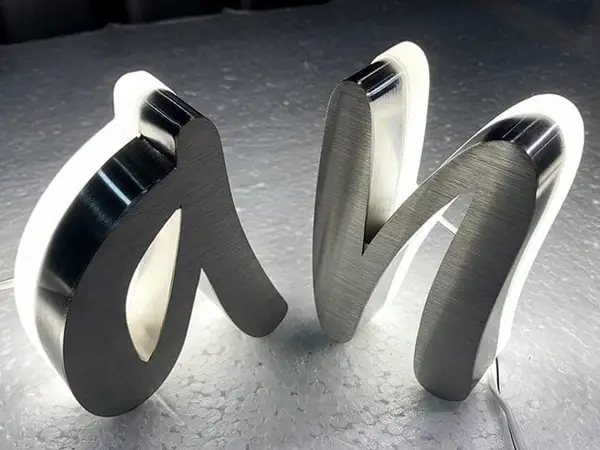
Marine grade aluminum for outdoor signs means 5052 or 6061 sheet, 0.040 to 0.063 inches thick. Install it right and you'll get 8 to 12 years before the finish looks tired. That's the whole pitch.
I’ve watched people overthink this alloy thing to death. They ask about magnesium content and temper ratings like they’re building a submarine. Meanwhile their sign shop down the street is using 3003 with a cheap powder coat and calling it marine grade. That’s the first lie you need to avoid.
Most “marine grade” aluminum on sign quotes is just 3003 with a fancy finish. It might survive a few Ohio winters. It won’t survive a single season of salt spray without pitting along the edges. When I see pitting, I know somebody cheaped out on the blank or used a domestic coil that spent too long in a warehouse.
Aluminum doesn’t rust. It corrodes. In coastal air, you get pitting and white oxidation that creeps under paint if the alloy can’t handle chloride. Marine grade alloys—5052 and 6061—have enough magnesium and chromium to shrug that off better than the 3003 stuff they make cheap flashing and gutter covers from.
I’ve fabbed signs with both. 5052 is my default for outdoor letter returns and flat panels because it bends clean without cracking. 6061 machines nicer if you’re routing thick stuff. But heat it up too much during cutting and you’ll get warping that ruins a large blank before the install crew even shows up.
If you’re doing a cast plaque or a heavy fabricated emblem, cast aluminum or bronze gives you solid heft and laughs at weather. But for sheet work, stick with 5052 or 6061, not 3003.
I’ve watched this go wrong: a shop ordered “marine grade aluminum” for a restaurant sign 200 feet from the Atlantic. They got 3003 H14. Two years later the edges looked like lace and the powder coat was flaking off in sheets. That’s a $4,000 replacement because somebody wanted to save 18 cents a pound.
For most outdoor signs, 5052 H32 is the sweet spot. It bends tight for channel letter returns without fracturing. It takes a powder coat or anodized finish consistently. And it doesn’t fight you on the brake press. If you’re trying to make a 4x8 panel stay flat while you weld studs to the back, 5052 is more forgiving than 6061 T6.
6061 is stronger, sure. But stronger isn’t always better. If you’re building a structural sign frame or a big monument cabinet, 6061 makes sense. If you’re making front-lit channel letters, use 5052 for the returns and backs. You’ll thank me when your welder isn’t chasing cracks with a TIG torch.
3003? Skip it. Unless you’re making a cheap interior sign that’ll never see rain or UV. Even then, why bother?
You’re buying aluminum for signs in standard thicknesses from 0.040 to 0.063 inches. That’s 1.0 to 1.6mm in metric. Sounds thin. Trust me, it’s not. A 0.063 aluminum face weighs a third of what the same size steel face weighs, and that weight savings matters when you’re hanging a 60-pound sign over a sidewalk.
Flatness tolerance on a 5x10 sheet can turn a clean install into a wavy mess if the mill didn’t stress-relieve the coil properly. I’ve unboxed panels that looked flat on the pallet and looked like a potato chip the moment the morning sun hit them. Temper matters. H32 is a stabilized strain-hardened temper; it holds shape better than H14 or O-temper when you’re routing or bending long edges.
After we cut a panel on the laser—±0.1mm, no problem—it goes to bending or welding. If the sheet has too much springback because of the wrong temper, every return is off by half a degree. That’s not something you fix with a grinder. That’s a scrapped face.
For large sign blanks, I insist on 0.063 minimum if there’s any wind load. For smaller flat cut letters or thin trim caps, 0.040 works. But if you’re near a coast or in a hurricane zone, bump it. The extra thickness costs less than a call back after a storm pulls a panel loose.
Anodized aluminum is the closest thing to a set-and-forget finish on 5052. It penetrates the surface instead of sitting on top like paint. You get a brushed look that won’t peel. Powder coat looks rich and you can match any RAL color, but if a forklift nicks it, moisture gets underneath and starts lifting the coating from the edges inward.
Powder coat gets most of its durability from the pretreatment, not the powder. If the shop skips the chromate conversion stage because it costs an extra 20 minutes per rack, your sign looks great for six months. Then the coating starts failing exactly where the installer drilled the mounting holes. I’ve seen aluminum letters that looked brand new at delivery and looked like they’d been sandblasted after one winter.
For coastal environments, pair 5052 with a two-coat anodized finish. Or go with a high-solids marine paint system if you absolutely need a custom color. And don’t skip edge sealing. A cut edge on aluminum is where corrosion starts first.
If you want a premium architectural look that’s still weather-tight, consider back-lit halo letters with aluminum returns and a properly sealed face. The finish spec matters more than the alloy if you’re not in a salt zone.
If you’re installing within 500 feet of breaking salt water, skip aluminum entirely. Use 316. 316 stainless steel letters cost 20 to 30 percent more than 304, but that extra 2 to 3 percent molybdenum is what gives you 15-plus years outdoors without pitting. 304 has 18 percent chromium and 8 percent nickel; it’s fine for strip malls in Ohio. But it’s not fine for Miami Beach.
I’ve spec’d 304 for a coastal job once. Once. Three years later you could see the pitting from across the street. The customer didn’t want to hear about alloy chemistry. They just wanted a refund.
Aluminum has its place—weight, cost, formability. But if your main concern is corrosion rather than budget, marine grade aluminum honestly doesn’t beat 316 stainless. It just costs less upfront and installs lighter. That’s the trade-off.
Is 3003 aluminum marine grade?
No. It never was. If a supplier calls it marine grade, they’re lying or they don’t know the difference. Either way, don’t buy it for an outdoor sign near salt.
Do I need 6061 for outdoor signs?
Only if you’re machining a complex structural part or need a higher strength-to-weight ratio for a big cantilevered monument sign. For flat cut letters, channel letter returns, and standard cabinets, 5052 H32 is easier to work with and less likely to warp under heat.
Can I powder coat aluminum and call it marine grade?
No. Powder coat doesn’t change the alloy. You can powder coat a cheap 3003 sheet and it’ll still pit underneath the coating. Finish and alloy are two separate specs. Get both right.
How long does marine grade aluminum actually last on an outdoor sign?
Look, with 5052, a decent finish, and no direct salt blast, figure 8 to 12 years before you need to refinish or replace. If you’re right on the water, plan for half that. And if you’re tired of gambling, just pay the stainless premium and sleep at night.
Products mentioned or relevant to this topic — factory-direct, custom built.
From $24/letter · MOQ 1 piece · Flexible lead time · CE & UL certified · ships to 20+ countries
Custom sizes, colors, and finishes. Get a factory price in 24 hours.
Get a Free QuoteWhatsApp +86 13865703472 · cairuisheng@aochuangsign.cn