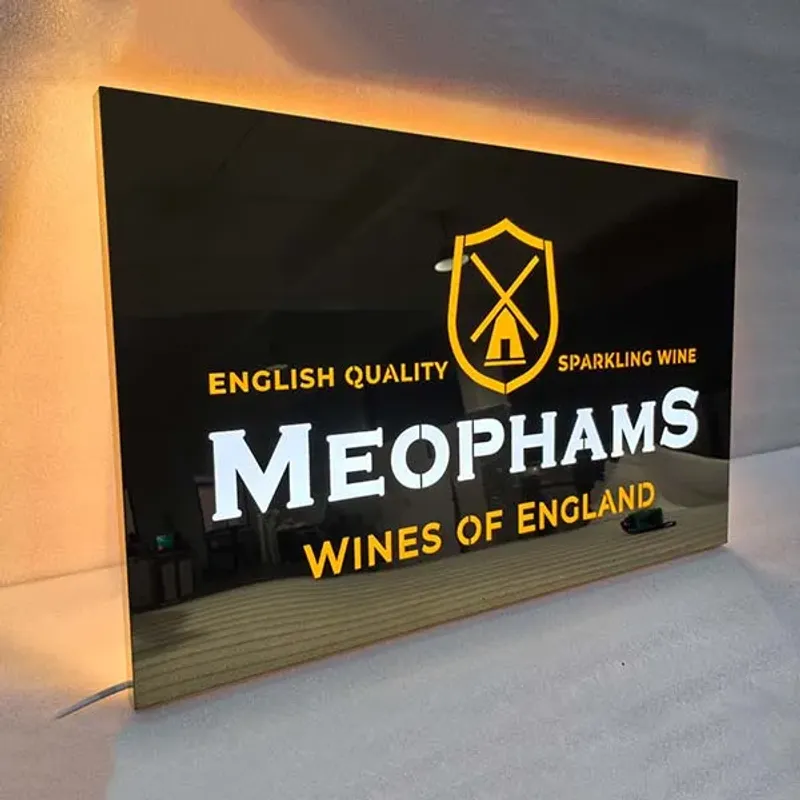
Fifteen years building signs, and I've never once seen an RCM certificate for a whole sign assembly. Not once. RCM is a mark, not a piece of paper, and behind that mark sit three equipment risk levels under Australia's Electrical Equipment Safety System.
If you're selling illuminated signs into Australia, don't ask "Do you have RCM approval?" Ask whether your product falls in-scope under AS/NZS 4417.2 and whether you've registered as the responsible supplier.
Look, I run a factory in Lu'an, Anhui—3,000 square meters, 50-plus workers. I've been at this since 2010 and shipped enough containers to know Australian compliance is a whole different animal from CE and UL.
Nobody tells you this: no overseas factory can act as the responsible supplier in Australia. You wear that hat. I ship signs to Australia from my factory. I can hand you test reports, LED module specs, wiring diagrams. But if the sign gets flagged at port, your ABN takes the hit, not mine.
RCM stands for Regulatory Compliance Mark—Australia's unified mark for electrical safety and electromagnetic compatibility. The old C-Tick and A-Tick system died years ago, but I still see shops slapping both on their labels.
That mark doesn't mean a government body approved your sign. It means a responsible supplier registered the product on the EESS database and holds a Declaration of Conformity plus test reports. That's the whole ballgame.
Look, I get it. My customers want one sheet of paper that says "compliant." That paper doesn't exist. If a supplier says "we have RCM approval for our signs," ask them to send the actual EESS registration number and the test report. Then watch the excuses start.
Lighting and signs usually fall under AS/NZS 60598.1 for luminaires, AS/NZS 61347 for LED controlgear, and AS/NZS CISPR 15 for electromagnetic compatibility. Test your component or assembly against whichever applies.
RCM is not a certificate. Let me repeat that slower: a sign doesn't get "RCM approval." In-scope components or assemblies get marked by a responsible supplier who's registered and holds the evidence. RCM covers both electrical safety and EMC. Your sign can pass electrical safety and still fail EMC if it radiates noise.
Draw the line here: any electrical equipment running above 50V AC or 120V DC and below 1,000V AC or 1,500V DC sits in-scope. That covers almost every sign driver you plug into a 240V wall socket.
Quote front-lit channel letters for a Melbourne café and the LED modules might run on 12V, but the driver feeding them is in-scope. Same story for backlit halo letters in a Sydney lobby.
Non-illuminated 304/316 stainless steel letters bolted to a wall don't need RCM. They're not electrical. But the moment you add LED modules and a driver, you've created an electrical product. That's the ugly truth most sign shop owners miss.
Battery-powered signs under 50V AC usually escape EESS scope, but ACMA can still grab them if they radiate interference. Don't assume battery means zero rules.
Plug-in signs with a 240V plug get treated like household appliances. They need an RCM mark and a compliant plug. Hardwired signs fall under installation wiring rules AS/NZS 3000. Don't mix the two.
EESS splits into three risk levels. Level 1: low risk—self-declaration and a database check. Level 2: test report from an accredited lab. Level 3: certificate from an accredited certifier. Simple to say. Hard to apply to a one-off custom sign.
LED modules often sit at Level 1 if they're low voltage and low power. LED drivers can land at Level 1 or Level 2 depending on how they're built. A complete custom illuminated sign can get pulled into Level 2 or Level 3 once you look at wiring, enclosures, and installation.
ACMA handles electromagnetic compatibility. If your sign has LEDs, drivers, or any switching electronics, it can radiate interference. Lighting products typically need AS/NZS CISPR 15 testing for EMC. The RCM mark covers both EESS and ACMA when both apply.
Nobody tells you this: many importers hang their hats on the driver's RCM mark and forget the sign assembly itself. State electrical regulators don't care if the driver is compliant when the wiring looks like a bird's nest and the sign leaks water into a 240V circuit.
For outdoor signs, IP65 is the bare minimum. That means dust-tight and protected against water jets. IP66 does better near the coast. IP68 is submersible—overkill unless you're mounting the sign underwater. CE and UL matter in Europe and the US. They don't replace anything in Australia.
First, determine if the sign or its components sit in-scope. Then figure out the risk level. Most LED drivers and power supplies land at Level 1 or Level 2, but a custom illuminated sign may hit Level 2 or Level 3 depending on construction.
Get test reports from a NATA-accredited lab or an ILAC MRA partner. Don't accept a test report from a random Chinese lab unless it's accredited under ILAC. I've seen this go wrong: a buyer accepted a "test report" on a power supply. Turned out to be a marketing PDF with a logo.
Register as a responsible supplier on the EESS database. You need an Australian ABN. You keep the Declaration of Conformity, test reports, and product records for at least five years. I keep telling importers this, and they act like it's optional.
Registration itself costs little. The lab testing is where your money goes. A proper AS/NZS 60598 test report for a custom sign assembly can run into the thousands, especially if you need EMC testing too. Budget for it.
Then label the product with the RCM mark. Use the mark in the correct format—not a photocopy from Google Images. The mark must stay legible and durable on the product or its label.
At my factory, we build acrylic LED letters and other illuminated signs with Bluesky and Rishang LED modules. Those modules carry proper test reports. But I can't register your sign in Australia—you do that on your end.
The biggest mistake I see: importers assume CE covers Australia. CE is a European self-declaration. I've had Australian customers forward me CE certificates and ask if that's enough. It isn't.
Second mistake: buying cheap drivers with a fake RCM mark. Run the responsible supplier number through the EESS database before you ship a container. If that number doesn't show up, the mark is counterfeit.
I've seen this go wrong more times than I can count. A sign shop imported 40 illuminated letters with CE-marked drivers. No EESS registration, no test reports. Sydney port held the crate. Three weeks later, the whole shipment got destroyed. The opening date? Missed.
Cheap LED modules die in 12–18 months. Ours—Bluesky and Rishang—run five-plus years. A sign that fails early isn't just a warranty issue. It becomes a compliance problem because the product no longer meets its original spec.
State electrical safety regulators can issue fines, force recalls, and stop installations. The ACCC watches for fake marks. You don't want this fight.
Another rookie mistake: buying a 240V sign, hardwiring it, and calling it a building material. The moment you wire it into a circuit, an electrical inspector can demand compliance documents. No documents, no occupancy permit. Simple.
If you're buying signs or components from a factory—mine or anyone else's—get this in writing: RCM mark on in-scope components, test reports to AS/NZS 60598 or 61347, IP rating for outdoor use, and the responsible supplier details if the supplier claims Australian compliance.
If a supplier says "we handle RCM for you," ask for their Australian ABN and EESS registration number. No ABN, no responsibility. That's not me being difficult. That's the law.
Look, I've built signs since 2010. I've shipped enough containers to know the truth gets loose at 11pm after a long day on the factory floor. Here's the truth: Australian compliance is your job. We can give you solid materials—UV-stable acrylic, 304 stainless, LED modules that last five years—but the paperwork has your name on it.
If you want to sleep at night, have a local sign certifier or electrical engineer review your documentation before the order hits the water. A few hundred bucks is cheaper than a destroyed container.
Short version: the RCM mark is a promise, backed by test evidence and a registration number. Not a certificate you can download for $50.
Is RCM the same as CE? No. CE is European. RCM is Australian/New Zealand. One doesn't replace the other. If someone tells you CE covers Australia, run.
Do non-illuminated letters need RCM? No. Stainless steel letters without LEDs are a building product, not electrical equipment.
Can my overseas factory register for RCM? Generally no. The responsible supplier must be an Australian or New Zealand legal entity. If your factory says they can, they're confusing RCM with a test report.
What if I only install signs, I don't import them? The electrical contractor installing the sign is responsible for ensuring in-scope components comply. If the sign fails, you're the one pulling it off the wall.
Products mentioned or relevant to this topic — factory-direct, custom built.
From $16/letter · MOQ 1 piece · 7–15 day production · CE & UL certified · ships to 20+ countries
Custom sizes, colors, and finishes. Get a factory price in 24 hours.
Get a Free QuoteWhatsApp +86 13865703472 · cairuisheng@aochuangsign.cn