For a jewelry store, the best sign is front-lit channel letters with 304 stainless returns and a 5mm acrylic face. They run $1.05–$1.35 per centimeter of letter height, so a 40cm storefront name lands around $42–$54 per letter — not the $800 a pop I've watched domestic shops invoice.
I've been on factory floors since 2010. A sign for a jewelry store isn't about being bright. You need it to be believed.
Look, nobody drops $3,000 on a ring under a sign that looks like a vape shop. The sign has maybe two seconds to say "we'll still be here if the prong comes loose."
Jewelry buyers are already nervous. They're worried about being ripped off. A cheap, faded, yellowing sign tells them their intuition is right.
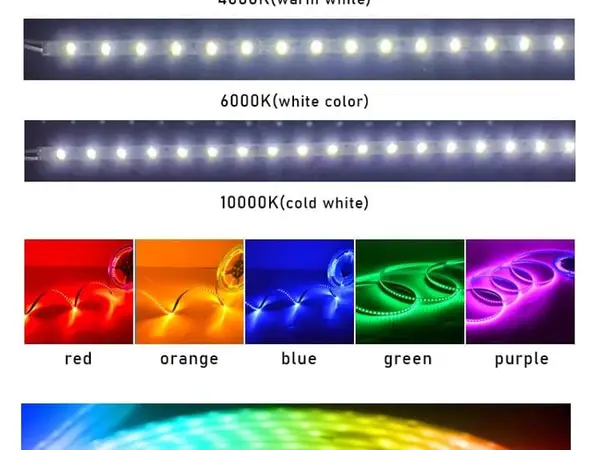
Use 4000–5000K neutral LEDs. That's the color temperature where platinum looks platinum and diamonds don't turn blue. 3000–3500K warm can work for a boutique with rose gold and vintage cases, but 6000–6500K cool white is for highway gas stations, not engagement rings.
Our channel letters use a 5mm UV-resistant acrylic face with 90–92% light transmittance. Domestic acrylic lasts 1–2 years before yellowing. Mitsubishi or Degussa UV acrylic lasts 5–8 years. For a jeweler, the acrylic isn't a cost upgrade. That's the difference between "premium" and "going out of business sale."
I once sent a sample with domestic acrylic to a client. It yellowed before the lease sign-off. Never again.
Channel letters win for 90% of storefronts. A lightbox cabinet screams discount jeweler or pawn shop. That big glowing box works great if you're selling $99 chains on a highway, but a luxury jeweler needs dimensional letters with depth.
Don't let anyone fool you: lightbox cabinets are often cheaper upfront, but they fail in ways that cost more later. Water collects in the bottom. The acrylic face turns yellow. The LED modules fail in 12–18 months if you buy cheap ones. A channel letter with sealed returns and proper drain holes ages better.
For a jewelry store name under 10 letters, front-lit channel letters with stainless trim and baked-paint finish run $1.05–$1.35/cm. If you want gold or chrome electroplated trim, budget $1.50–$1.80/cm. That's per centimeter of letter height, so an 8-inch letter means roughly 20cm, not 8 inches of price.
If the landlord demands a backlit halo look, back-lit halo letters cost $1.20–$1.65/cm in baked paint and $1.50–$1.80/cm electroplated. They look expensive because they are. But a jeweler who wants an architectural, high-end storefront should at least price them.
One more thing: drain holes. Any outdoor channel letter needs drain holes at the lowest point of each return. If the fabricator doesn't mention them, they haven't installed signs outdoors. Birds will turn a dry letter into a condo.
The ugly truth is most jewelry stores in a strip mall don't own their pylon sign. The landlord rents you a slot on a cabinet from 2008. You can't change the sign type, only the face.
If you're in a standalone building with road frontage, a monument sign with raised stainless letters says "established" better than any pylon. 304 stainless has a 10+ year outdoor life. That's 18% chromium, 8% nickel, and it won't pit in normal weather.
Aluminum is one-third the weight of steel and naturally rust-proof. It works fine for a monument sign cabinet, but for the letters themselves I'd still use stainless. Aluminum can look cheap if the finish isn't right.
Powder coated aluminum at 0.040–0.063 inches is okay for cabinet skins. If they use anything thinner, it oil-cans in wind. That's a callback waiting to happen.
A pylon sign from the highway is about visibility, not trust. If you must use one, keep the letter face clean and use 4000K LED. Don't put a script font on a pylon. Nobody can read it at 45 mph.
In a walkable jewelry district, a blade sign perpendicular to the facade catches foot traffic that's already walking past. It works. But it's a secondary sign. Don't spend more on it than your main channel letters.
Window graphics and acrylic LED letters inside the glass are fine for hours and promotional text. They're not the main sign. I've seen jewelers spend $2,000 on window vinyl and then skimp on channel letters. That's backwards.
A-frame signs in front of a jewelry store are a liability. Wind knocks them over. They scrape the sidewalk. They don't read luxury. If you're in a pedestrian district, one sandbagged A-frame is okay, but don't pretend it's a sign system.
Blade sign brackets should be stainless. Aluminum brackets snap in wind. I don't care what the bracket supplier says.
Materials matter more for jewelry than for any other retail sign. 304 stainless steel letters are the standard. 1.2–1.5mm thickness, 18% Cr, 8% Ni. Brushed #4 is elegant and doesn't show fingerprints. Mirror #8 is high-end but shows every smudge from the installer's glove.
I've seen this go wrong: a jeweler in a beach town ordered 201 stainless to save 20–30% on material. Three years later the letters pitted. 316 stainless has 2–3% molybdenum and costs 20–30% more than 304, but it's marine grade. If you're within a few miles of salt water, pay for 316. No exceptions. Cheap stainless costs more by year three.
Nobody tells you this about finishes: PVD gold can look expensive for a few years, but cheap PVD fades unevenly. Baked paint in any RAL color is the workhorse. If a jewelry store wants a matte black or champagne gold letter, baked paint beats vinyl wrap every time.
Suppliers lie about LED modules. SMD 2835 modules run 100–150 lm/W, which is industry standard. SMD 5730 modules push 40–60 lm per chip for maximum brightness. SMD 5050 does RGB, but don't use it for white unless you need color changes. Cheap modules die in 12–18 months. Rishang and Bluesky modules last 5+ years. Want to spot bad LED modules fast? Look at the solder joints. Dull gray means it won't last 18 months. Shiny silver means proper lead-free solder.
A 3mm acrylic face nets about 92% light output. A 2mm face nets 90%. Your customer won't notice the 2% difference, but they'll notice a 40% cost bump if you overpay. Use 5mm acrylic for the face if the return is stainless. That face holds flat and resists cracking around the mounting studs.
Skip the RGB color-changing pitch on a jewelry store. RGB is for bars and phone repair shops. A jeweler should look timeless, not like a nightclub.
Landlord sign criteria are usually a PDF from 2008. Read it before you cut metal. Some landlords require UL-listed signs. Some require a specific cabinet. Some ban exposed neon. You can't skip this step.
UL 48 certification costs $4,000–$15,000 and takes 4–9 months with quarterly audits. ETL is a lower-cost alternative, 10–30% cheaper. CE marking costs 20,000–50,000 RMB. Most factories will say they have it. Ask to see the certificate with today's date. Watch them sweat.
IP65 is the minimum outdoor rating. That means dust-tight and protected from water jets. But it doesn't mean your sign survives a Florida hurricane. If you're in a coastal or industrial area, ask about IP66. NEC Article 600 covers US electrical requirements for signs, so if your installer doesn't know it, fire them.
If the jeweler has an interior showroom directory or tactile room signs, ADA rules apply. Tactile signs mount at 48–60 inches, need non-glare surface, Grade 2 Braille. That's not the storefront sign, but it's part of the package.
Budgeting: For a small jewelry store with 10 letters at 30cm height, front-lit channel letters in baked-paint stainless trim run roughly $315–$405 before shipping. Same letters in halo electroplated could run $450–$540. That's the honest math. Add installation and permits state-side if you don't have a crew.
Look, I've watched sign shops pay $800 for a front-lit letter from a domestic fabricator. Same 304 stainless, same Rishang LEDs. We ship that letter for $120. That's not a typo. The domestic shop has overhead, maybe a storefront, maybe a salesperson with a lease. We have a factory floor and a laser cutter.
We run a 10-step process: design confirmation, laser cutting with ±0.1mm tolerance, TIG welding, grinding and polishing, acrylic face CNC, LED assembly, neutral silicone sealing, an 8–12 hour aging test, 100% QC inspection, then export packaging with foam, carton, and plywood crate.
MOQ is one piece. Sample lead time is around 5 days. Bulk production runs about 15 days, depending on size and complexity. Shipping is express 7–10 days, air about 10 days, fast sea 40–50 days, standard sea about 65 days. Freight depends on destination and volume, so don't ask me for a price until I know the zip code and crate size.
LCL sea freight has a dirty little secret: handlers touch your crate 6–8 times between our dock and yours. Every touch is a chance for damage. That's not in the brochure. For a small jewelry store sign, air freight often makes more sense than waiting 65 days for a discount.
Don't buy cheap LED modules from a factory you don't know. Ask for Bluesky or Rishang modules. Ask for photos of the solder joints. Ask for the CE certificate with today's date. If they can't show you, walk.
Can't believe I still have to explain this:
What's the best budget sign for a small jewelry store?
Front-lit channel letters. 304 stainless trim, 5mm UV acrylic face, 4000K LED modules. Don't buy a lightbox unless the landlord forces you.
Do I need 316 stainless for a jewelry store?
Only if you're near salt water or a heavy industrial corridor. Otherwise 304 will outlive your lease. 316 costs 20–30% more.
Do I really need UL listed?
If your landlord or local inspector requires it, yes. UL 48 costs $4,000–$15,000 and has quarterly audits. If a supplier says they have it, ask for the certificate numbers and verify.
How long until I get my sign from China?
Sample 5 days. Express shipping 7–10 days. Air about 10 days. Sea takes 40–65 days. Don't email me for exact freight without telling me the destination and total weight.
Products mentioned or relevant to this topic — factory-direct, custom built.
From $24/letter · MOQ 1 piece · Flexible lead time · CE & UL certified · ships to 20+ countries
Custom sizes, colors, and finishes. Get a factory price in 24 hours.
Get a Free QuoteWhatsApp +86 13865703472 · cairuisheng@aochuangsign.cn