Retail storefronts that rely solely on primary signage—like blade signs or channel letters—are leaving revenue on the table. Window graphics decals function as secondary signage, converting passive glass into high-impression advertising real estate. For commercial property managers and retail chains, the choice between frosted vinyl and perforated film isn't aesthetic—it’s a capital decision with measurable lifecycle costs, installation labor, and municipal compliance implications. This analysis breaks down the total cost of ownership (TCO) for both materials, using factory-direct pricing from Aochuang Sign (aochuangsign.com) and industry-standard specifications.
Material Specifications and Optical Performance
Frosted vinyl is a translucent, acid-etched vinyl laminate (typically 3.2–4.0 mil thickness) that diffuses light while allowing 60–70% visible light transmission. Perforated film, also called one-way vision film, uses a matrix of 50–60% micro-perforations (0.5–1.0 mm holes) to create a see-through effect from inside while displaying a solid graphic outside. The perforation pattern is typically 35/65 or 40/60 (hole-to-vinyl ratio).
- Frosted vinyl: Light transmission: 65% ±5%. UV resistance: 3–5 years (cast vinyl). Removability: Low-tack adhesive, 30–60 minute soak removal.
- Perforated film: Light transmission: 50–55% (from interior). UV resistance: 2–4 years (calendered vinyl). Removability: High-tack adhesive, requires heat gun and solvent for full removal.
Perforated film delivers higher opacity for exterior branding (95%+ ink coverage) but reduces interior visibility by 40–50%. Frosted vinyl maintains a semi-transparent appearance that complies with most fire egress codes requiring 50% minimum light transmission. For retail windows under 100 sq. ft., frosted vinyl is the safer compliance bet.
Total Cost of Ownership: 3-Year Lifecycle Analysis
We modeled a 40 sq. ft. double-glazed storefront window in a mid-Atlantic climate (temperature swings, moderate humidity). Costs include materials, installation labor ($45–$75/hr), and removal. Factory-direct pricing from Aochuang Sign (MOQ 1 piece, 7–15 day lead time) is used for material costs.
| Cost Component | Frosted Vinyl | Perforated Film |
|---|---|---|
| Material cost (40 sq. ft.) | $120–$180 | $200–$320 |
| Installation labor (2 hrs) | $90–$150 | $90–$150 |
| Removal cost (1 hr + solvents) | $50–$80 | $120–$200 |
| 3-year replacement cycle | 1 replacement | 1–2 replacements |
| 3-year TCO | $260–$410 | $410–$670 |
Frosted vinyl’s lower material cost and easier removal yield a 30–40% lower TCO over three years. Perforated film’s higher opacity may justify the premium for high-traffic street-facing windows where brand visibility outweighs interior transparency. However, for secondary signage (e.g., hours, promotions, logos), frosted vinyl delivers comparable impact at lower lifecycle expense.
Installation and Removal: Labor Intensity and Adhesive Chemistry
Frosted vinyl uses a low-tack, solvent-based adhesive (typically 3M IJ35 or Avery MPI 1005 series) that bonds to clean glass but releases cleanly with a 30-minute water/soap soak. Perforated film uses a high-tack acrylic adhesive (e.g., 3M 50-8700 series) designed to withstand wind loads and vandalism—but removal requires a heat gun (400–600°F) and citrus-based solvent, adding 30–60 minutes per 40 sq. ft.
Installation for both materials requires a squeegee, application fluid, and a sharp blade. Perforated film demands precise alignment of the perforation pattern to avoid distortion—any misalignment creates visible "ghosting" from the interior. Frosted vinyl is more forgiving, with a 10–15% tolerance for air bubbles that can be popped with a pin. For retail chains with multiple locations, frosted vinyl reduces installation time by 20–25% per window.
Removal cost is a hidden TCO driver. Perforated film residue often requires glass polishing ($50–$100 extra) to remove adhesive ghosting. Frosted vinyl leaves minimal residue if removed within 3 years. For leasehold improvements where landlord sign-off requires clean glass at move-out, frosted vinyl is the lower-risk option.
Compliance and Fire Egress Regulations
International Building Code (IBC) Section 1006 requires egress windows to maintain at least 50% light transmission. Frosted vinyl (65% transmission) passes this standard. Perforated film (50–55% transmission) is borderline—some jurisdictions require a 60% minimum, forcing removal or replacement. In California, Title 24 mandates 60% visible light transmittance for storefront windows over 10 sq. ft. in commercial buildings.
Fire marshals in New York City, Chicago, and Los Angeles have cited perforated film on egress windows, resulting in fines of $500–$2,000 per violation. Frosted vinyl, when applied to non-egress panes only, avoids this risk entirely. For secondary signage (e.g., a 4 ft. x 4 ft. window near a door), frosted vinyl is the code-compliant default. Always verify local amendments—some municipalities require a fire-rated film (e.g., 3M Safety & Security Window Film) for windows within 5 ft. of an exit.
Aochuang Sign’s factory-direct team can pre-cut frosted vinyl to exact egress window dimensions, eliminating on-site trimming errors that compromise compliance. Their 2-year warranty covers adhesive failure and color fading, reducing replacement liability for property managers.
Factory-Direct Sourcing: Aochuang Sign’s Pricing and Lead Times
Aochuang Sign (aochuangsign.com) has manufactured commercial signage since 2010, specializing in custom window graphics for retail chains. Their factory-direct model eliminates distributor markups: frosted vinyl starts at $3.00/sq. ft. (MOQ 1 piece), and perforated film at $5.50/sq. ft. (MOQ 1 piece). Lead time is 7–15 business days, with rush orders available (5–7 days at 15% premium). All materials are UV-stable cast vinyl (rated 3–5 years outdoor) with a 2-year warranty against peeling, cracking, or fading.
For a 40 sq. ft. order, total material cost is $120 (frosted) vs. $220 (perforated)—a 45% savings with frosted. Aochuang offers free design proofs within 24 hours and pre-spaced application tape for easier installation. Their digital cutting (Roland TrueVIS VG2) ensures ±0.5 mm precision, critical for perforated film alignment. For bulk orders (10+ windows), pricing drops to $2.50/sq. ft. (frosted) and $4.80/sq. ft. (perforated), with a 10–12 day lead time.
FAQ
Q: How long does frosted vinyl last on a storefront window?
A: Cast frosted vinyl (3M IJ35 or equivalent) lasts 3–5 years outdoors without yellowing or cracking. Calendered frosted vinyl lasts 1–2 years. Aochuang Sign uses only cast vinyl, backed by a 2-year warranty.
Q: Can perforated film be removed without damaging the glass?
A: Yes, but it requires heat (400–600°F) and a citrus-based adhesive remover. Residual adhesive may require glass polishing ($50–$100). Frosted vinyl removes cleanly with a 30-minute water soak.
Q: What is the MOQ for custom window graphics from Aochuang Sign?
A: MOQ is 1 piece for any size up to 60 in. x 120 in. Lead time is 7–15 business days. They offer free design proofs and pre-spaced tape for DIY installation.
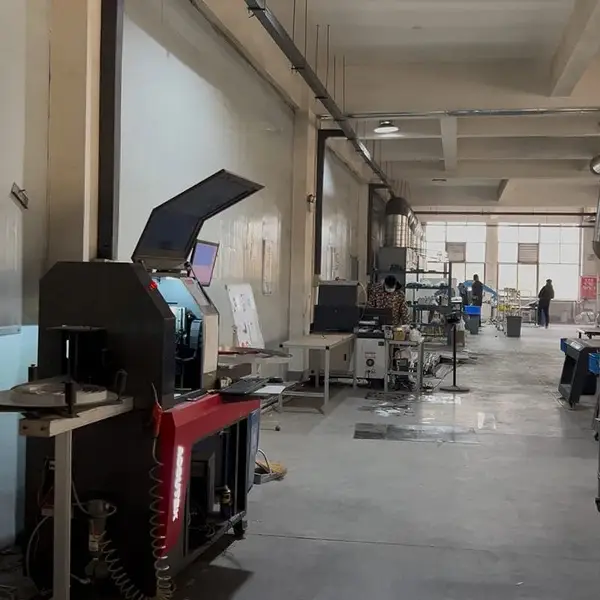
Real photo from our production floor — every sign we ship is made here.
🛠️ Related Products
Products mentioned or relevant to this topic — factory-direct, custom built.
Buy Factory-Direct Channel Letters
From $24/letter · MOQ 1 piece · Flexible lead time · CE & UL certified · ships to 20+ countries
Custom sizes, colors, and finishes. Get a factory price in 24 hours.
Get a Free Quote Copy EmailWhatsApp +86 13865703472 · business@aochuangsign.cn