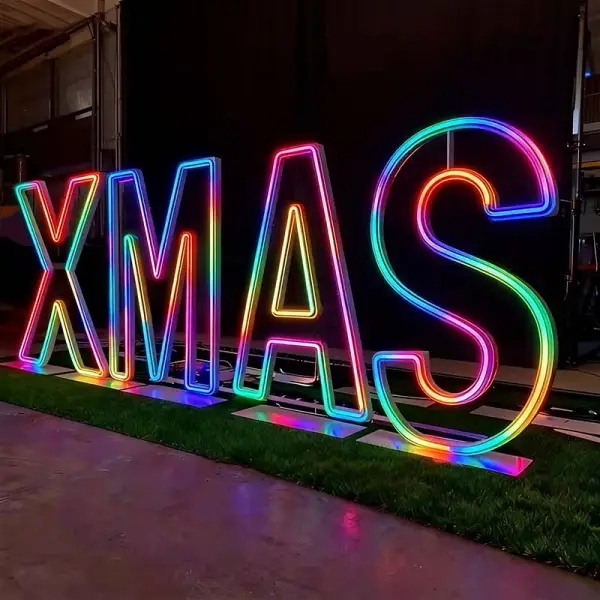
I've watched a contractor lose an entire storefront sign job because he bid it with 3mm acrylic and the architect spec'd 5mm.
That's a $6,000 mistake. And it's the kind of mistake this guide is going to stop you from making.
Here's what nobody tells you: the difference between 3mm and 5mm acrylic for outdoor
channel letters isn't just about thickness. It's about wind load, LED heat buildup, and how long your customer's sign actually survives before it starts looking like garbage.
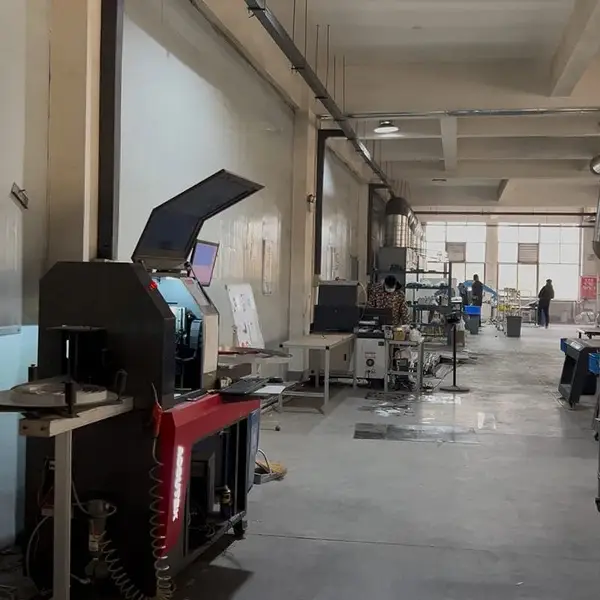
Let's break this down like we're standing on my factory floor in Lu'an, because that's where the truth lives.
---
The Spec Sheet Lie
Almost every acrylic supplier will tell you their material is "UV-resistant" and "durable."
That's technically true. It's also useless information.
Here's the real data. Mitsubishi and Degussa acrylic — the good stuff — holds its clarity for 5-8 years outdoors. Domestic Chinese acrylic? You're looking at 1-2 years before yellowing starts. Same thickness. Same look. Completely different lifespan.
The cheap stuff isn't actually cheap. You're just paying less now and replacing the face three times as often.
If you're importing from China and your supplier doesn't specify which acrylic they're using, assume domestic. Ask the question. Get the answer in writing.
---
The Physics of 3mm vs 5mm
My customers ask me every week: "Which thickness do I need?"
The answer isn't a number. It's a question: "How big are the letters, and where are they going?"
Here's the engineering truth. A 3mm acrylic face on a channel letter up to about 1.5 meters tall is fine. The face is rigid enough to hold its shape. It's lighter. It's cheaper to ship. It's easier to CNC cut. But go bigger than that — say 2 meters or more — and 3mm starts to flex. It ripples. It catches the wind.
Wind is the enemy. Not rain, not sun. Wind.
Think about it. A 2-meter-tall letter with a 3mm face is essentially a sail. Over time, that flexing stresses the silicone seal. Water gets in. LED modules short out. The letter dies from the inside out.
The rule from my factory: under 2.5 meters, 3mm is fine. Over 2.5 meters, use 5mm+. That's not a marketing scheme. That's basic engineering.
---
What 5mm Actually Buys You
Here's what nobody tells you about 5mm acrylic: it's not just thicker, it's stiffer. That rigidity means a few things.
First, it handles wind load like a champ. A 5mm face on a big letter isn't going to ripple and flex. It's going to hold its shape.
Second, it's easier to seal. When you've got a rigid face, the silicone sealant doesn't get stretched and stressed. That means fewer water leaks. That means your LEDs last longer.
Third, it looks better. There's a visual depth to 5mm that 3mm just doesn't have. Light from the LED modules diffuses more evenly. The face glows rather than having hot spots.
But here's the downside: 5mm costs more. It's often 30-40% more expensive than 3mm. It's heavier, so shipping costs go up. And it's harder to bend if you're doing curved faces.
The ugly truth is most of the channel letters we ship use 3mm. And that's fine. But when a customer in Miami Beach orders 2-meter letters, I tell them to pay for 5mm. I've seen this go wrong too many times with cheap 3mm faces on big letters. The letters end up looking like wavy potato chips within a year.
---
The LED Heat Problem Nobody Mentions
Here's the part most guides skip entirely: LEDs generate heat.
Yes, even LED. They're efficient, but they're not magic. In a sealed channel letter, that heat has nowhere to go. The acrylic face absorbs it.
Now here's the problem. SMD 2835 modules — the industry standard — run at 100-150 lumens per watt. That's great for brightness, but it means they produce heat. In a tight letter with limited air circulation, that heat can hit 60-70°C on a summer day.
Thinner acrylic conducts heat faster. It's more prone to thermal deformation. I've seen 3mm acrylic faces literally bow outward from LED heat buildup in black letters sitting in direct sunlight. The face starts to look like a bubble.
5mm acrylic has more mass. It absorbs heat more slowly. It doesn't deform as easily.
If your letters are dark-colored and get direct sun, consider upgrading to 5mm even on medium-sized letters. It's not just about wind — it's about heat.
---
Where 3mm Makes Sense
Let me be clear: I'm not trashing 3mm. For most outdoor channel letters under 1.5 meters, it's the right call.
I've got a customer who runs a chain of convenience stores. Standard storefront
front-lit channel letters, about 60cm tall. We ship him hundreds of 3mm faces a year. No problems. He's been buying from us since 2016.
3mm is also the right choice for
rimless channel letters because the smaller size and open-face design don't create the same wind or heat stress.
The secret is matching the material to the job. A 30cm letter in 5mm acrylic is over-engineering. You're paying for stiffness you don't need. And your customer's paying for it too.
---
Coastal and High-Wind Environments
I've shipped signs to Miami, Honolulu, and Singapore. In coastal environments, the rules change.
Here's what nobody tells you: salt air corrodes everything. Not just the stainless steel — the acrylic too. Salt crystals embed in the surface. They catch UV. They accelerate yellowing.
For coastal signs, we recommend 5mm acrylic with a UV-resistant protective film. It's more expensive, but it's the difference between a sign that looks new in year 4 and a sign that looks decades old by year 2.
And while we're on the subject of materials, pay attention to your frame too. In coastal areas,
stainless steel letters in 316 grade are worth the 20-30% premium over 304. The molybdenum in 316 makes it dramatically more corrosion-resistant. I've seen 304 stainless start pitting within 18 months on a beachfront property. That's a 10+ year material lasting 18 months because the owner saved a few hundred dollars.
---
The Real Cost Gap
Let's talk money.
When you're buying direct from a factory, the cost difference between 3mm and 5mm is roughly 15-25% on the material cost. On a $120 channel letter, that's maybe $20-30 per letter.
Now, what does that translate to in the US market?
If you're a sign shop, you're charging $200-700 per letter for front-lit channel letters installed. That $20-30 upgrade to 5mm is nothing compared to the cost of a callback. One warranty trip to replace a warped 3mm face will eat the savings from ten letters.
The ugly truth is this: most sign failures are caused by trying to save $20 on material.
---
How We Build It
Since you need to trust us to ship your signs, here's exactly what we do at Aochuang:
The 10-step process starts with laser cutting the aluminum returns at ±0.1mm precision. That's accuracy you can measure with good calipers. Then we TIG weld the returns — not spot welding, actual structural welding. The face gets CNC cut to fit the return profile precisely.
After that, we mount the LED modules — the good ones, Samsung or Osram or Blueview quality. Not the cheap stuff that dies in 12-18 months. Then we use neutral silicone to seal the acrylic into the return. Not acid cure, neutral. There's a difference and it matters.
Every single sign goes through an 8-12 hour aging test before it leaves the factory. We don't test one sign out of a batch. We test every one. That's the 100% QC inspection line in our
acrylic light boxes and letters.
If a sign doesn't pass, it doesn't ship.
---
Shipping and Tariffs
OK, now let's get real about logistics.
3mm acrylic vs 5mm also means a weight difference. A set of 8 letters in 3mm might weigh 60kg. The same set in 5mm might weigh 85kg. On air freight at $4-12 per kg, that's an extra $100-300 just in shipping.
The sea freight option takes about 65 days but runs $80-200 per cubic meter for LCL. That's the budget-friendly route.
And don't forget the US Section 301 tariff — roughly 30% on signage imports. That applies to both options equally. So the tariff isn't a reason to choose one or the other. But understanding your total landed cost before you order is essential.
---
The Certification Question
If you're selling in the US, you need to understand the electrical side.
UL 48 certification runs $4,000-15,000 and takes 4-9 months. ETL is an alternative, typically 10-30% cheaper. CE marking costs 20,000-50,000 RMB and takes 2-8 weeks. Most of our customers don't need us to hold these certs themselves — they need the components to be compliant with NEC Article 600.
But here's the thing you should ask every factory: "What certifications do you actually have, and can I see them?"
I've had customers show me certificates from other factories that were expired by three years. Or certificates for a product line the factory doesn't even make. It's an industry problem.
Ask to see the certificate. Check the date. Check the product scope.
---
The Critical Difference: Quality Control, Not Just Specs
You can spec 5mm acrylic from a factory that's going to use crappy LEDs and cheap silicone. You'll get a sign that fails in 18 months regardless of thickness.
Conversely, you can spec 3mm acrylic from our factory and get a sign that's engineered properly — good modules, proper sealing, structural welds — and it'll last 5+ years in the field.
The material thickness isn't the only variable. It's not even the most important one. But it's the one everyone focuses on because it's easy to compare on paper.
Here's what I tell every customer: don't obsess over the acrylic thickness at the expense of everything else. Ask about the modules. Ask about the welding. Ask about the sealing process. Ask about what brand of acrylic they're using.
---
When To Choose Each
Let me break this down into a simple rule set:
**Choose 3mm when:**
- Letters are under 1.5 meters tall
- You're looking for aluminum letters or smaller channel letters with our budget-friendly options
- Sign is in a sheltered outdoor location
- Shipping costs are a major concern
- The letters are part of a standard storefront installation
**Choose 5mm when:**
- Letters are over 2.5 meters
- The sign is on a high-rise facade or exposed rooftop
- The location experiences strong winds regularly
- The letters are dark-colored in direct sun
- You're installing a
back-lit halo letter where structural integrity is critical
---
Cracks and Fabrication Differences
There's another technical detail that most sales reps won't mention: 3mm and 5mm machine differently.
3mm is easier to work with. It bends more readily. It's faster to CNC cut. That means faster production times and lower labor costs.
5mm requires heavier machinery. It's more prone to stress cracking during bending if the operator doesn't know what they're doing. It takes longer to CNC cut. It's harder to get a perfect curve.
But here's the benefit I've observed on our factory floor: 5mm is more forgiving in the field. It doesn't crack as easily during handling. It's less likely to shatter if a ladder accidentally gets dropped on it during installation.
For
brass letters or other metal-backed letters, the difference is less critical because the metal provides structural support. But for
acrylic letters that rely entirely on their own rigidity, thickness is everything.
---
Halo Lit Letters Are Different
Now let me tell you about halo-lit letters specifically, because they're a different animal entirely.
With
front-lit letters, the light shines through the acrylic. The face is the light source. With halo-lit letters, the light reflects off the wall behind the letter. The face is mostly opaque, and light escapes from the edges.
That means the acrylic face in a halo-lit letter has less direct light stress but more structural demands. The letters are usually taller and the faces are usually larger.
I recommend 5mm for halo-lit letters over 1.5 meters. The extra rigidity keeps the letter's face flat against the wall, which is essential for that clean halo effect. If the face warps, the halo light gets distorted and the whole sign looks wrong.
---
What I'd Do If I Were You
So here's my honest advice after 16 years in this industry:
Don't buy cheap acrylic on big letters. Don't buy thick acrylic on small ones. Match the material to the application.
If you're not sure which one you need, get both prices. The difference between a quote for 3mm and 5mm is usually small enough that you can choose flexibility. But if a factory quotes you the same price for both, ask questions. The only way that makes business sense is if they're using a cheaper grade of acrylic for the 5mm.
And trust your supplier. A good factory will tell you when you're over-specifying. A poor factory will just take your order and smile.
At Aochuang, we're not going to upsell you on 5mm if 3mm is right for your job. But we're also not going to let you make a 2.5-meter letter with 3mm and pretend it's fine. That's not a sale; that's a future headache for both of us.
---
The Bottom Line
There's no universal right answer to 3mm vs 5mm acrylic for outdoor channel letters. The right answer depends on the size, the location, the environmental stress, and your customer's budget.
But here's the good news: the decision doesn't have to be made alone.
Send me your letter sizes and your location and your mounting height. I'll tell you what I'd use. And if I think you're over-specifying, I'll tell you that honestly too.
An 8-letter storefront sign with 3mm faces, good Samsung modules, and proper manufacturing will cost you around $150-300 per letter from our factory. The US retail equivalent is $200-700 installed. Do the math.
If you're ready to talk about a project, email me directly. I've got a 3,000 square meter factory in Anhui, 50+ workers, and two decades of ships under the bridge. The coffee's always on.
---
*Jason Cai, Founder & General Manager
Aochuang Sign, Lu'an, Anhui, China
info@aochuangsg.com*