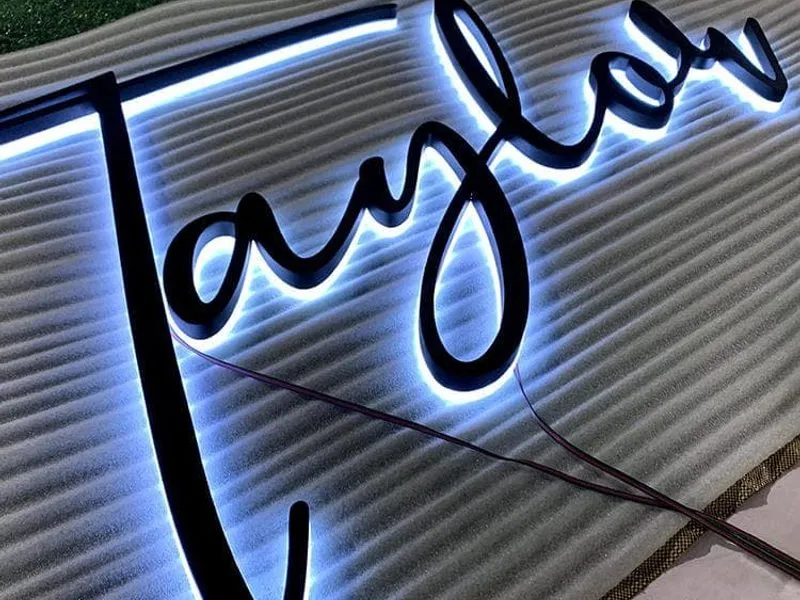
11:47 at night. I'm staring at a 4-foot acrylic letter some genius designed with a 5mm face and zero drain holes. Water's pooling inside and the customer's calling tomorrow. I've been doing this since 2010. Save the renderings.
Look, I've burned my hands on hot acrylic and argued with LED suppliers who think I can't tell a Samsung module from a knockoff. Here's what you need to know about acrylic channel letters before you quote another job.
Most sign shops sell "acrylic letters" like it's one material. No, it isn't. If you're ordering front-lit channel letters for a storefront, the acrylic face is the single biggest variable in how long that sign looks good.
Good UV-resistant acrylic from Mitsubishi or Degussa runs 5 to 8 years before it starts to yellow. Domestic acrylic? 1 to 2 years, maybe less in Arizona or Florida. Light transmittance stays 90 to 92 percent either way, but that yellowing is what your customer notices, not the lumen output.
Plenty of shops label domestic acrylic as "premium" and bank the margin. Ugly but true.
I opened a carton from a new supplier last year. The faces had a blue cast to the edge. Not premium. Regrind.
Let's get one thing straight: 2mm, 3mm, and 5mm are the standard acrylic thicknesses. Under 2.5 meters, 2mm or 3mm is fine. Over 2.5 meters, go 5mm or you'll watch the face bow in the first summer.
Here's what nobody tells you: a 3mm acrylic face transmits about 92 percent of the light, and a 2mm face transmits about 90 percent. Your customer won't notice that 2 percent difference, but they will notice the 40 percent cost bump when you overspec 5mm on a 16-inch letter.
Quote acrylic LED letters with a 2mm face all day for interior or small exterior work. No one will complain. But if the letter's taller than your installer, put 5mm on it and walk away.
I've seen this go wrong: a shop built an 8-foot set of acrylic channel letters with 2mm faces because the client cheaped out. First heat wave, the faces looked like a potato chip. That's not saving money. The redo cost triple.
Factory pricing tells the story. A front-lit acrylic channel letter runs $20 to $80 per letter. A back-lit halo letter runs $35 to $120. That's not markup. That's labor.
Front-lit is simple: a can, an acrylic face, LEDs inside. Add a trim cap and you're done. Back-lit is a different animal. You're building the letter body, mounting it off the wall, and hiding all the wiring behind a metal face. More welding, more finishing, more holes in the wall.
Pitching a bank or a med spa? Back-lit halo letters give you the premium architectural look. Pitching a pizza place? Front-lit does the job.
Some clients think halo-lit is just front-lit with the LEDs pointed backward. I've had to explain it with a sketch and a beer. Save yourself the pain: know the difference before you quote.
And then you've got rimless channel letters. Clean, modern, no trim cap—just the acrylic face set flush into the return. Looks sharp on a white wall, but it's less forgiving to install. Any misalignment shows.
The acrylic face will outlast cheap LED modules, and the customer will blame the whole sign when the LEDs fail. SMD 2835 modules run 100 to 150 lumens per watt and they're the industry standard. Quality chips from Samsung, Osram, or Blueview give you a real 5-plus years. Cheap modules? 12 to 18 months.
Quickest way to spot bad modules: look at the solder joints. Dull gray means the solder's about to crack. Shiny silver means proper lead-free solder.
Most quality modules carry an L70 rating of 50,000 hours, but that's lab conditions. In a hot channel letter with no ventilation, you're cooking the LEDs. Leave a drain hole at the bottom. You're not building an aquarium.
IP65? Water jets. Not a hurricane.
Seal the acrylic face with neutral silicone. Not bathroom caulk. Not construction adhesive. I don't care what the depot guy told you.
Acrylic expands and contracts. If you screw the face down tight to a steel return, you're asking for a stress crack. Let it float in the channel. Don't torque the screws down like you're mounting an engine block.
Watched this happen once: an installer ran a bead of cheap white silicone around a face and it yellowed before the acrylic did. The client thought we sold them bad acrylic. Nope. Sealant.
Another one: mounting studs. Use 304 stainless. They'll outlast the sign. Use zinc and you'll see rust streaks running down the face after the first winter.
Look, you can build the prettiest acrylic channel letter in the world, but if it doesn't pass code, you're not installing it. In the US, NEC Article 600 covers electric signs. UL 48 certification costs $4,000 to $15,000 and takes 4 to 9 months. Your factory should have it or an ETL equivalent.
CE marking costs 20,000 to 50,000 RMB and takes 2 to 8 weeks. Most factories will say they have it. Ask to see the certificate with today's date. Watch them sweat.
Outdoor acrylic channel letters need IP65 at minimum. Dust-tight and protected against water jets. That rating won't save the sign from a Florida hurricane. If you're on the coast, spec IP66 or better.
Real example: a contractor imported a container of cheap channel letters without UL. The inspector red-tagged the whole storefront. The factory's "certificate" was three years old and for a different model.
How long do acrylic channel letters last?
Good UV-resistant acrylic face: 5 to 8 years before yellowing. Quality LED modules: 5-plus real years. Power supply: 1 year warranty. Cheap: 18 months before you're apologizing.
What thickness acrylic should I use?
Under 2.5 meters, 2mm or 3mm is fine. Over 2.5 meters, use 5mm or the face will bow. A 3mm face transmits 92% of light, 2mm 90%. Stop overthinking it.
Do I have to order 100 letters?
No. Our MOQ is one piece. Lead time 7 to 15 days. If you need 50 letters, same 7 to 15 days.
Why are factory-direct acrylic letters so cheap compared to US quotes?
US retail installed runs $200 to $700 per front-lit letter. Factory-direct product costs $20 to $80. Shipping and tariffs add about 30% under Section 301. You're still saving 50 to 65% on product. Labor and shop overhead eat the rest.
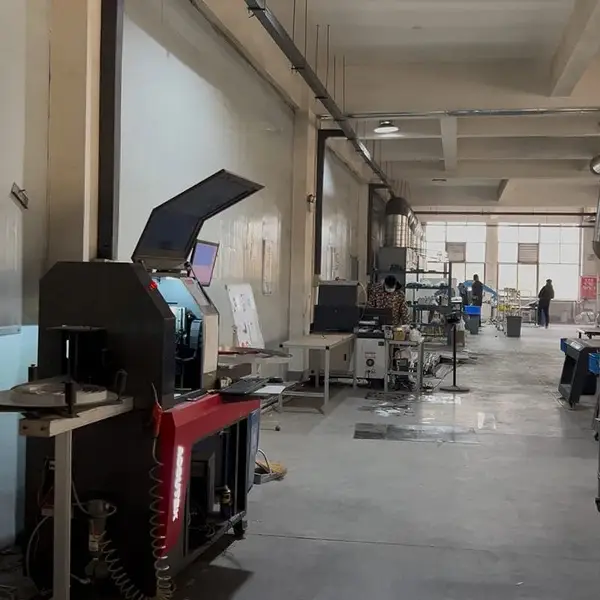
Real photo from our production floor — every sign we ship is made here.
Products mentioned or relevant to this topic — factory-direct, custom built.
From $24/letter · MOQ 1 piece · Flexible lead time · CE & UL certified · ships to 20+ countries
Custom sizes, colors, and finishes. Get a factory price in 24 hours.
Get a Free Quote Copy EmailWhatsApp +86 13865703472 · business@aochuangsign.cn