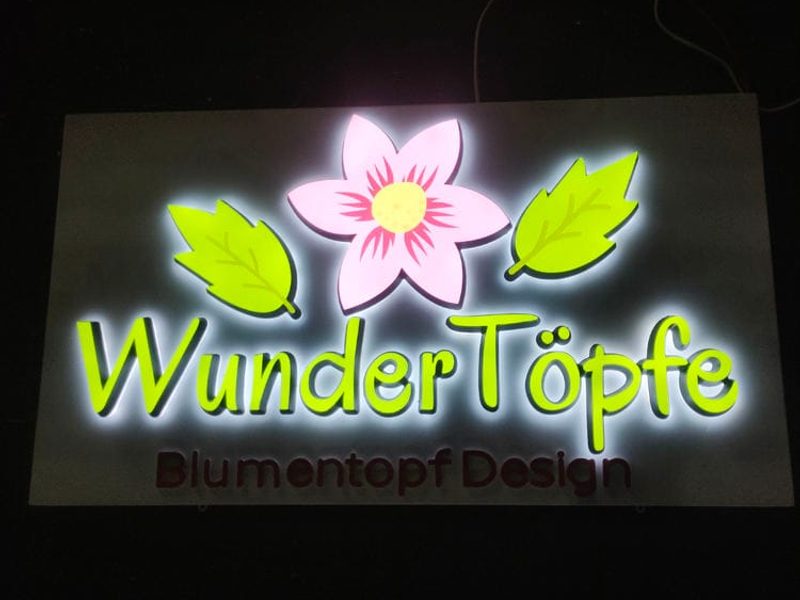
You're Paying 4x What This Sign Costs
I've watched sign shops order a set of acrylic LED letters from a domestic fabricator and hand over $800. Same letters, same Samsung LEDs, same 3mm acrylic. We ship that out of Lu'an, Anhui for $120. That's not a typo. That's the difference between a factory that's been doing this since 2010 and a middleman who slaps a 400% markup on it.
Here's what nobody tells you: the
acrylic LED letters you're buying from a US shop? They're likely made in China anyway. The difference is you're paying for the guy who picked up the phone, the guy who drove the crate to your door, and the guy who charged you for the "custom" design.
Cut that out and you cut the price in half. More than half.
The ugly truth: factory-direct isn't a secret. It's just that most sign shop owners don't want to deal with the language barrier, the shipping logistics, or the fear of getting a container of junk. I get it. But if you know what you're looking at, you can save 50-65% on the product alone.
What 3mm of Acrylic Actually Costs You
A lot of guys think thicker acrylic means better sign. They spec 5mm for a 2-foot letter. That's waste.
Look, Mitsubishi acrylic—the good UV-resistant stuff—lets 92% of light through at 3mm. At 2mm it's 90%. You're not going to see that 2% difference on a storefront. But you will see the 40% cost bump when you go from 2mm to 3mm. And if you're ordering bulk—say 50 letters for a chain restaurant—those percentages add up to real money.
Most factories use domestic acrylic for the cheap orders. It yellows in 1-2 years. The Mitsubishi or Degussa stuff? 5-8 years before you notice color shift. For a sign that's supposed to last, you pay for the good acrylic. For a temp job or a short-term lease, save your money.
For letters over 2.5 feet, we go with 5mm. Under that, 3mm is fine. You don't need 5mm on a 10-inch letter unless you're expecting some kid to climb on it.
LED Lifespan: The 18-Month Lie
I've seen this go wrong: a shop buys cheap modules rated at 50,000 hours, installs them, gets 14 months. Then the customer calls. Then the shop calls me. And I tell them what I tell everyone—look at the solder joints.
That's the tell.
Shiny silver joints mean proper lead-free solder. Dull gray means you got bottom-of-the-barrel modules that'll fail before the warranty runs out. The L70 rating is 50,000 hours in a lab at 25°C. In a hot sign cabinet in Phoenix? Half that.
Quality modules from Samsung or Osram—the real ones, not the knockoffs—hit 5+ years real-world. Cheap modules? 12-18 months. I can show you the difference under a microscope. But you don't need a microscope. Just ask the supplier what brand they use. If they dodge the question, walk. I've seen it a hundred times.
For bulk orders of
mini LED letters—those small interior signs—the LEDs are typically SMD 2835 at 100-150 lm/W. That's plenty for indoor. Outdoor letters need something tougher. SMD 5730 gives 40-60 lm/chip, higher brightness but bigger draw. Know your application before you order.
Factory Direct Pricing: What the Numbers Actually Say
Here's a real price list. Not what I wish it was. What we actually quote:
Front-lit channel letters: $20-80 per letter factory price. Back-lit halo: $35-120. Non-lit stainless: $15-40. Acrylic LED letters: $15-50 depending on size and LED count. Lightboxes: $80-250 per square meter.
Now compare that to US retail installed: $200-700 per letter for front-lit. $400-1,000 for halo-lit. The math works.
But you have to account for shipping. Express (7-10 days) is $30-100 for small packages. Air freight: $4-12 per kg. Sea freight LCL: $80-200 per cubic meter. And the US Section 301 tariff adds about 30%. So add that to your cost. Still cheaper than domestic.
The rookie mistake is ordering LCL without bracing your crate. LCL shipping means your crate gets handled 6-8 times between our dock and yours. Every touch is a chance for damage. Pay for plywood crating. Not cardboard. Not foam alone. Plywood. It's worth the extra $20.
UL, ETL, CE: Which Certifications Actually Matter
The ugly truth: a lot of factories claim CE marking but can't show you the current certificate. CE costs 20,000-50,000 RMB and takes 2-8 weeks to get. If a factory says they've had it for five years, ask to see the audit report from this year. Watch them sweat.
For the US market, UL 48 is the gold standard. It costs $4,000-15,000 and takes 4-9 months with quarterly audits. ETL is a UL alternative that's 10-30% cheaper. Both are accepted for NEC compliance.
IP ratings?