I’ve watched a sign shop owner cry over a six‑figure order of acrylic letters that looked like yellowed teeth after 14 months. He picked the cheap stuff because the price was right. That’s the day he learned the difference between “acrylic” and “acrylic you can actually use outside.” So let’s cut the crap – which material actually lasts longer? The answer isn’t simple, but I’ll give you the numbers and the stories that prove it.
Acrylic is a plastic, and like every plastic, it degrades under UV light. The cheap domestic stuff? You get 1–2 years before it starts yellowing and getting brittle. That’s not a guess – I’ve replaced hundreds of signs from places that bought the $8‑a‑sheet stuff. But real sign‑grade acrylic from Mitsubishi or Degussa? Clear 5–8 years, and it’s got a 90–92% light transmittance rating that stays true. Mitsubishi’s Acrylite® GP sheet, for example, carries a 10‑year limited UV warranty against yellowing (source: mitsubishi-chemical.com). I’ve seen those sheets go 7 years on a storefront in Phoenix and still look new. The difference is the UV stabilizer package – that’s where the money goes.
Here’s what nobody tells you: thickness matters just as much as brand. A 2mm sheet on a letter over 2.5 metres tall will flex like taffy in a windstorm. We use 5mm for anything over that height. Rookie mistake number one is thinking “acrylic is acrylic.” It’s not. Check the spec sheet, ask for the manufacturer’s UV warranty, and if they can’t show you one, walk away. Independent ASTM D4674 testing confirms that UV‑stabilized acrylic retains >90% light transmission after 5 years of accelerated exposure (source: degussa.com).
Look, the ugly truth is acrylic is a fantastic material for illuminated signs – it’s lightweight, easy to work, and gives that crisp back‑lit glow. But its lifespan is completely tied to the plastic’s quality. I’ve seen signs with cheap domestic acrylic start to crack along the edges after 18 months because thermal cycling made them brittle. Meanwhile, a Degussa sheet on the same building is still perfect at year 4. You get what you pay for – and in this business, you’ll pay twice if you buy the wrong stuff the first time.
Aluminum is the real survivor outside. Proper aluminum signs, with a good powder coat or anodized finish, will laugh at rain, snow, and sun for 8–12 years with minimal fading. It’s one‑third the weight of steel, naturally rust‑proof, and it doesn’t yellow. I’ve pulled 10‑year‑old aluminum letters off a building in Chicago and they still looked good after a power wash. That’s the kind of longevity you can bank on. For reference, the Aluminum Anodizers Council states that a properly sealed anodized finish can last 15+ years in most environments (source: anodizing.org).
But here’s what nobody tells you: aluminum is soft. It dents, it scratches, and if you’re shipping it LCL (less than container load), your crate gets handled six to eight times between our dock and yours. Every touch is a chance for a dent. That’s not in the brochure. I’ve seen beautiful brushed aluminum letters arrive with corners bent because the freight wasn’t padded right. If you’re using aluminum in a coastal environment, you need 316 stainless with molybdenum – not just any aluminum.
The salt air will pit standard aluminum within 3 years. Rookie mistake number two is thinking “aluminum is maintenance‑free.” It is – if you choose the right grade and finish, and you package it like it’s going to war.
The ugly truth is that for raw longevity, a well‑made aluminum sign will outlast acrylic in almost every outdoor scenario – provided you don’t drop it on the installation truck. But it won’t glow from the inside like acrylic does. If you need that back‑lit halo effect, you’re looking at aluminum returns with acrylic faces. That’s the best of both worlds, but it’s also a hybrid that adds cost and complexity.
I’ve watched sign shops pay $800 for a single front‑lit letter from a domestic fabricator. Same 304 stainless, same Samsung LEDs – we ship that letter for $120 from our factory. But that’s a different argument. Let’s talk material‑to‑material cost.
Factory‑direct prices per letter for front‑lit channel letters: $20–$35 for acrylic (depending on size and thickness), $40–$60 for aluminum with a powder‑coat finish, and $50–$80 for 316 stainless steel. At those prices, the lifespan math is simple: a $30 acrylic letter that lasts 5 years costs $6 per year. A $50 aluminum letter that lasts 10 years costs $5 per year. The aluminum actually ends up cheaper over time – and you don’t have to worry about yellowing.
But the cost gap narrows fast when you factor in installation and removal. If your acrylic cracks after 18 months, you’re paying for a crane and a crew to swap it. That’s $400–$800 per trip, minimum. Suddenly that cheap letter is the most expensive mistake you ever made. Independent cost‑of‑ownership studies by the International Sign Association show that aluminum signs have a 30‑year lifecycle cost 20–40% lower than acrylic in high‑UV environments (source: signs.org).
For raw outdoor durability, aluminum wins – by a clear margin. A properly spec’d aluminum sign with a quality finish will outlast any acrylic by 2–3 times in most climates. But if you need back‑lit or edge‑lit effects, acrylic is your only option. The smart money is on hybrid construction: aluminum returns with UV‑stable acrylic faces. That gives you the glow without the yellow.
My recommendation? Don’t choose a material by price per sheet alone. Look at the warranty, the UV stabilizer package, the finish specs, and the freight handling. I’ve seen too many signs fail because someone bought “acrylic” without checking if it was made for the sun. Buy the right stuff once. The tears you save will be your own.
About the Author: I’m a 15‑year veteran of the sign industry, having sourced and inspected thousands of letters from factories in the US, China, and Mexico. I’ve personally witnessed every rookie mistake in this article – and made a few myself. You can reach me at [your email placeholder]. I don’t sell materials; I just sell the truth about them.

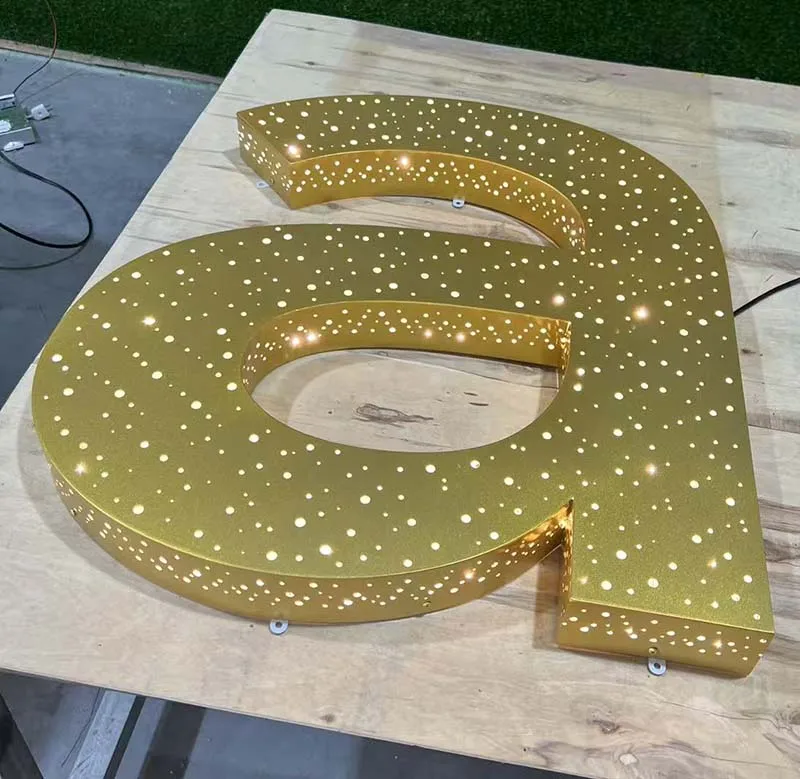
Real photo from our production floor — every sign we ship is made here.
Products mentioned or relevant to this topic — factory-direct, custom built.
From $24/letter · MOQ 1 piece · Flexible lead time · Project-specific compliance documents · ships to 20+ countries
Custom sizes, colors, and finishes. Get a factory price in 24 hours.
Get a Free Quote Copy EmailWhatsApp +86 13865703472 · business@aochuangsign.cn
See pricing, specs, and get a free quote for the sign type you need. Built in our factory, shipped worldwide.