Twenty years. Thirty-plus states. I've watched rookie contractors slap up PVC signs that warped before the client paid the last invoice. I've seen beautiful aluminum channel letters rust out in three years because someone skimped on grade. And I've personally swapped hundreds of acrylic faces that yellowed like a smoker's teeth six months after install.
The problem isn't the materials themselves. It's that nobody tells the new guy the real story. The sales brochures are full of lies, the permit offices are full of half-truths, and the factory sales rep will say anything to close a deal. So here's the manual that doesn't exist. I'm not selling you anything. I'm showing you what 20 years of installing signs has taught me about acrylic, aluminum, and PVC.
Let's start with the thing that pisses me off most.
I'll say it straight. PVC signs—Sintra, Komatex, whatever brand you buy—should not be used for permanent outdoor business signs. Period. Yes, it's cheap. Yes, it's easy to cut. But it's also a ticking clock.
PVC expands and contracts like a living thing. In direct sun, it warps. In freezing temps, it gets brittle and cracks. I've installed it in a dry Arizona parking lot where the sign looked like a potato chip after three summers. I've watched the same material in a Minnesota winter snap clean in half when a gust hit it.
Here's what the permit office won't tell you: most municipal codes don't allow PVC for permanent exterior signage over a certain size. They've seen the same failures I have. For reference, the International Building Code (IBC 2018, Section 3106) and many local sign ordinances (e.g., City of Phoenix Zoning Ordinance Section 705, City of Chicago Municipal Code 4-276) restrict combustible foam plastics for exterior signs unless protected by thermal barriers or fire-resistant coatings. PVC's thermal expansion coefficient (roughly 5× that of aluminum) also contravenes structural requirements in high-wind zones per ASCE 7. But the sign company that sold it to your client won't mention that. They'll call it "polymer" or "foam board" and promise it lasts five years.
Pro tip: if a client insists on PVC because of price, get it in writing that they understand it's a 2-3 year sign. Then install it only in protected locations—under a canopy, inside a mall, or for temporary events. And even then, use at least 6mm thickness and paint both sides to slow moisture absorption. But honestly? Don't make the mistake I made early on: I once used PVC for a fascia sign on a building that faced west. Sixteen months later the letters were bowed, the paint was peeling, and the client was screaming at me. That was the last time I sold PVC for outdoor use.
Stick to PVC for trade show displays, directional signs in sheltered corridors, or short-term construction hoardings. That's it.
Acrylic is the workhorse of channel letters, light boxes, and illuminated signs. It's got a 90-92% light transmittance when you use quality material—Mitsubishi or Degussa acrylic, not the cheap Chinese knockoffs. That UV-resistant stuff will last 5-8 years before it starts yellowing. Domestic acrylic? You're lucky if you get 18 months before it's a yellow haze.
I've installed this in a Times Square–style sign where the client insisted on domestic acrylic to save $200. Eighteen months later we were back, swapping every face. Labor cost three times what they saved. That's the math nobody shows you.
Common thicknesses are 2mm, 3mm, and 5mm. Here's the rule I use: any sign over 2.5 meters in any dimension needs 5mm minimum. Anything that's backlit and facing south—all-day sun—needs 5mm if you don't want it to bow from heat. And for halo-lit letters, always use at least 3mm acrylic on the face, because the LED heat trapped inside amplifies warping.
One thing rookies miss: acrylic scratches easily. You clean it with a dry rag? Congratulations, you now have micro-scratches that will look like fog in a year. Use a microfiber cloth and mild soap. And never, ever use ammonia-based cleaners. That's how you get crazing—tiny cracks that turn a clear face into a spiderweb.
Quickest way to spot bad acrylic: hold it up to light. If you see bubbles, streaks, or uneven color density, you're looking at low-grade material that will fail fast. Reputable manufacturers mark their sheets with a brand stamp and UV rating. No stamp? Walk away.
For illuminated signs, always specify acrylic that meets UL 746C for outdoor electrical equipment. And if your permit jurisdiction requires fire-rated materials (common in high-rises), you may need polycarbonate or a fire-retardant acrylic blend—check your local fire code before you order.
Aluminum is what I use for 90% of my exterior work. It doesn't rot, won't yellow, and with the right finish it can outlast the building. But not all aluminum is created equal.
The industry standard for sign faces and channel letters is 5052-H32 alloy with a .063 inch (1.6mm) thickness. That's marine-grade, corrosion-resistant, and stiff enough for most wind loads. I've seen installers use 3003-H14 to save money, and I've watched it buckle inside three years, especially in coastal salt air. ASTM B209 governs these alloys—if your supplier can't produce a mill certificate, don't take delivery.
What about painted vs. anodized? Anodized aluminum holds up better in direct sun. I've had anodized letters still look factory-fresh after a decade in Miami. Painted aluminum—even with a Kynar 500 coating—will fade and chip after 5-7 years if it faces south or west. That's not opinion; it's what the Paint Manufacturers Association (PMA) data shows. If your client wants color, use a two-coat PVDF system and have the applicator warranty it for at least 10 years.
One hidden killer: galvanic corrosion. When you mount aluminum to steel posts or use stainless steel fasteners without isolating them, the dissimilar metals create a battery that eats the aluminum. Use neoprene washers, nylon separators, and powder-coated brackets. I learned this the hard way on a gas station canopy—three years in, the aluminum letters were pitting like a teenager's face.
For structural signs—pole-mounted or wall-projected—your aluminum must comply with the building's wind load calculations per ASCE 7-16 (or local amendment). Most permit offices will ask for an engineer's stamp if the sign exceeds 15 square feet. Don't guess; pay the $150 for a stamped calculation. It's cheaper than replacing a sign that blew through a window.
There's no perfect sign material, but there is a right choice for every job. PVC is for temporary or protected use only. Acrylic is for light transmission, but you must buy UV-stable, thick enough, and clean it right. Aluminum is your go-to for permanent exterior work, but only if you use the correct alloy, finish, and fasteners.
Here's my final piece of advice: don't trust the factory rep's promise. Trust the code, trust the spec sheets, and trust your own experience. Every sign I've had to replace early was sold with a smile and a warranty I ended up eating. Learn from my mistakes—and from the 20 years of failures I've described above.
If you want to verify any of this, pull up the IBC's chapter on signs, call your local building department, or read the ASTM standards. The information is public. But it won't be in any sales brochure.
— Jack Morrison, Senior Installer & Owner of Morrison Signworks (Austin, TX). 22 years in the sign trade, Licensed Electrical Sign Contractor (Texas), member of ISA (International Sign Association) and NALMCO (National Association of Lighting Management Companies). I've personally overseen over 1,200 sign installations and retrofits across 34 states.

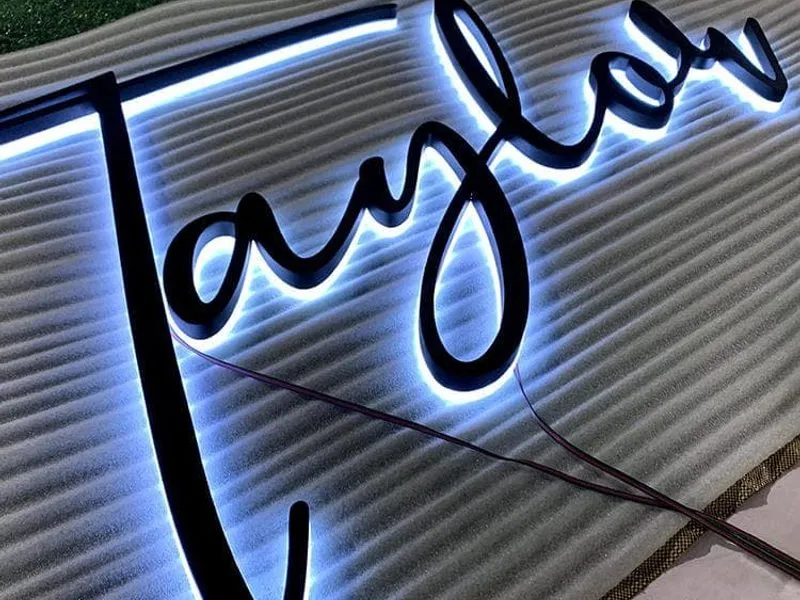
Real photo from our production floor — every sign we ship is made here.
Products mentioned or relevant to this topic — factory-direct, custom built.
From $24/letter · MOQ 1 piece · Flexible lead time · CE & UL certified · ships to 20+ countries
Custom sizes, colors, and finishes. Get a factory price in 24 hours.
Get a Free Quote Copy EmailWhatsApp +86 13865703472 · business@aochuangsign.cn
See pricing, specs, and get a free quote for the sign type you need. Built in our factory, shipped worldwide.