
I’ve watched general contractors grab $35 “ADA signs” off Amazon, slap them next to bathroom doors, and smile like they just solved world hunger. Then the inspector walks in, runs a fingernail over the Braille, and fails the whole floor. The fine print in the standards isn’t optional. It’s the law. And when you’re the sign shop caught in the middle between a building owner and a punch list, that law gets expensive fast.
This guide is built from the factory floor, not a compliance seminar. I’ll give you the hard numbers, the common disasters, and exactly what you need to order from us—or any supplier—without getting burned. We ship worldwide. We’ve made ADA signs for U.S. schools, clinics, and office towers. But I’ll tell you straight up what we can’t do, because pretending gets everybody sued.
ADA signage is governed by the 2010 ADA Standards for Accessible Design, Section 703. This isn’t a suggestion. It’s federal code. Permanent rooms and spaces need signs that work for both sighted folks and those who read with their fingers. If you’re thinking of a printed plastic plaque with blurry bumps, stop.
Here’s the hard list. Tactile characters must be raised a minimum of 1/32 inch (0.8mm) from the substrate. They must be uppercase, sans serif or simple serif, and comply with specific height and stroke-width proportions—characters 5/8 inch (16mm) to 2 inches (51mm) tall, with stroke thickness that’s no more than 15% of the character height. The background and characters need a high contrast, non-glare finish. That means no shiny acrylic that turns into a mirror under hallway lights. The code doesn’t give you a precise LRV number for contrast across the board, but the industry standard says 70% minimum contrast between background and text. And don’t try to cheat with dark grey on black—your customer’s low-vision consultant will nail you.
The ugly truth is that many sign shops conflate “tactile” with “embossed.” If you can’t feel a clear edge with your eyes closed, it’s not compliant. Our CNC routers cut the letter profiles to 0.8mm relief on acrylic, or we use chemically etched stainless steel that gives a lip sharp enough to pass the fingernail test but not cut skin. That balance takes experience.
Look, Braille isn’t just a bunch of random dots. Grade 2 Braille is mandatory on all permanent room signs. The dots must be domed, with a diameter between 1.5mm and 1.6mm, and raised at least 0.6mm from the surface. The dot spacing is strict: 2.3mm to 2.5mm between dots in the same cell, 6.7mm to 7.5mm between cells horizontally, and 10.2mm to 10.7mm between lines vertically. If you use flat-topped beads or cheap Raster Braille that crumbles after 18 months, you’ve shipped a decorative item, not a compliant sign.
Here’s what nobody tells you: the adhesive that holds Braille beads in place is just as critical as the bead shape. Exterior signs with direct sun exposure will cook those tiny glue bonds. We’ve had sign shops in Arizona send back failed signs from another supplier—beads literally fell out after a single summer. That’s why we now integrate Braille into the substrate itself using a UV-stable acrylic fusion method for interior signs, and laser-engraved dimples in 304 stainless for outdoor plaques. Our stainless steel letters can incorporate precisely machined Braille cells that won’t separate, even after years of rain and 110°F heat. You’re not just paying for metal; you’re paying for a construction that survives the inspector five years from now.
I’ve seen this go wrong: a clinic ordered 150 room signs with stick-on Braille. Twenty months later, a blind patient filed a complaint because three restroom signs had missing dots. The clinic had to replace every sign on the same floor for consistency, at triple the original budget. Don’t repeat that.
ADA spells out that the baseline of tactile text must be mounted between 48 inches (1220mm) minimum and 60 inches (1525mm) maximum above the finished floor. That’s measured to the lowest tactile character, not the bottom of the sign. And for single doors, the sign goes on the latch side, centered at 60 inches from the floor to the sign’s centerline—unless there’s no wall space, in which case you mount on the nearest adjacent wall. Get this wrong and even a perfectly fabricated sign becomes non-compliant. I’ve had installers call me furious because they drilled 40 holes before realizing the sign was 2 inches too low. Two inches cost them the day.
For overhead signs, like exit or room numbers mounted on soffits, different rules apply. Those need visual characters only, but with proper height, contrast, and viewing distance calculations. An overhead acrylic light box with an exit pictogram can be ADA visual-character compliant if the text is big enough. Our acrylic light boxes often include ADA-compliant visual text, but they’re not a substitute for a tactile wall sign at the door. One does not replace the other.
Cheap plastic warps. Cheap acrylic yellows and loses contrast within two years. And you can’t exactly show up for a reinspection with a sign that’s gone beige. For indoor tactile signs, we prefer high-impact acrylic with a matte surface, laminated with trims of anodized aluminum. Our aluminum letters and plaques are lightweight, naturally rust-proof, and take powder coating with an eggshell finish that kills glare to under 15 gloss units—well within ADA’s non-glare requirement.
Stainless steel is the gold standard for exterior ADA signs. We use 304 grade, 1.5mm thick, with a brushed #4 finish that won’t reflect headlights or sun. It’ll last 10+ years outdoors without maintenance, and you can embed tactile characters and Braille right into the metal via chemical etching. The contrast problem with bare stainless is solved by infilling the etched areas with a dark, UV-stable epoxy. That combination holds up after 500,000 cycles of a finger rubbing the raised letters. No paint flaking, no delamination.
Don’t use anodized aluminum in a coastal environment without specifying 316 stainless instead. Salt air pits the aluminum surface after three or four years, making the tactile edges fuzzy. 316 costs about 20-30% more, but it’s the difference between a 5-year warranty that holds and a lawsuit.
Lie #1: “It’s ADA compliant because we used the right font.” No. The font is one component among many. I’ve seen suppliers ship signs with the correct uppercase Helvetica but zero Braille spacing. That’s a fail.
Lie #2: “CE certification means it meets ADA.” CE is a European conformity mark for electrical safety and EMC. It has absolutely nothing to do with U.S. accessibility laws. I’ve been at this since 1998. CE and ADA live on different planets. When you’re ordering from a Chinese factory, ask for test reports showing Raster Braille cell measurements and contrast ratios, not a CE stamp on an invoice.
And here’s a brutal truth: no factory in China can give you a blanket “ADA certification.” ADA compliance is a field-installed condition. The substrate, text, Braille, mounting height, door approach clearances, and viewing angles all interact. We can fabricate a tactile sign to the exact dimensional and material specs of Section 703, and we’ll provide a production checklist and photos to your order. But the responsibility for confirming the final installation meets local building codes rests on you, the sign shop or contractor. That’s honest. That’s how you avoid a lawsuit.
We’re Aochuang Sign. We’ve got a 3,000-square-meter floor in Lu’an with 50 people who’ve been bending metal and cutting acrylic for over a decade. MOQ is one piece—we’ll do a single custom room sign if that’s what you need to test the market. Lead time is 7 to 15 days, depending on complexity.
We can produce tactile characters via CNC routing on acrylic, chemical etching on stainless, and laser engraving on aluminum. Braille cells are made to Grade 2 specs with domed dots, no sharp edges. We’ll seal the surfaces with a matte lacquer that brings the gloss below 20 units. For exterior signs, we’ll switch to 304 stainless with a brushed finish and epoxy infill. We can powder-coat aluminum in any RAL color that matches your contrast requirements, including dark background/light text or the reverse.
What we won’t do is pretend we’ve got a U.S.-licensed accessibility inspector on staff. We’ll send you a digital proof with all measurements annotated: character height, stroke width, Braille dot spacing, sign thickness. You verify that against the ADA Standards. We’ve learned that the good U.S. sign shops have their own jig for checking Braille cells with a micrometer before mounting. The bad ones trust a Chinese factory’s word and get burned. Be the good kind.
Finish matters more than you think. ADA requires a non-glare surface. That means no polished acrylic, no mirror polished stainless, no glossy powder coat. We use a low-gloss clear coat on acrylic that measures 18-22 gloss units at 60 degrees. On metal, a fine glass-bead blast after powder coating knocks down any sheen. If you spec a shiny sign because it “looks premium,” you’ll fail inspection. The law doesn’t care about premium.
Edge treatment is another silent failure point. Raised tactile characters need to be free of burrs. Our fabricators deburr each letter footprint by hand under magnification. That slows production, and it’s why our price per sign might be $5 more than a competitor who ships sharp-edged letters. A blind person’s fingertip can feel a 0.1mm burr as a sharp sting. One bloody thumb on a grand opening is all it takes to trash your reputation.
And please don’t forget the emergency backup if you’ve got illuminated exit signs. A photoluminescent element or reliable battery backup is often required alongside the tactile sign. That’s a separate product, but we can supply edge-lit acrylic exit signs with power-fail illumination if you ask. They don’t replace the tactile sign, they complement it.
ADA signs are mostly flat plaques, so they ship cheap. A box of 20 room signs goes express (7-10 days) for around $80-$120, air freight for $4-6 per kilo, or sea freight LCL for $90-$150 per cubic meter if you’re ordering a whole building’s worth. Remember the Section 301 tariff on Chinese signs: roughly 30% on most sign products. That’s a killer if you’re comparing factory price to retail. But even with the tariff, our price on a custom 6”x9” stainless steel tactile room sign is $28-$45 ex-works. Compare that to $150-$350 from a U.S. fabricator for the equivalent spec. The savings can be huge, but only if the sign arrives compliant. Don’t gamble with specs to save five bucks.
The ugly truth is that plenty of U.S. sign distributors are just importing from China, slapping their own packaging on, and marking it up 3x. I know because we’ve seen our own products on their shelves at trade shows. You can cut out that middle layer. But you’ve got to know exactly what to ask for. Send us the signed-off architectural drawings, the required RAL colors, the exact ADA section you’re meeting, and we’ll build to that. Close isn’t close enough.
Here’s what nobody tells you: the guy placing the P.O. often doesn’t read the ADA spec. He’s got a tile contractor breathing down his neck and just wants the signs on the wall. He sends a photo of last year’s project and says “make it like this.” That’s lazy, and it’s dangerous. I’ve had customers order 300 signs based on an old template that was non-compliant to begin with. We delayed the job for two days, called them out, and fixed the Braille spacing. They were annoyed until the inspector praised them. Then we got a $50,000 repeat order. The trust earned from catching your customer’s mistake pays better than any rush fee.
Look, I’m not trying to sell you a dream. We’re a factory with calloused hands, not a law firm. But we’ve cut more ADA signs than most U.S. shops have hung. We know that a 1.6mm Braille dot is gospel, that a sans-serif uppercase “I” needs a clear 2mm side clearance, and that your installer needs a 48-60 inch measured mark on the wall before drilling. If you’re ready to source tactile signs that won’t embarrass you in front of an accessibility audit, let’s talk specifics. Send dimensions, finishes, and required mounting. We’ll quote you honestly, ship fast, and you handle the final compliance check. That’s the only way this partnership works without a courtroom involved.
And remember: if the Braille doesn’t read true, the whole sign is just expensive wall art. Don’t let that happen.
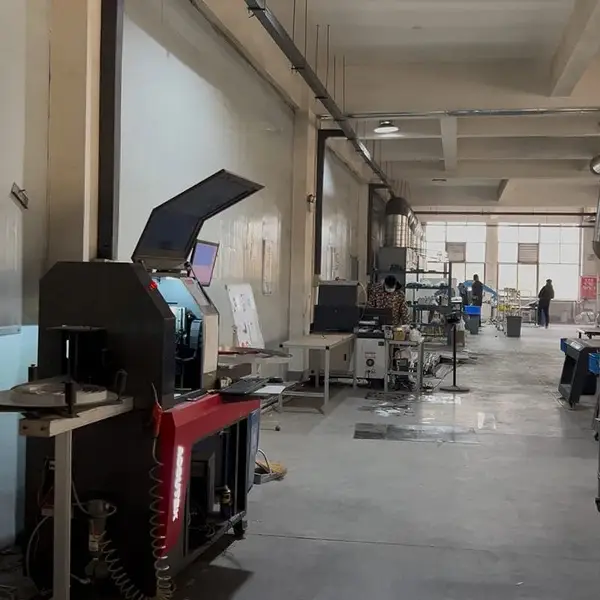
Real photo from our production floor — every sign we ship is made here.
From $24/letter · MOQ 1 piece · Flexible lead time · CE & UL certified · ships to 20+ countries
Custom sizes, colors, and finishes. Get a factory price in 24 hours.
Get a Free Quote Copy EmailWhatsApp +86 13865703472 · business@aochuangsign.cn
See pricing, specs, and get a free quote for the sign type you need. Built in our factory, shipped worldwide.