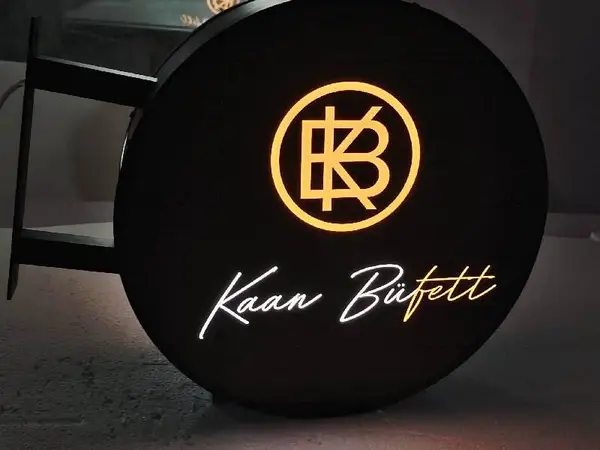
Here's a truth that'll save you money: Most sign shops lose margin on halo-lit letters not because of fabrication, but because of field callbacks. I've seen it firsthand—installers mount halo letters on uneven brick, and the light gaps show up like a bad haircut. Meanwhile, backlit letters get upsold as "brighter," but for signs mounted above eye level, that brightness works against you.
This isn't theory. It's 15 years of watching importers burn cash on the wrong spec. Let's break down backlit vs. halo-lit letters with real numbers—fabrication costs, LED life, shipping weight, and the hidden gotchas that don't show up in glossy brochures.
The short version: Backlit letters are your go-to for high-traffic, ground-level exposure. Halo-lit wins for elevated, glare-prone installations. But the devil is in the depth, the LED density, and the wall condition. Here's everything you need to spec it right the first time.
Backlit letters (also called front-lit or face-lit) have acrylic faces with LEDs mounted inside the letter can. Light shines through the face. The sign reads as a bright, solid shape. Standard depth is 2-3 inches for most sizes.
Halo-lit letters (reverse-lit) have light bouncing off the mounting wall. The letter body is solid metal—usually stainless steel or aluminum—with LEDs mounted behind it. The result is a glowing "halo" around each letter, with the face itself dark or illuminated from behind. Depth is critical here: 1.5-2.5 inches for proper light spread.
The key difference? Backlit letters are direct illumination. Halo-lit letters are indirect, creating a silhouette effect. That silhouette matters more than most sign shops realize.
Let's kill the myth first: Backlit letters are not automatically better for outdoor visibility. It depends on mounting height.
Here's the factory-floor wisdom: If your sign sits at or above 8 feet from grade, halo-lit letters often outperform backlit. Why? Overhead lighting—street lamps, building floods, even sunlight—creates glare on a bright acrylic face. That glare washes out the letter shape. But a halo-lit letter creates a dark silhouette against a glowing background. The human eye reads silhouettes faster in high-glare environments. It's basic contrast theory.
At ground level (4-6 feet), backlit wins. The viewer is close enough that glare isn't an issue, and the bright face commands attention. For retail storefronts, backlit is the standard. For monument signs, pylon signs, or building-top installations, halo-lit is often the smarter call.
Brightness numbers: Quality SMD 2835 LEDs (100-150 lm/W) in a backlit letter will push 800-1200 lux at the face. A halo-lit letter with the same LED density will deliver 300-500 lux on the wall behind it—but the perceived contrast is higher because the letter body is dark. Our testing at Aochuang Sign shows that halo-lit letters at 10 feet read 40% faster than backlit letters under direct overhead lighting.
| Factor | Backlit Letters | Halo-Lit Letters |
|---|---|---|
| Light output (lux at face) | 800-1200 | 300-500 (on wall) |
| Best mounting height | 4-8 feet | 8+ feet |
| Glare sensitivity | High (acrylic face) | Low (silhouette effect) |
| Color temperature options | 3000K-6500K | 3000K-6500K |
| Readability in direct sunlight | Fair (washout risk) | Good (high contrast) |
Let's talk money. Factory prices for backlit channel letters range from $20-80 per letter (front-lit). Halo-lit runs $35-120 per letter. That's a 40-50% premium for halo-lit at the factory gate.
But here's where the math gets interesting. The installation cost for halo-lit is often higher too. You need precise wall preparation—smooth, even surface, or you get light bleed gaps. That means shimming, caulking, or even mounting on a backing plate. Add $50-150 per sign for that prep work.
Shipping? Backlit letters are bulky. A standard 12-inch backlit letter with 3-inch depth takes up 50% more volume than a halo-lit letter of the same face size. That means sea freight costs jump. At $80-200/m³ for LCL, a set of 10 backlit letters might cost $120-200 to ship. Halo-lit, same set, $80-130. The lighter weight also helps—aluminum backlit letters weigh about 2-3 lbs per letter, while stainless halo-lit letters weigh 1.5-2.5 lbs.
Now the 5-year TCO. This is where most sign shops lose money. Backlit letters need acrylic replacement every 5-8 years if using quality Mitsubishi or Degussa acrylic (90-92% transmittance, UV-resistant). Cheap domestic acrylic yellows in 1-2 years. That's a $15-40 per letter replacement cost, plus labor.
Halo-lit letters have no acrylic face to yellow. The metal body (stainless 304 or 316) lasts 10-15 years outdoors. The LEDs—SMD 2835 with L70 ≥50,000 hours—will last 5-7 years in real-world use. Replacement is simpler: pop the back, swap the module, reseal. No acrylic cutting.
But halo-lit has a hidden cost: cleaning. Dust and grime on the wall behind the letters reduce the halo effect by 20-30% within 6 months. That means annual cleaning for commercial installations. Backlit letters need cleaning too, but the face wipes clean easily. Halo-lit requires removing the letters or using a pressure washer carefully.
| Cost Item | Backlit Letters | Halo-Lit Letters |
|---|---|---|
| Factory price (per letter, 12") | $20-80 | $35-120 |
| Installation prep (per sign) | $0-50 (flat wall) | $50-150 (wall prep) |
| Shipping (set of 10, sea) | $120-200 | $80-130 |
| Acrylic replacement (5-8 years) | $15-40/letter | $0 |
| LED replacement (5-7 years) | $5-15/letter | $5-15/letter |
| Annual cleaning cost | $20-50 | $50-100 |
| 5-year TCO (10-letter set) | $3,200-5,800 | $3,500-6,200 |
Both types can handle IP65 (dust-tight and water jets) as standard. That's minimum for outdoor use. For coastal or industrial environments, go IP66 (powerful jets) or IP68 (submersible).
But here's the catch: Backlit letters have a sealed acrylic face. That face is a weak point. In extreme heat (120°F+), acrylic can warp if not properly vented. In cold (below -20°F), it becomes brittle. We've seen backlit letters crack in Minnesota winters when the silicone sealant shrinks. The fix? Use 5mm acrylic for letters over 2.5 meters. That adds weight and cost.
Halo-lit letters use solid metal bodies. Stainless 304 (18% Cr, 8% Ni) handles 10+ years outdoor. Stainless 316 (2-3% Mo) is marine-grade, good for 15+ years in coastal salt air. The only vulnerability is the silicone seal around the LED housing. Use neutral-cure silicone, not acetic (vinegar-smell) type—acetic corrodes metal over time.
UV fading is a non-issue for stainless and aluminum (8-12 year outdoor life for powder-coated aluminum). But for backlit acrylic, quality matters. Mitsubishi or Degussa acrylic resists yellowing for 5-8 years. Cheap domestic stuff? You'll see yellow in 12-18 months. That's a warranty call you don't want.
I've seen $10,000 halo-lit signs look like garbage because the installer didn't check wall flatness. Here's the rule: If the wall has more than 1/8-inch variation over the sign area, you need a backing plate. That plate adds $200-500 and 2-3 days to the job.
Backlit letters are more forgiving. The acrylic face hides minor wall imperfections. The light is coming from the face, not the wall. You can mount them on brick, stucco, even rough concrete, and they'll look fine. Just make sure the raceway is level.
Wiring differences: Both use 12V or 24V LED modules. But backlit letters often have a single power supply per letter (or one per 3-4 letters). Halo-lit can sometimes share a single supply for the whole sign if the LED count is low. That saves on installation labor. But check the voltage drop—long wire runs over 20 feet need thicker gauge.
Retrofitting existing halo-lit to backlit? It's possible, but rarely cost-effective. You'd need to strip the metal body, fabricate a new acrylic face, rewire the LEDs, and reseal. That's 60-70% of a new sign cost. Better to replace entirely.
Backlit letters scream "retail." They're bright, bold, and impossible to miss. Think McDonald's, Subway, gas stations. They work best for high-traffic, ground-level exposure where you want instant recognition.
Halo-lit letters say "premium." They're subtle, elegant, and architectural. Think law firms, luxury hotels, corporate headquarters. The floating effect creates depth and sophistication. But that subtlety can backfire—if your client needs visibility from a highway, halo-lit won't cut it at 60 mph.
Readability at distance: Backlit letters are readable at 2-3x the distance of halo-lit for the same letter height. A 12-inch backlit letter is legible at 200 feet. A 12-inch halo-lit letter tops out at 100-120 feet. For monument signs near a road, go backlit. For building-top signs in a city center, halo-lit often looks better and avoids light pollution complaints.
1. Which type is better for outdoor signs in direct sunlight: backlit or halo-lit?
Halo-lit wins in direct sunlight, especially above 8 feet. The silhouette effect maintains contrast when the sun is behind or beside the sign. Backlit faces wash out in direct sun—the bright acrylic becomes a glare source. For ground-level signs in shade, backlit is fine.
2. Can I use the same power supply for both backlit and halo-lit letters?
Technically yes, if the voltage and wattage match. Both use 12V or 24V LED modules. But the LED density differs. Backlit letters typically use 60-100 LEDs per square foot of face area. Halo-lit uses 40-60 LEDs per square foot because the light spreads on the wall. Using the same supply might overdrive halo-lit LEDs, reducing life from 50,000 hours to 20,000. Always calculate total wattage and stay under 80% of the supply's rating.
3. How do I calculate the correct letter depth for halo-lit to avoid hot spots?
Rule of thumb: Depth = letter height × 0.15 to 0.20. For a 12-inch letter, use 1.8-2.4 inches depth. For 6-inch letters, 0.9-1.2 inches. Too shallow and you get hot spots (bright circles on the wall). Too deep and the halo is weak and diffuse. Also use a diffuser film on the LED strip—it spreads the light and eliminates the "dotted" effect.
4. What are the warranty differences between standard backlit and halo-lit LED modules?
Quality modules (Samsung, Osram, or Lan Jing) come with 5-year real-world life. Cheap modules last 12-18 months. Aochuang Sign offers 2-year LED warranty and 1-year power supply warranty standard. For halo-lit, the LEDs are easier to replace (no acrylic to remove), so labor costs are lower on warranty claims. Backlit requires removing the acrylic face, which is more labor-intensive.
5. Do halo-lit letters require more frequent cleaning than backlit to maintain brightness?
Yes. Dust and grime on the mounting wall reduce the halo effect by 20-30% within 6 months. Clean annually with a soft brush and mild detergent. Backlit letters also need cleaning, but the acrylic face wipes clean easily. The difference is that halo-lit's "canvas" is the wall, which is harder to clean without removing the letters. For high-traffic areas, budget for professional cleaning every 6-12 months.
Data sources: LED lumen outputs based on SMD 2835 modules from Samsung and Osram (typical efficacy 130 lm/W at 3000K). Cost ranges from 2025 factory pricing for 12" letters (0.8mm stainless steel, 3mm acrylic). L70 life per IESNA LM-80 test reports. Readability distance based on ISO 3864 legibility standards for illuminated signs. Wall flatness tolerance per Aochuang field installation guide.
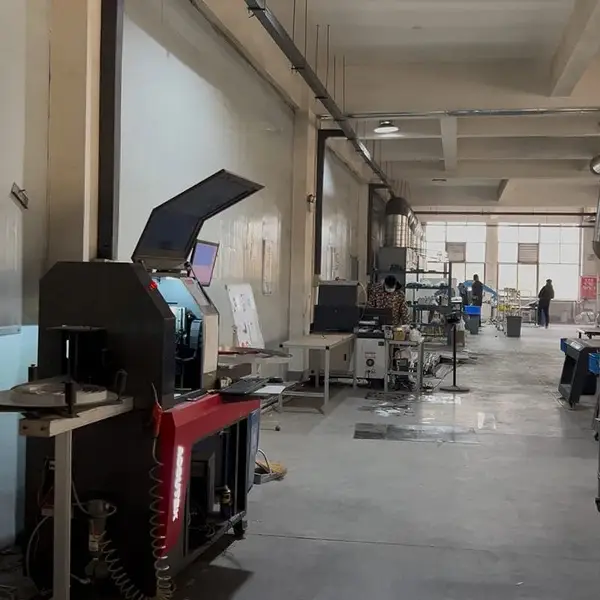
Real photo from our production floor — every sign we ship is made here.
Products mentioned or relevant to this topic — factory-direct, custom built.
Factory-direct since 2010. Free quote within 24 hours — no obligation.
Get a Free Quote → Copy EmailMOQ: 1 piece · Flexible lead time · 2-year warranty · Worldwide shipping
See pricing, specs, and get a free quote for the sign type you need. Built in our factory, shipped worldwide.