Look, I've been on this factory floor since 2010, and the first thing I tell anyone about bronze letters is to pick the damn thing up before you sign the PO.
Real cast bronze has heft. Fake bronze—usually aluminum with a sprayed-on patina or brass that somebody called bronze because it sounded better—will feel light, hollow, or tinny. That's not a trivial detail. That's the difference between a sign that reads "established 1987 law firm" and one that reads "painted fake."
We make both here at Aochuang Sign, 3,000 square meters in Lu'an, Anhui, with a crew of 50+ welders, polishers, and finishers. We ship worldwide, minimum order one piece, and turnaround runs 7–15 days. But I'll be the first to tell you: not every "bronze" letter is bronze.
Here's what nobody tells you: "bronze" is a family of copper alloys, not a single recipe. Commercial bronze C22000 is 90% copper and 10% zinc. Architectural bronze C38500 is basically a leaded brass, not a true bronze. Silicon bronze C65500 is the one you want for coastal or industrial conditions because it laughs at salt.
I've corrected more spec sheets than I can count. Architect writes "architectural bronze" thinking it's fancier than brass. Wrong. That's brass with lead for machining. If you're ordering a cast aluminum or bronze sign for a marina, spec C65500 silicon bronze, not C38500.
If you just want a metal look and don't care about real metallurgy, compare 304/316 stainless steel letters. Our 304 stainless contains 18% chromium and 8% nickel and will live 10+ years outdoors. 316 adds 2–3% molybdenum and costs 20–30% more. That's the same decision you're making with bronze alloys—pay now for the right alloy, or pay later to replace pitted letters.
Don't let a smooth-talking supplier sell you brass and call it bronze. If you're not sure, ask for the alloy cert. If they hesitate, you've got your answer.
The ugly truth? Most bronze letters aren't cast. They're waterjet or laser-cut from bronze plate, then welded or bent into shape. For flat letters, that's fine. Cheaper and faster, and our laser cutters hold ±0.1mm. But you won't get the deep, sculpted profile of a true sand-cast letter.
We run a ten-step process here: we confirm your design in a day, laser cut, TIG weld, grind, polish, run an 8–12 hour burn-in, then QC every single piece. Works for fabricated and cast signs alike. The real difference? What happens before the first cut—a pattern for casting or a flat sheet for cutting.
If you're installing indoors in a lobby, fabricated bronze letters with a good patina are fine. If you're mounting them outside on a stone facade and they'll get touched, pushed, or hit by landscaping equipment, solid cast is the only choice.
I've seen this go wrong: a university bought fabricated bronze letters for an exterior donor wall, and within two years, the corner of an 'R' peeled back from a mower strike. A cast letter would have dented, not peeled.
Look, patina is chemistry, not paint. If you want a living finish that ages, tell the factory to use a liver of sulfur process and then seal it. If you want a stable, repeatable color across 40 letters, you spec a chemically induced patina with a clear urethane topcoat, not wax.
We do polished, brushed, oxidized, and statuary finishes. But here's the brutal truth: a "bronze finish" on aluminum isn't bronze. Not bronze. A coating. It might look great for a few years, until UV and moisture get under the clear and the aluminum starts to chalk.
If you're chasing that dark oil-rubbed bronze color but need to control cost, baked paint letters can hold an RAL color fine. But don't spec them for a coastal building and expect a 10-year life. For that, use real C65500 or 316 stainless, not a paint system.
One more thing: brass is not bronze. Brass has more zinc; bronze has more tin or other elements. If someone offers you brass & copper letters and calls them bronze, walk away or demand a material cert. Reputable factories include alloy documentation.
Here's what nobody tells you: the mounting system fails before the letter does. For stone or masonry, use stud-mounted letters. You drill into the facade, epoxy threaded stainless studs into the back of each bronze letter, and lock them in. A 12-inch cast bronze letter is heavy, so the studs need to be 1/4-inch stainless minimum—not those little 10-24 screws people use on interior acrylic.
ADA tactile signs have specific rules: mounting height between 48 and 60 inches to the raised characters, non-glare finish, and Grade 2 Braille. If your bronze letters are part of an ADA sign, the finish can't be high-gloss. That's code, not design preference.
Adding lighting to bronze letters? That's where it gets complicated. Our LED modules run L70 ≥50,000 hours, and we warranty the LEDs for two years. But UL 48 certification in the US will set you back $4,000–15,000 and take 4–9 months with quarterly audits. Don't assume a factory's CE mark covers you. CE costs 20,000–50,000 RMB and takes 2–8 weeks, and I've seen plenty of certs that expired three years ago. Ask to see the certificate with today's date.
The ugly truth? You're paying for weight and labor, not material. Copper alloys aren't cheap, but the real cost in cast bronze letters is the grinding, polishing, and patina work—hours of skilled labor per letter. Fabricated letters cut from plate cost less because the process is faster, but you lose depth.
I've watched sign shops pay $800 for a front-lit letter from a domestic fabricator. Same 304 stainless, same Samsung LEDs. We ship that letter for $120. Bronze letters carry the same markup. Buy factory-direct and you'll save 50–65% off product cost before shipping and tariffs.
Do the lifecycle math. Real C65500 silicon bronze or 316 stainless on a coastal building will live 15+ years. A bronze-finished aluminum letter might look okay for 8–12 years, but the finish will fail before the metal. If you're replacing letters in year five, any upfront savings are gone.
For factory-direct orders, sea freight LCL takes 50–70 days and costs $80–200 per cubic meter. Air freight is 10–20 days at $4–12 per kilogram. If you need bronze letters for a grand opening, sea freight won't cut it. That's why lead time isn't the only number that matters.
Look, I've worked QC on thousands of metal letters, and the same defects show up when a factory rushes. Porosity in cast bronze looks like little pinholes—won't fly on a 4-foot lobby sign. Cold shuts look like hairline seams where two flows of metal didn't fuse. Grinding marks that weren't polished out show up the minute the patina hits. Mismatched patina between letters is the most common complaint in multi-letter installations.
Here's a factory-direct QA checklist I use: check each letter under raking light for flatness. Run your finger along the edges—any burr means they skipped deburring. Check the back for straight studs and no broken corners. Verify alloy with a material cert if it's supposed to be bronze. We inspect every piece before export packaging: foam, then carton, then plywood crate. That's the minimum.
And don't skip the aging test if your letters have any LED component. We run 8–12 hours powered before packaging. I've seen factories ship LED letters without burning them in, and half the modules were dead on arrival. With bronze, the metal's fine, but the electronics are the weak link.
I've seen this go wrong: an installer used construction adhesive to mount cast bronze letters on a limestone facade because he didn't want to drill. Six months later, the adhesive released, and a 6-pound letter fell eight feet onto a sidewalk. Nobody got hurt, but the lawsuit did damage.
Mechanical fasteners only. Stud mounting with epoxy for masonry. Through-bolts and backer plates for panels. Never rely on adhesive alone for letters over a couple pounds. For interior drywall, use the proper hollow-wall anchors rated for shear and pull-out.
Maintenance is easy but not zero. Clean real bronze patinas with a damp cloth and mild soap. Don't pressure wash a chemically patinated bronze sign. You'll strip the sealer. Reapply a clear microcrystalline wax or urethane topcoat every few years, especially in harsh coastal or industrial conditions. If you used 316 stainless or silicon bronze, you can mostly ignore it.
Is bronze a good outdoor material? Yes, if it's the right alloy. C65500 silicon bronze is excellent for coastal and industrial environments. But if you buy "architectural bronze" that's actually leaded brass or a painted aluminum fake, it won't last. Stop asking this like all bronze is the same.
Can you make bronze letters light up? You can add LEDs, but it's a lot of extra work and cost. If you want illuminated letters, don't start with bronze. Pick a different system with a proven thermal path. Bronze is a terrible heat sink compared to aluminum.
What's the difference between bronze and brass? Bronze is a copper alloy with tin or other elements. Brass is copper and zinc. Brass is softer and more machinable. Bronze is harder and more corrosion-resistant. In the sign trade, people mix them up constantly. Don't be one of them.

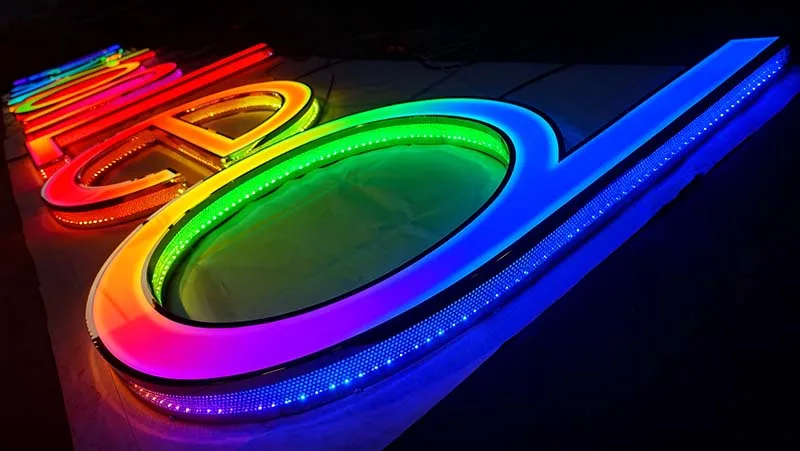
Real photo from our production floor — every sign we ship is made here.
Products mentioned or relevant to this topic — factory-direct, custom built.
From $24/letter · MOQ 1 piece · Flexible lead time · CE & UL certified · ships to 20+ countries
Custom sizes, colors, and finishes. Get a factory price in 24 hours.
Get a Free Quote Copy EmailWhatsApp +86 13865703472 · business@aochuangsign.cn