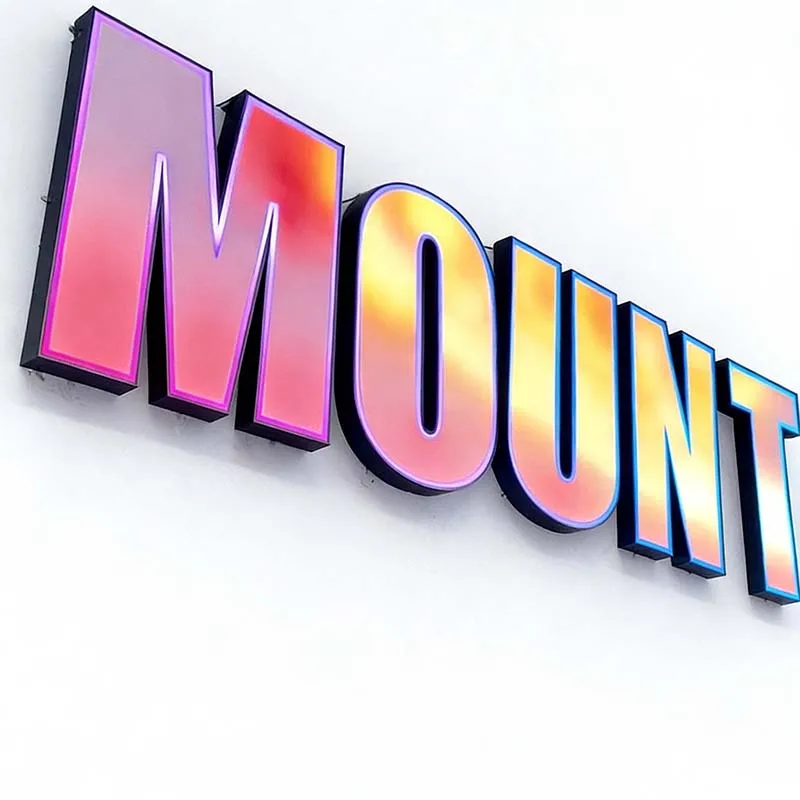
It’s always the same. “We need 47 sets of front-lit channel letters. All identical. Delivered to 47 addresses. And our grand openings start in ten weeks.”
The sign shop owner on the other end sounds tired. They’ve already tried three local fabricators, got quotes all over the map, and missed two permit deadlines. Now they’re staring down a corporate brand manual that demands 6-inch stainless returns and a specific red acrylic that nobody stocks. Nobody warned them franchising means you aren’t building one sign—you’re building a supply chain.
That’s where a factory like ours either becomes your best asset or your biggest waste of time. After 16 years on the floor, I’ve shipped bulk custom letters for franchise rollouts worldwide. Some jobs went smoother than a CNC-cut acrylic face. Others? I’ve watched installers unbox letters that looked like a kindergarten art project because the buyer chased the cheapest quote. This guide is what I’d tell you over a beer, not a brochure.
Any factory with a laser cutter can spit out stainless steel letters. The chaos comes from multiplication. 50 lobby signs mean 50 slightly different ceiling heights, 50 sets of local sign codes, and 50 electricians who “know a faster way.” If your supplier can’t stonewall-dimensions match from kit #1 to kit #102, your brand looks inconsistent by town #3.
I’ve seen this go wrong: A franchise ordered 80 back-lit halo letter sets. Beautiful on the first install in Dallas—3mm push-thru acrylic, warm 3000K LEDs, flawless 10mm halo. By store 12, the acrylic shifted 0.5mm in the jig, and suddenly “COFFEE” read “COFFEE” with that annoying dark shadow on the ‘E.’ Nobody noticed until the regional manager sent photos and asked why half the stores looked dim. Three weeks of shipping replacement faces killed their grand opening schedule.
Look, bulk consistency isn’t magic. It’s back-lit halo letters produced with the same jig, same batch of acrylic (we stock entire lots for rollout orders), and same worker on the bending brake. We photograph every set against a checkered grid before crating. It’s tedious. It’s also why our repeat franchise clients don’t leave.
Your brand manual says “all signs must be UL listed.” Fine. UL 48 certification for a product family costs $4,000–$15,000 and takes 4–9 months of testing, plus quarterly factory audits. Most Chinese sign factories do not have it. They’ll wave a CE certificate and mumble “self-certification.” That won’t fly with a Connecticut inspector who wants the UL label on every power supply.
Here’s what we can and can’t do. We hold CE, RoHS, and ISO 9001. Our LED modules come from suppliers who have ETL marks—ETL is a nationally recognized testing lab, accepted almost everywhere UL is, and 10–30% cheaper to maintain. But if your program requires a UL-listed complete sign, I’m going to tell you upfront: we can arrange it through our partner lab, it adds $3,000+ per product line, and your timeline extends by months. I’ve lost jobs being that honest. I’ve also kept clients out of court.
The ugly truth is, many buyers gamble. They order LED modules with UL components and hope the inspector doesn’t notice the housing isn’t listed. That works… until it doesn’t. For multi-location rollouts in coastal areas or strict jurisdictions (California, Florida, New York), don’t gamble. Front-lit channel letters with an IP65-sealed design and a recognized component mark clear most hurdles without a full product listing, and I can walk your contractor through that discussion.
Cheap freight quotes ruin more franchise programs than cheap LEDs do.
You see a quote for 50 aluminum lettersets at $15 per letter, sea freight $200 per cubic meter, you think you’re a genius. Then your sets arrive in five separate LCL containers because the factory split shipments to save $80 on consolidation. Store 27 opens without a sign because its crate is still floating off Long Beach. Your project manager quits. I’ve watched it happen.
For bulk rollouts, we default to two things: one purchase order, one production batch, and one consolidated sea shipment (FCL if the volume justifies the $1,200–$3,000 freight), then domestic break-bulk to stores from your warehouse. If you need direct-to-site, we palletize each location’s set, label the boxes like a commercial kitchen order, and use a freight forwarder who won’t split LCL shipments for fun. It costs more. It saves your sanity.
Here’s another nobody-tells-you: packaging isn’t free. 50 sets of stainless steel letters need more than foam and a prayer. We use foam-lined individual cartons, then bolt those into seven-layer plywood crates. One scratched 304 face in box #17 of 400 means a replacement order, a delayed punch list, and a lot of finger-pointing. We’ve got the 10-step QC photos to prove the letter left clean.
A chain bought acrylic light boxes for 60 locations. They opted for “same spec, cheaper supplier” modules. The modules hit 120 lm/W on day one, just like Samsung 2835s. Eighteen months later, stores in Phoenix and Dallas started developing dark spots. The cheap epoxy yellowed under UV, the phosphor degraded, and the L70 dropped to about 7,000 hours. The franchisee replaced them with local shop parts that didn’t match the color temperature. Suddenly the warm-lit bakery looked like a hospital waiting room in half the stores.
Look, our warranty is 2 years on LEDs, 1 year on power supply. Real lifespan of quality SMD 2835 modules (Samsung, Osram, or China’s top-tier Lan Jing) is 5+ years at L70 ≥50,000 hours. But I can’t stop a client from sourcing their own noname modules. I can only refuse to install them. In bulk rollouts, every penny “saved” on components compounds across 800 letters and detonates in year two.
Not all stainless is armor. 304 stainless (18% chromium, 8% nickel) gives you 10+ years outdoors. For a fast-casual chain in Ohio, that’s perfect. Stainless steel letters in 304, brushed #4 finish, 1.5mm thickness, will look current when the franchise agreement renews. 316 stainless adds 2–3% molybdenum, costs 20–30% more, and belongs in Miami Beach or Seattle. If your locations are within three miles of salt water, pay for 316. I will not upsell you on 316 for a Kansas medical clinic. It’s a waste of your budget.
Acrylic faces are another quiet killer. UV-resistant acrylic from Mitsubishi or Degussa holds 90–92% light transmittance for 5–8 years without yellowing. Domestic acrylic? 1–2 years before the whites go piss-yellow, especially in south-facing storefronts. On a 60-store rollout, that means by the time store #60 opens, store #1’s letters already look tired. We stock both and I’ll tell you the price difference: about 15–20% on acrylic cost. For franchise consistency, buy the good stuff.
Aluminum letters—1/3 the weight of steel, naturally rust-proof, 8–12 year outdoor life. Perfect for internal mall signage or covered entrances. Aluminum letters get anodized or powder-coated; we do both in-house. But aluminum dents easier than stainless. If your locations have high foot traffic or bored kids with skateboards, go steel. Simple.
Our factory prices: front-lit channel letters $20–80 per letter, back-lit halo $35–120, stainless non-lit $15–40, and light boxes $80–250 per square meter. Compare that to US retail installed costs of $200–700 per front-lit letter and you see the 50–65% gap. But here’s the thing—you aren’t buying a letter. You’re buying a letter, freight, tariff, customs broker, inland trucking, and the risk of a damaged shipment you can’t send back. Budget 25–35% on top of our invoice for landed cost. The Section 301 tariff on Chinese-made signage adds roughly 30%, though codes change. I don’t handle that; your importer does. I just make sure the commercial invoice reflects reality, because lying to Customs is a fast way to get your letters quarantined.
MOQ? We set it at one piece. That’s not a gimmick. We want you to test a sample set before you buy 600 letters. I’d rather ship you two front-lit channel letters for $300 with express freight than have you discover a color mismatch on a $50,000 order. The 7–15 day lead time per set scales: 10 sets still ship in 15 days because we run them simultaneously across 50 workers. A 100-set rollout might take 20 days, plus sea shipping. I’ll never promise a date we can’t hit, because in this business, your lease penalty is steeper than my late shipment apology.
I’m going to walk you through it, because most factories just say “quality control” and smile.
If your bulk order has 400 letters, step 9 happens to every single one. It’s boring. It’s necessary. I’ve sent a set of dual-lit channel letters back to step 3 because the welder had a bad Monday. That’s what the ISO 9001 process manual requires, and it’s what I’d do if my name were stitched into the banner.
We’re a factory in Lu’an, Anhui. We don’t have US contractors, we don’t pull permits, and we don’t know your local wind-load code. We provide a spec sheet with weights, mounting hole patterns, and electrical specs. Your local sign shop or GC handles installation. I’ve seen importers assume a factory “takes care of everything” and end up with 50 channel letters in a storage unit and no one to hang them. Don’t be that person. As part of a rollout program, I’ll connect you with a freight forwarder who knows signage, and I’ll pack each location’s set with its own installation template and hardware, labeled for the exact store. But the man on the ladder is yours.
Pantone numbers don’t look the same on backlit acrylic as they do on powder-coated aluminum. A franchise’s red (say, PMS 186C) on an ACM panel is simple. The same red as a translucent face lit with 6500K LEDs? It shifts orange. We keep 3000K, 4000K, and 6000K modules in stock, and we’ll sample your specific acrylic stack with the actual LED color temperature before you commit to 70 sets. That one sample costs you $80 in courier fees. It saves you repainting 200 letters. I consider it mandatory for rollouts.
Dual-lit channel letters complicate this further—you need a face color that looks coherent both illuminated and ambient. If the brand guide calls for pure white faces that glow red at night, we test a translucent red film insert. If it calls for gold returns and white halo, we use a warm white LED behind a specific acrylic diffuser. These decisions, when made once and locked into a bulk order, make the entire chain look high-end.
Express (DHL, FedEx): 7-10 days, $30–100 for a small sample box. Air freight: about 10 days, $4–12/kg, good for 1–5 sets. Sea freight LCL: about 65 days, $80–200/m³, plus drayage and customs. Full container (FCL): about 65 days, $1,200–3,000. For a 50-store rollout with 400 total letters, sea LCL or FCL makes the landed cost make sense, but factor 10 weeks of transit into your project timeline. I’ve had franchisees order air freight for their first 3 stores to hit an opening date, then sea for the remaining 47. It costs more but covers the gap. I won’t sugarcoat port delays or customs exams; they happen.
Here’s another bluntness: import duties under Section 301 are ~30% on many sign components from China. Some competitors “gift” the invoice at $200 to dodge duty. That’s fraud. If Customs checks the shipment, your letters get seized and you get flagged for every future import. Our invoices state actual production cost. Your total landed cost will be higher. Plan for it.
We won’t copy a competitor’s patented letter shape. We won’t use a copyrighted logo without your release. We won’t skip taxes or duties. We won’t expedite at the expense of sealing quality. And we won’t promise 6-day production for 300 pieces. 7–15 days is real for up to about 20 sets; larger bulk extends that, but we’ll give you a schedule before you pay.
We also won’t pretend that neon flex signs for 80 locations are identical to glass neon. LED neon flex bends easily, ships safely, and costs $30–200 per sign. It isn’t hand-blown glass. It will not impress a 60-year-old sign purist. It will, however, light up a franchise lobby without a $3,000 artisan installation.
We warranty the LEDs for 2 years, the power supply for 1. That’s realistic. If a Mean Well driver fails in month 11, we courier a replacement under warranty. If your installer drills into an LED module, that’s on you. We’ll still sell you the spare part at cost. On bulk rollout orders, we include 2–3% overage of critical components (acrylic faces, drivers) so your local shop can do quick fixes. It costs us very little and earns loyalty I can’t buy with marketing.
Here’s my final pitch, and it’s not fancy. We’re a 3,000m² factory with 50+ workers, ISO 9001, CE, RoHS, exporting worldwide. We’ve handled franchise programs from 10 units to 150. We’ve made mistakes, corrected them, and learned that batch photos, locked material lots, and brutal honesty keep clients coming back. I’d rather lose a quote for telling you 316 stainless is overkill in Nebraska than ship letters that rust in year four.
If you’re holding a brand standards PDF and a bid sheet with 60 addresses, reach out. Tell me you read this guide and I’ll make damn sure you get a sample kit that matches your brief. Not prettier. Not cheaper. Just exactly what your franchise needs at scale, packed to survive the journey, with zero sales fluff. Because on the factory floor, after 16 years, fluff doesn’t weld.

Real photo from our production floor — every sign we ship is made here.
From $24/letter · MOQ 1 piece · Flexible lead time · CE & UL certified · ships to 20+ countries
Custom sizes, colors, and finishes. Get a factory price in 24 hours.
Get a Free Quote Copy EmailWhatsApp +86 13865703472 · business@aochuangsign.cn
See pricing, specs, and get a free quote for the sign type you need. Built in our factory, shipped worldwide.