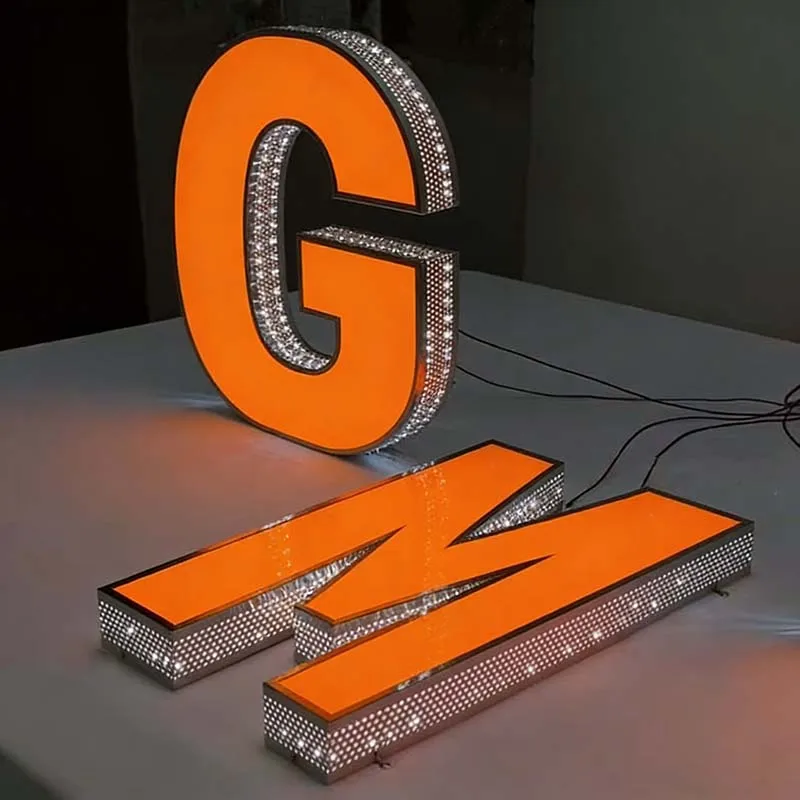
I've watched a contractor order 400 channel letters for a 40-store rollout and get 300 of them wrong. Wrong blue. Wrong font. Wrong mounting holes punched into the returns. That wasn't a factory problem. That was a spec problem — and the buyer blamed China for his own sloppy drawings.
Here's what nobody tells you: franchise sign programs don't fail during production. They fail in the 48 hours after the PO lands. Someone didn't approve the submittal drawings. Someone didn't verify LED voltage against the site's electrical plan. Someone assumed "same as last time" meant something to a factory that runs 30 different jobs a week and already forgot what your logo looks like.
This guide is written for the people who buy signs in volume — sign shop owners, contractors, importers, franchise ops directors. I'm going to tell you exactly how Aochuang Sign runs multi-location orders, and exactly where I'd call us out if I were sitting on your side of the table.
The ugly truth is that most sign factories don't want your rollout job. They want your repeat job. There's a difference you learn after 16 years of this trade.
A single custom letter is a one-night stand. A franchise rollout is a marriage. You're trusting a factory to hold the same dimensions, color, and LED brightness across 200 identical letters, shipped to 40 different addresses, sometimes over six months. When store #17 gets a letter 2mm shorter than store #16, you'll hear about it. Not from us. From the franchisee. In all caps. With photos.
So before you email anyone a request for quote, understand what makes a rollout different. You need batch consistency, not a pretty sample. You need packaging that survives cross-country freight, not one layer of bubble wrap. And you need documentation — submittal drawings, UL/ETL compliance, material certifications — that an electrical inspector won't laugh out of the building.
If a factory can't show you their QC process in writing, walk away. I've seen this go wrong more times than I can count: a buyer gets a beautiful sample, places a 50-store order, and production comes back looking like it was assembled by three different shops on three different continents.
Aochuang has been building letters since 2010. 3,000 square meters of floor space, 50+ skilled workers, exports worldwide. We're not the biggest factory in China. That's fine. Bigger isn't better. Better is better.
Here's the honest price picture for bulk orders. These are factory-direct FOB prices per letter — not the inflated numbers you get from importers who've never touched a welder:
Now compare that to US retail installed: $200–700 per letter for front-lit, $400–1,000 for halo-lit. The gap isn't a secret. It's the reason you're reading this. Factory-direct savings of 50–65% is a real number, not a marketing slogan.
But here's what nobody tells you: those savings evaporate if you don't know what you're buying. A $20 letter built with cheap Chinese LED modules dies in 18 months. Then you're paying a local sign guy $150 an hour to replace them. The discount only counts when the materials you spec are right.
Let's talk acrylic, because it's where most "cheap" signs get cheap. We use Mitsubishi and Degussa acrylic on export jobs. Light transmittance runs 90–92%, and the UV resistance holds up 5–8 years outdoors. Domestic Chinese acrylic? One to two years before it yellows like a smoker's fingernails.
I've seen this go wrong: a buyer specs "acrylic" without naming a brand. The factory quotes domestic material because it's half the price. The sign looks perfect in the shop. Eighteen months later, the franchisee's logo looks like a nicotine stain. That's a rookie mistake, and it's on you for not specifying the grade.
Same story with stainless. 304 contains 18% chromium and 8% nickel — good for 10+ years outdoors. 316 adds molybdenum and costs 20–30% more. For a strip mall in Ohio, 304 is fine. For Miami Beach or anything within a mile of salt water, pay for 316. I've replaced too many 304 letters on coastal jobs that looked like rusted wrecks after four years.
And then there's LED modules. This is where I get angry. SMD 2835 is the industry workhorse: 100–150 lumens per watt, L70 rated at 50,000 hours. Quality modules from Samsung, Osram, or better Chinese brands like Lanjing (Blueview) genuinely run 5+ years. Cheap no-name modules last 12–18 months. Same socket, same size, completely different lifespan.
The ugly truth is that most buyers can't tell the difference from a spec sheet. So we send photos of the actual modules going into your letters, with the batch numbers visible. If a factory won't do that, they're hiding something.
Certifications are where importers zone out and contractors get burned. Let me make this simple.
If your letters go into any building in the US, they'll be inspected under NEC Article 600. That means your sign shop or electrical contractor needs UL 48 or ETL-listed components. UL 48 costs us $4,000–15,000 to maintain, takes 4–9 months to earn, and requires quarterly audits. ETL is a legitimate alternative — usually 10–30% cheaper. CE is Europe's mark, and while we hold it, it means nothing on a US jobsite.
Here's the dirty secret: plenty of Chinese factories stamp "CE" on everything without a certificate in a filing cabinet. A real CE certification costs 20,000–50,000 RMB and takes 2–8 weeks. Ask to see the certificate. With today's date. Not a photocopy from 2019.
For outdoor letters, your minimum is IP65. That's dust-tight and resistant to water jets from any direction. It does NOT mean your sign survives a Florida hurricane. Coastal or extreme-weather sites? Spec IP66 or IP68. If a factory tells you IP65 is waterproof, they're lying. It's water-resistant. There's a difference.
One more, for anyone touching public buildings: ADA compliance. That means mounting height between 48 and 60 inches, non-glare finish, and Grade 2 Braille on tactile signs. If your franchise is a bank, a hotel, a clinic, or anything with public access, this is not optional. It's the law, and the fines are not a rounding error.
If you want a fast, accurate quote on a multi-location program, here's what needs to land in the first email:
Look, the buyers who impress me send a complete package on day one. The buyers who annoy me say "just make it like the last one" — and then blame us when the colors don't match a store built in 2019 with a different material batch.
Here's our process, step by step, with real days attached:
Total: 7–15 days. That's the honest number. If a factory promises 3 days, they're pulling stock off a shelf and hoping you don't notice the color mismatch.
For a franchise rollout, build in a buffer. Order samples first. Approve them. Then release batch production. It costs you two weeks up front, and it saves you from discovering a defect after 50 franchisees have already placed their orders.
Here's the freight picture in round numbers:
And the elephant in the room: US Section 301 tariffs run around 30% on these goods. Your customs broker will break the news. It hurts. But even after tariffs, the total landed cost sits 30–40% below buying domestic. That's the arithmetic that makes rollout programs work.
My recommendation for franchises: air-freight the first store's worth of letters so you can get approved and installed while the rest of the batch sails. You'll have your certificate of occupancy before the container reaches Long Beach.
I'm about to lose some orders. Fine. Better than lying to you.
We can't make a bad file look good. Garbage in, garbage out, and the welder isn't a graphic designer.
We can't guarantee perfect color matching across material batches ordered months apart. Acrylic dye lots shift. If you order 100 letters in January and 100 in July, we'll lock in the same batch or tell you the variation is coming.
We can't install anything. We're a factory. We build signs. Your local sign shop handles mounting, electrical, and permits. I've watched importers try to skip the licensed electrician to save money. It always ends with a red tag and a delay that costs more than the electrician ever would have.
And we can't overnight one letter at a reasonable cost. Export packaging is engineered for volume — foam, plywood crates, proper cartons. We'll happily build a single sample letter so you can see the quality firsthand. But the economics only work when you're ordering in bulk, which is what a rollout is.
Here's what nobody tells you: the sign industry is packed with middlemen who don't build anything. They take your order, forward it to a factory, and add 40%. We're not those guys. We're the guys with the welding torches and the CNC routers who get silicone on our boots.
Send the vector files and your quantities. We'll give you honest pricing based on whether your program needs stainless steel letters, aluminum letters, or acrylic light boxes. We'll tell you if your spec is overkill or undersized. We'll build a sample, test it, photograph it, and ship it to your door.
The best rollout buyers treat us like a partner, not a vending machine. They send specs. They ask hard questions. They push back when something doesn't make sense. That's the relationship that produces 200 perfect letters.
Look, I've been doing this for 16 years. I've watched LEDs get brighter, codes get stricter, and tariffs get crazier. But the fundamentals haven't moved: good materials, honest specs, and a factory willing to say "no" when you ask for something stupid.
That's who we are. If you're ready to talk numbers, send the files. We'll show you what factory-direct pricing actually looks like.
Then get back to work.
Factory-direct since 2010. Free quote within 24 hours — no obligation.
Get a Free Quote → Copy EmailMOQ: 1 piece · Flexible lead time · 2-year warranty · Worldwide shipping

Real photo from our production floor — every sign we ship is made here.
See pricing, specs, and get a free quote for the sign type you need. Built in our factory, shipped worldwide.