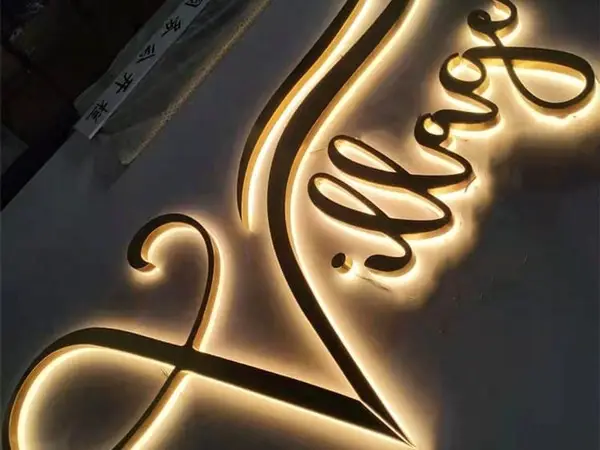
Yeah, you can dim LED channel letters at night. Do it right and a 50% dim setting cuts heat load enough to push a quality LED module's real lifespan past 5 years. Cheap modules? They die at 12–18 months.
But you can't wire a $30 wall dimmer into a sign like it's a dining room chandelier. Channel letters run on drivers, not line voltage. If the driver isn't dimmable, you just bought yourself a strobe light and a service call.
Nobody tells you this: most channel letter failures I see are driver failures, not LED failures. Drivers sit inside the letter can, cooking at 60°C in summer. Then someone adds dimming without any thermal headroom.
Our shop has pulled drivers out of retrofits that looked like melted cheese. A dimming setup that ignores heat? That's a warranty void waiting to happen.
When you dim a channel letter, you're dimming the driver, not the LED module. The driver takes 120V or 277V AC and converts it to low-voltage DC—usually 12V or 24V—that the modules eat. Want dimming? The driver has to accept a control signal and reduce current or pulse width accordingly.
Ordering front-lit channel letters for a storefront? Ask the factory exactly which driver they're speccing. Can't tell you the dimming protocol? Walk away.
In the field, four signal types matter: 0-10V, PWM, TRIAC, and DALI.
Our LED modules come from Bluesky (蓝景) or Rishang (日上). They carry an L70 rating of ≥50,000 hours. But that rating assumes clean DC—not a pulsing TRIAC signal from a dimmer meant for incandescent bulbs.
I've watched sign shops pay $800 for a front-lit letter from a domestic fabricator. Same 304 stainless. Same Samsung LEDs. We ship that letter for $120. No joke.
Take that $680 you just saved and buy a proper 0-10V dimming system with a timer. You'll still have cash left over.
Here's the ugly truth: most sign owners think dimming is about the utility bill. Utility bills barely enter the picture. The real issue is heat. Drivers carry a case temperature rating, usually 60–70°C. Run them full blast in a stainless steel letter on a south-facing wall in Phoenix and you're flirting with thermal shutdown every afternoon.
Dim it to 50% at night and the driver runs cooler for 10 hours, every night. Our factory warrants power supplies for 1 year and LED modules for 2 years. Thermal stress kills power supplies before the LEDs, every time. A dimmer isn't energy theater—it's cheap insurance.
Bluesky SMD 2835 modules run 100–150 lm/W. At half brightness they draw about half the current. That means half the heat. Multiply that across 20 modules in a storefront sign and you've changed the thermal profile for the whole can.
Nobody tells you this: most commercial sign codes don't require dimming—they require automatic shutoff or reduction after business hours. ASHRAE 90.1 Section 9.4.1.3 is the big one. Your local inspector might not check. The utility rebate program will.
California's Title 24 goes further. Exterior signs over a certain wattage must automatically reduce by at least 65% after hours. Sell signs in California? You don't get to ignore this.
NEC Article 600 covers electric signs in the US. Add an aftermarket dimmer that isn't listed and you can void your UL listing. UL 48 on a sign costs $4,000–15,000 and takes 4–9 months with quarterly audits. Don't cheap out on a $50 Amazon dimmer and torch that paperwork.
ETL runs 10–30% cheaper than UL, but the same rule applies: non-listed aftermarket parts kill the listing.
IP65 is dust-tight and water-jet resistant. That rating doesn't mean your sign survives a Florida hurricane. Same logic applies to dimming: an outdoor-rated photocell doesn't mean it won't fail when salt spray hits the terminals.
Get the driver from the same supplier as the LED modules. Ordering backlit halo letters? Ask for a 0-10V driver with a 12V output and a dimming range of 10–100%. Don't accept a driver that dims only to 50% unless you're happy with "half off" as your night setting.
For simple storefronts, a timer + 0-10V dimmer does the job. For franchise signs with a lobby controller, DALI or DMX makes sense. But I've never met a strip mall tenant who needed DALI.
CE marking costs 20,000–50,000 RMB. Most factories will say they have it. Ask to see the certificate with today's date. Watch them sweat.
Using RGB or color-changing letters? That's a different animal. Acrylic LED letters with RGB modules need a decoder that handles both color and brightness, not just a voltage dimmer.
If the existing driver isn't dimmable, you've got three practical moves.
I've seen this go wrong: a sign company added a photocell to a non-dimmable LED sign and skipped the surge protector on the line side. First thunderstorm cooked the driver and six modules. A $10 MOV would have saved it.
Flicker is the classic. It happens when a TRIAC dimmer chops the AC waveform and the driver can't handle the chopped phase. The LEDs strobe. Your customer films it with their phone. The video goes on Google reviews. Bad look.
Inrush current is the sleeper. A bank of five drivers in a big sign can pull 30–50 amps for a few milliseconds when the timer kicks on. Wire that circuit with a standard breaker and you'll get nuisance trips. Use an inrush-rated relay or a zero-crossing switch instead.
Color shift is real at low dim levels. Cheap 6000K modules drift blue-green below 15% output. Our standard 4000–5000K neutral white holds color better. Warm 3000–3500K is even more forgiving. Dimming below 20%? Spec the right color temp or don't complain when the sign looks sickly.
Here's the ugly truth: most channel letter dimming failures aren't component failures. They're install failures. Wrong signal type. No thermal relief. No surge protection. A dimmable driver doesn't fix a bad install.
Can I use a regular wall dimmer on LED channel letters?
No. Not unless you enjoy flicker, buzzing, and a dead driver. Wall dimmers are TRIAC. Channel letters need a driver that says dimmable.
Does dimming void my LED warranty?
Only if you use a non-listed dimmer or overheat the driver. Our factory warranties LED modules for 2 years and power supplies for 1 year. Melt the driver and you're on your own.
What's the cheapest way to dim a channel letter?
A timer that kills power. Not dimming, but code-compliant in most places and costs about $40. You asked for cheap.
Can I dim RGB channel letters?
Yes, but you need a decoder or controller that speaks the same protocol as the modules. Our acrylic RGB letters ship with matched controllers. Mixing random brands is how you get a sign that blinks in three different colors.
Products mentioned or relevant to this topic — factory-direct, custom built.
From $16/letter · MOQ 1 piece · 7–15 day production · CE & UL certified · ships to 20+ countries
Custom sizes, colors, and finishes. Get a factory price in 24 hours.
Get a Free QuoteWhatsApp +86 13865703472 · cairuisheng@aochuangsign.cn