I’ve spent 16 years on a sign factory floor, and I still hear the same question every week: “What’s the real cost per letter if I order from China instead of using a local shop?” Nobody gives a straight answer. You get quotes that hide shipping until the last email, or locals who tell you importing is a gamble with customs. I’m going to lay out the numbers—our numbers, Aochuang Sign’s numbers—as of 2026, and I’ll tell you where we save you money and where we can’t.
This isn’t a sales pitch where I pretend we’re perfect for every job. We’re a 3,000m² factory in Lu’an, Anhui, with 50+ workers who’ve exported worldwide. We’ve got CE, RoHS, ISO 9001, and we burn letters in an aging test for eight hours before they leave. But we don’t have an installer in Dallas, and we won’t tell you a rush order for two letters is a good idea. I’m here to give you the numbers so you can compare apples to apples, not polished website promises.
Let’s kill the guesswork. Factory-gate prices per letter, based on a standard 20-inch capital letter, 304 stainless steel return, 3mm acrylic face, quality SMD 2835 LEDs, fully assembled and wired:
Now, compare local installed prices. I pull data from sign shops I’ve talked to across the US and from our contractor clients. For front-lit, you’re looking at $250–$600 per letter installed. Halo-lit? $450–$1,000. That’s not parts cost; that’s the project wrapped up with permits, bucket trucks, and a healthy margin.
The numbers make sign shop owners sweat. Even after you add shipping and the 30% Section 301 tariff, you’re still pocketing 50–65% savings on the product itself. Let’s run a real-world example: a set of ten 18-inch front-lit letters. From us, $45 each, total $450. Air freight for 25 kg, $200. Tariff (30% on product) $135. Landed cost: $785. Your local shop quotes $4,200 installed. Even if you pay a local installer $1,500 to hang them, you’re at $2,285. That’s 45% less. You just bought yourself a vacation.
One rookie mistake I see over and over: a buyer asks for “stainless steel” and assumes they’re getting 304. They get 201 grade because it’s 15% cheaper, and six months later the letters have rust blooms at the seams. I’ve yelled at suppliers for pulling that crap.
The material inside that per-letter price is everything. 304 stainless—18% chromium, 8% nickel—will give you a decade outside. That’s what we use as standard unless you ask otherwise. For coastal cities, we push stainless steel letters in 316 marine grade, which has molybdenum and costs 20–30% more. It’s the only metal that won’t pit when salt spray hits it every morning.
Acrylic is another hiding spot for junk. Mitsubishi or Degussa sheets have 92% light transmittance and last 5–8 years without yellowing. Domestic acrylic—half the price—will look like a smoker’s teeth by the third summer. We stock both and let you pick. Want the full cost per letter on a rimless front-lit? The difference is about $12 between a cheap face and a good one. Spend it.
LEDs are the heart of any lit letter. The ugly truth is most bottom-dollar quotes you get online use no-name modules rated for maybe 15,000 hours. They flicker, they overheat, and they die 12–18 months in. Our standard module is a trusted SMD 2835 running at 120 lm/W, with real L70 lifetime over 50,000 hours. Samsung or Osram chips cost us more, and we charge accordingly—about $9 extra per 20-inch letter. That’s not a markup; that’s the difference between your sign looking brilliant and your phone ringing with a warranty claim.
Look, I’m going to say something that’ll irritate some competitors. If a factory tells you they’ve got full UL listing on their channel letters and they’re charging $40 per letter, they’re printing the sticker in the back office. True UL 48 certification costs $4,000–$15,000 to obtain, takes four to nine months, and requires quarterly factory audits. We don’t have it. We’re honest about that. We have CE and RoHS—20,000–50,000 RMB each, with real test reports—and if your project specs demand UL, we can partner with a third-party lab and build to UL standards, then you handle the field certification. It’s slower, it costs extra, but it’s legal.
What we can guarantee: IP65 water protection. That means our sealed letters resist water jets from any direction—not a hurricane, but a damn good rainstorm. IP66, with more powerful jets, is doable for coastal jobs. IP68 for immersion? We can build it, but someone better have a very good reason to dunk a channel letter underwater. I’ve seen this go wrong: a client ordered “waterproof” letters for a poolside sign, no spec, factory just put a bead of silicone and called it IP68. Water got in, LEDs corroded, the whole thing was scrap in four months. You want IP68, you ask for a pressure test video before shipping.
This is where I see sign shop owners get pissed off because they didn’t factor in the freight. You can’t just look at our $45 letter and multiply. Small orders shipped by express (DHL/FedEx) cost $30–$100 for a sample box, which might hold a pair of 12-inch letters. Great for testing quality, not for profit. For a real order, you want air freight: about 10 days, $4–$12 per kg. A set of ten 20-inch front-lit letters weighs about 32 kg packed. At $8/kg, that’s $256. Sea freight (LCL) to a US port is $80–$200 per cubic meter and takes about 65 days. If you’re re-doing a storefront for a grand opening in March, order by December. I’ve heard every excuse for why the boat is late; none of them fix the empty storefront.
Then comes the 30% Section 301 tariff on product value, not shipping. On that $450 order, that’s $135. Your customs broker will charge fees too. So your total landed cost on ten letters can run $785 to $900, depending on speed. That’s still under 90 bucks a letter for a completely fabricated, tested, ready-to-install sign that would cost you $400+ locally. The math works if you order at least five letters. For onesie-twosies, the shipping kills the deal. I’ll tell you straight up: if you only need two letters, call a local shop. I’d rather you get a good deal there than blame me for a $200 freight bill on a $90 order.
Nobody buys a sign hoping to climb a ladder and troubleshoot it in six months. Our process hasn’t changed much since 2010 because it works. Day one, your artwork is confirmed and turned into a precision laser cut—tolerances ±0.1 mm on the stainless can. TIG welding the returns takes experienced hands; our welders put down beads that grind out silky smooth. The acrylic face is CNC-cut with a few thousandths of an inch clearance so it drops in and seals without silicone smeared everywhere. LED modules are mounted on a clean backing, not some hacked-up scrap metal. Then we wire everything and let it burn on the aging rack for eight to twelve hours. Every single letter gets tested—not a spot check. After that, a 100% QC inspection under 5,000K light, because that’s when you see scratches and dust. Finally, we pack each letter in foam, double-wall carton, and custom plywood crate. That’s why our letters arrive with the faces still clear and the corners unbent.
I’ve lost count of the midnight phone calls from contractors who bought letters from the cheapest factory on Alibaba. They save maybe $11 per letter, and then half the LEDs are dead on arrival, the acrylic has a blue cast, and the stainless is so thin you can flex it with your thumb. Replacing a 24-inch letter costs them double because they need a match, fast. We charge a fair price because we use real materials: neutral cure silicone that doesn’t eat the acrylic, power supplies rated for outdoor use (Mean Well or equivalent), and LED drivers with thermal protection.
Here’s another thing nobody tells you: color temperature is free, but the wrong one will make a high-end restaurant look like an auto body shop. Warm white 3000–3500K for hospitality; it makes wood and copper glow. Neutral 4000–5000K for corporate lobbies, clean and professional. Cool white 6000–6500K for industrial parks and highway pylon signs. We ask you this before we cut the first piece of metal, because once the LEDs are in, that’s the color. I’ve seen a brand-new storefront get ripped out because someone ordered 6500K for a bakery and it looked like a surgery center.
You’re looking at this article titled 2026, so let’s address that. The factory price per letter hasn’t jumped dramatically in two years, but raw material fluctuations are real. Stainless coil prices swing with nickel, and shipping carriers adjust fuel surcharges monthly. Tariff rates remain the big unknown; if policy changes, we’ll update quotes immediately. What’s certain is that local sign shops are passing on their own cost increases—labor, rent, insurance—at a steeper rate. I’ve seen local quotes climb 8–12% annually, while our product cost stayed almost flat because we’ve locked in material suppliers. The gap between factory and installed price is only getting wider. By the end of 2026, I expect that same 20-inch front-lit letter installed locally to push $700 in metropolitan areas, while our landed cost per letter in volume stays around $70–$90.
For some real numbers, a restaurant chain opening five locations should budget about $85 per front-lit letter landed, plus $120–$150 per letter for a local installer. That’s $235 per letter on the wall, compared to $550+ from a turnkey local shop. Multiply by 50 letters and you’ve just kept $15,750 in your pocket. That buys a lot of social media ads.
We can’t send a guy in a truck to take measurements of your storefront. We can’t pull permits or argue with a landlord about mounting brackets. We build the letters to your specs and ship them. You need a local sign company to handle site survey, permit drawings, and final installation. If you’re a general contractor with your own install crew, you’re golden. If you’re a business owner who’s never hung a 12-pound aluminum letter, find a local installer before you order. And if your opening date is three weeks away and you need UL labels on everything, you’re probably better off buying locally. That’s just being straight.
But if you’ve got a $20,000 sign package and you’re tired of watching the local shop mark up materials by 400%, that’s where we step in. We’ve shipped back-lit halo letters to architects, neon flex signs to chain restaurants, and thousands of front-lit channel letters to strip malls across North America. You’ll get the same stainless, the same Samsung chips, the same waterproofing, and an actual QC video with your name written on the crate. No fluff, no brochure language. Just a sign that lights up year after year and a price that leaves room for profit.

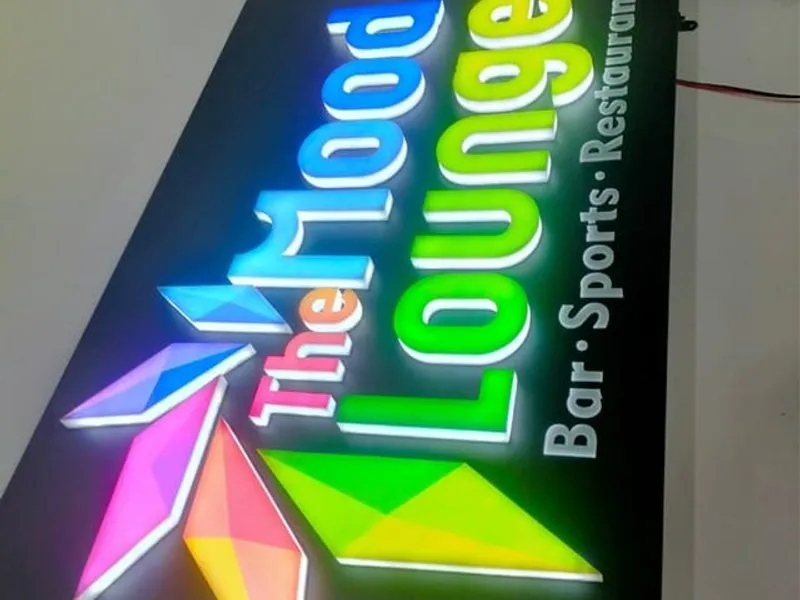
Real photo from our production floor — every sign we ship is made here.
Products mentioned or relevant to this topic — factory-direct, custom built.
Factory-direct since 2010. Free quote within 24 hours — no obligation.
Get a Free Quote → Copy EmailMOQ: 1 piece · Flexible lead time · 2-year warranty · Worldwide shipping
See pricing, specs, and get a free quote for the sign type you need. Built in our factory, shipped worldwide.