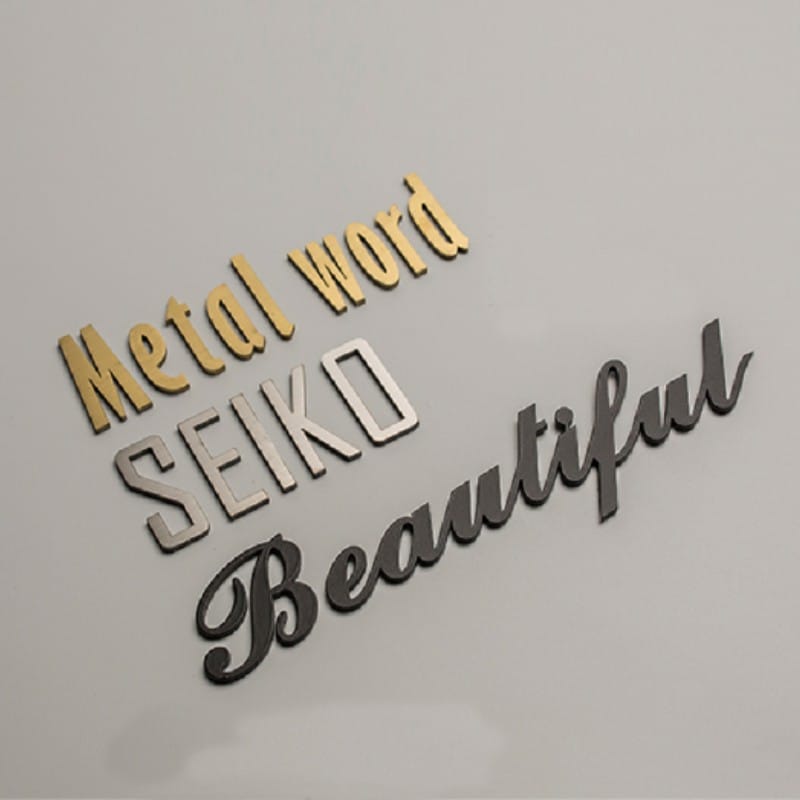
Look, I've been on this factory floor since 1997. I've watched sign shops argue channel letters versus lightboxes like it's a holy war.
Channel letters or lightboxes. Which one actually makes a storefront money? The answer isn't what suppliers want you to hear.
I'm going to break down cost per year, not cost per sign. That's where everyone screws up.
If you're buying for a strip mall in Ohio, you need one answer. If you're buying for a Miami Beach restaurant, you need a different one.
A channel letter is a three-dimensional letter with an aluminum or stainless steel housing, an acrylic face, and LED modules inside.
Our factory price for front-lit channel letters runs $20-80 per letter. Back-lit halo letters run $35-120 per letter.
A lightbox is a cabinet with an acrylic face and LEDs behind it. It's a flat panel, not individual letters. Factory price for acrylic light boxes runs $80-250 per square meter.
Same materials, same LEDs. Different visual effect. Different maintenance profile.
Here's what nobody tells you: the real difference isn't upfront cost. It's what happens in year three.
Channel letters look premium from 100 feet away. Lightboxes look like a glowing rectangle. That's not an insult, just a fact.
For a dental office with six letters, channel letters cost maybe $120-480 factory direct. A lightbox covers the same message but loses the dimensional effect.
For a gas station needing a 12-square-meter price panel, lightboxes win. Nobody puts channel letters on a fuel price sign.
Here are the material specs we work with every day:
Look, cost per sign is a trap. You need cost per year of visible branding.
A front-lit channel letter with Samsung or Osram LEDs and UV-resistant acrylic will run 5+ years before any real degradation. We warranty LEDs for 2 years, power supply for 1 year. The good stuff lasts longer.
Cheap LED modules from unknown suppliers? 12-18 months. I've seen a strip mall sign look like a jack-o'-lantern after one winter.
Domestic acrylic starts yellowing in 1-2 years. Mitsubishi or Degussa UV-resistant acrylic goes 5-8 years before noticeable change.
Lightboxes have the same math, but the acrylic face is bigger and more exposed. If you use cheap acrylic, the whole panel clouds over, not just one letter.
Here's the ROI difference: a $120 front-lit channel letter that lasts 5 years costs you $24 per year. A $200 lightbox that yellows in 2 years costs $100 per year. Plus reinstallation.
That's why I tell clients to stop asking "which is cheaper" and start asking "which stays lit and doesn't embarrass me in 24 months."
The ugly truth is any sign company that promises "maintenance-free outdoor signs" is lying to your face. Silicone breaks down. Acrylic gets scuffed. LED drivers fail. It's a machine on a wall.
We built a sign for a client in coastal Florida. He insisted on 304 stainless and cheap LEDs to save $600. Sixteen months later, the LEDs were flickering and the housing had pitting. He paid twice: once for the cheap sign, once for the replacement in 316 with quality modules.
If your storefront has a name under eight letters, channel letters are the default for a reason.
They create contrast at night, they read as high-end from across the street, and they justify a higher lease rate. Retail landlords notice signs.
Our front-lit channel letters use SMD 2835 LEDs at 100-150 lumens per watt. That's the industry standard for visibility without burning a hole in your electric bill.
If you want the architectural look, back-lit halo letters cost more, but they scream "premium tenant." Think law firms, boutique hotels, high-end dentistry.
For a strip mall in Ohio, 304 stainless with brushed finish and quality LEDs is enough. For Miami Beach, pay the 20-30% premium for 316 stainless. The salt air will eat 304 in a few years.
Color temperature matters too. 4000-5000K neutral for corporate and retail. 6000-6500K cool for industrial or highway. 3000-3500K warm if you're a restaurant and want people to feel relaxed, not interrogated.
I've seen this go wrong: a contractor ordered cool 6500K channel letters for a high-end steakhouse because they were $12 cheaper per letter. The place looked like a gas station restroom. They reordered in 3000K three weeks later.
Lightboxes are for large-format graphics, not brand names.
If you need to change a promotion every month, a lightbox with a removable acrylic face is less painful than replacing channel letters.
A gas station price sign, a mall directory, a fast-food menu board — those are lightbox jobs. You don't spell "cheeseburger combo" in 3D letters.
Our acrylic light boxes run $80-250 per square meter. At 10 square meters, that's $800-2,500 factory direct. A channel letter set for 10 letters might cost $200-800, but it wouldn't do the same job.
And our food menu signs are a specific type of lightbox for restaurants. Replaceable graphics, edge-lit acrylic, looks clean.
One thing lightboxes do better than channel letters: full-color graphics. You can print a menu, a photo, a map. Channel letters are text and logos only.
Here's what nobody tells you: the sign product is only half the cost. Installation, permits, and electrical hookup are the other half.
Channel letters need each letter mounted individually, a power supply hidden somewhere, and code-compliant wiring. Lightboxes are one cabinet, often easier to hang but heavier.
For US projects, NEC Article 600 applies to electric signs. ADA tactile signs require 48-60" mounting height, non-glare finish, Grade 2 Braille. That's a different product from channel letters or lightboxes.
The ugly truth is IP65 doesn't mean your sign survives a Florida hurricane. It means water jets from any direction. IP66 handles powerful jets. IP68 is submersible. None of them stop a flying 2x4.
If you're importing, you are the importer of
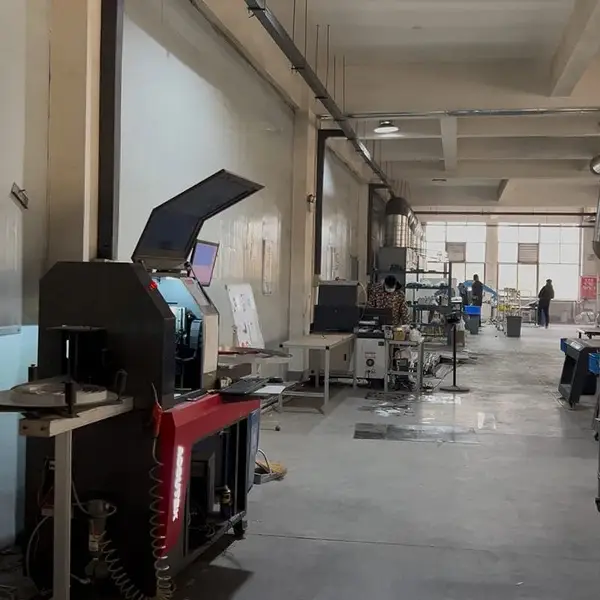
Real photo from our production floor — every sign we ship is made here.
Products mentioned or relevant to this topic — factory-direct, custom built.
Factory-direct since 2010. Free quote within 24 hours — no obligation.
Get a Free Quote → Copy EmailMOQ: 1 piece · Flexible lead time · 2-year warranty · Worldwide shipping
See pricing, specs, and get a free quote for the sign type you need. Built in our factory, shipped worldwide.