I’ve been cutting, bending, and wiring signs for 16 years. I’ve smelled acrylic after a laser gets too aggressive. I’ve stripped cheap LED modules out of channel letters that weren’t even two years old. So when I say you can get a cheap custom sign without sacrificing quality, I’m not reciting a sales deck. I’m telling you what material choices make that possible—and which ones guarantee a callback you don’t want.
I run production at Aochuang Sign in Lu’an, Anhui. We ship worldwide. Our lead time is 7–15 days, MOQ one piece. We don’t do “luxury” markups. We do factory-direct pricing on front-lit channel letters, halo-lit, stainless steel, aluminum—the whole lot. And I’ll be the first to admit: cheap can go sideways fast if you spec the wrong material for the job.
Look, acrylic is not just plastic. It’s a light-transmittance number and a UV-resistance promise. The good stuff—Mitsubishi or Degussa sheet—hits 90–92% light transmittance and holds color outdoors for 5–8 years. Domestic acrylic? 1–2 years before yellowing starts creeping in from the edges. That’s a phone call from a client asking why their brand blue now looks like stale piss.
Here’s what nobody tells you: thickness matters just as much as brand. A 2mm face on a 4-foot-wide letter will bow like a potato chip under summer sun. We won’t build anything over 2.5 meters without going to 5mm. For standard storefront letters, 3mm is our sweet spot—rigid enough, still economical. If you’re doing an acrylic light box with a big unsupported span, 5mm or you’ll regret it. I don’t care if the factory down the road says 2mm is fine. It isn’t.
Cheap doesn’t mean using junk acrylic. It means using domestic sheet only where it makes sense—indoor directories, temporary retail pop-ups, trade show displays that live in crates 90% of the time. For anything bolted to an exterior wall, you spec UV-resistant acrylic or you’re paying twice: once for the sign, once for the replacement. We stock both and we won’t upsell you, but I’ll ask where the sign’s going.
I’ve seen this go wrong: a contractor in Florida ordered “stainless steel” letters from some online vendor. Price was great. Eighteen months later, rust bleeding down the stucco. Magnets stuck to the face. It was 201-grade stainless—high manganese, almost no nickel, zero corrosion resistance. That’s the ugly truth of bottom-dollar metal letters.
Our stainless steel letters are 304 grade minimum. 18% chromium, 8% nickel. Density 7.93 g/cm³. You can leave them outside in Ohio for a decade and they’ll look the same. We do brushed #4, mirror #8, PVD coating, powder coating—all on 1.0–3.0mm stock. For coastal salt spray or industrial chemicals, step up to 316. It’s 20–30% more expensive because of the 2–3% molybdenum, but it’s the only thing that survives Miami Beach without pits.
Even the finish impacts longevity. Mirror polish is gorgeous until a seagull uses it for target practice, then it’s a fingerprint nightmare. Brushed #4 hides abuse and looks professional for years. Powder coating adds a color layer but can chip if some bonehead hits it with a pressure washer. Pick the finish that matches the maintenance the client will actually do—not the one that looks best in the brochure.
Here’s what nobody tells you about aluminum: it’s one-third the weight of steel, naturally rust-proof, and forgives a lot of installation sins. We cut aluminum letters from 1.0–1.6mm sheet. For large-format building signs where weight loading matters, aluminum is the no-brainer. It won’t win any awards for dent resistance at 1mm, but for letters mounted above pedestrian level, it’ll outlast the building.
We offer anodized, powder coated, and brushed. Anodized holds up 8–12 years outdoors without peeling. Powder coat gives you color options but can fade if you cheap out on the pigment. A five-dollar-per-letter savings on powder coat today becomes a blotchy red sign in four summers. For back-lit halo letters with aluminum returns, we often powder coat the returns black to kill light bleed. That kind of detail costs almost nothing in materials but changes the whole nighttime look.
The ugly truth is some factories try to sell painted mild steel as “aluminum look.” Bring a magnet. If it sticks, walk away. You’re buying rust waiting to happen.
A sign is just a dark box without good LEDs. I’ve pulled apart failed signs where the modules had corroded contacts because nobody sealed the back. We use SMD 2835 chips (100–150 lumens per watt) for most standard jobs, Samsung or Osram emitters on quality builds. They’ll hit L70 at 50,000 hours—roughly 6 years of overnight burning. Cheap no-name modules? 12–18 months, and half the string is flickering by month 14.
Color temperature is another place people screw up to save five bucks. 6000–6500K cool white looks surgical on a retail storefront. 3000–3500K warm white says “come inside the restaurant.” 4000–5000K neutral splits the difference for corporate. Pick the wrong kelvin and your client’s brand identity looks drunk. We stock all three ranges. It’s not a cost upgrade; it’s just a spec checkbox.
For dual-lit channel letters, you’re running two separate LED circuits—one for the face, one halo behind. That doubles the potential failure points. Buy the good power supply, not the $8 special. Our warranty covers LEDs 2 years, power supplies 1 year. I’d rather eat the cost of a Mean Well driver at build time than ship five replacements.
Let’s talk actual numbers. A standard front-lit channel letter, 18 inches tall, factory-direct from us runs $20–$80. That same letter installed by a US sign company? $200–$700. Even after you add express shipping, Section 301 tariff (~30%), and a local electrician, you’re saving 50–65% on product cost. Multiply that across a multi-location rollout and it changes the whole project budget.
Our neon flex signs give you that modern bent-neon look without the glass-tube fragility. Factory prices start at $30 and go to $200 for large script. An acrylic light box is $80–$250 per square meter, depending on depth and LED density. You don’t need a $15,000 wholesale order. MOQ is one piece. We crate it like it’s going to war and ship sea freight LCL at $80–200 per cubic meter if you can wait about 65 days.
Look, sea freight takes patience. But when a standard 20-foot container costs $1,200–$3,000 from China to the US and fits a lot of letters, the unit cost plummets. For emergency rush jobs, express gets it to you in 7-10 days. You pay more, but you still beat local pricing.
CE marking cost us 20,000–50,000 RMB and took a few weeks of testing. Any factory can print a fake CE logo. Ask for a PDF of the certificate with today’s date. I’ll happily send it. UL 48 is a different beast—$4,000–$15,000, 4–9 months of lab work, quarterly audits. ETL is a UL alternative, 10–30% cheaper. We don’t UL-list every order because most clients don’t need it. But if your city inspector requires it, we can do it. Don’t lie to yourself that a $6 Alibaba sign has actual UL.
IP65 means dust-tight and protected from water jets. It does not mean hurricane-proof. I’ve seen installers leave conduit entries unsealed, then blame the sign when water fills it. The label doesn’t save you from sloppy work. For coastal installs, spec IP66 minimum—powerful jets—and use marine-grade sealant on every penetration.
Our production runs: design confirmation (1 day), laser cutting to ±0.1mm, TIG welding of returns, grinding and polishing, CNC routing acrylic faces, LED assembly, neutral silicone sealing (not that acidic stuff that eats copper traces), 8–12 hour burn-in aging test, 100% QC inspection, then export packaging with foam, carton, and plywood crate. Total: 7–15 days.
Here’s what nobody tells you: burn-in testing catches 90% of LED infant mortality. The factory that ships right after assembly is rolling dice with your reputation. We don’t ship until every letter has been lit overnight.
I keep a mental list of the worst material choices I’ve seen in the field. Thin acrylic faces that cracked in a hailstorm. “Stainless” letters that rusted because they were 201 grade. Halos where the back panel warped from heat because someone skipped aluminum and used plastic. LEDs so dim after a year you couldn’t read the brand from across the parking lot. All of those were “cheap custom signs” by price, not by value.
Cheap is smart when you spec: 304 stainless for inland, 316 for coastal, Mitsubishi acrylic for outdoor, Samsung LEDs with a decent driver, and aluminum for anything over four feet. Cheap is stupid when you chase the lowest quote and ignore the datasheet. That’s not a sign—it’s a liability with a mounting pattern.
For quick-turn food menu signs or indoor lobby logos, you can safely use domestic acrylic and lower-output LEDs. But if that sign faces west into afternoon sun, even indoors, UV will yellow the face. I’ll mention it. You decide.
If you’re shopping quotes, ask the factory what grade of steel they use. What LED chip. What acrylic brand. If they can’t answer in ten seconds, keep shopping. We’ve got 50+ skilled workers on a 3,000m² floor, and every one of them knows the difference between 304 and 201 by touch. That’s the kind of factory you want cutting your letters.
We ship from Lu’an, China to wherever you are. Warranty: 2 years on LEDs, 1 year on power supply. The crate will arrive looking like it fought a forklift and won. The letters inside will be flawless. That’s the cheap custom sign you actually want.
Factory-direct since 2010. Free quote within 24 hours — no obligation.
Get a Free Quote → Copy EmailMOQ: 1 piece · Flexible lead time · 2-year warranty · Worldwide shipping

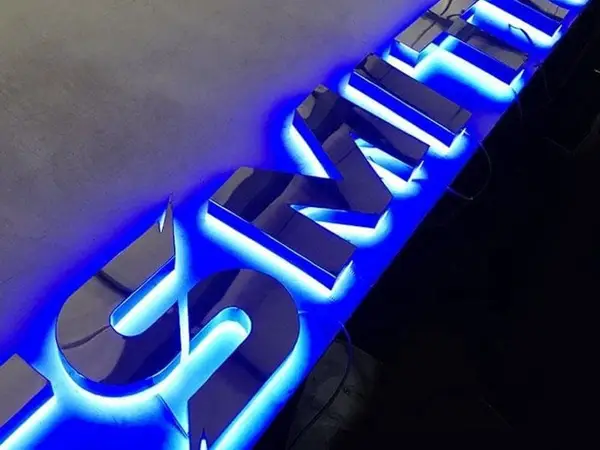
Real photo from our production floor — every sign we ship is made here.
See pricing, specs, and get a free quote for the sign type you need. Built in our factory, shipped worldwide.